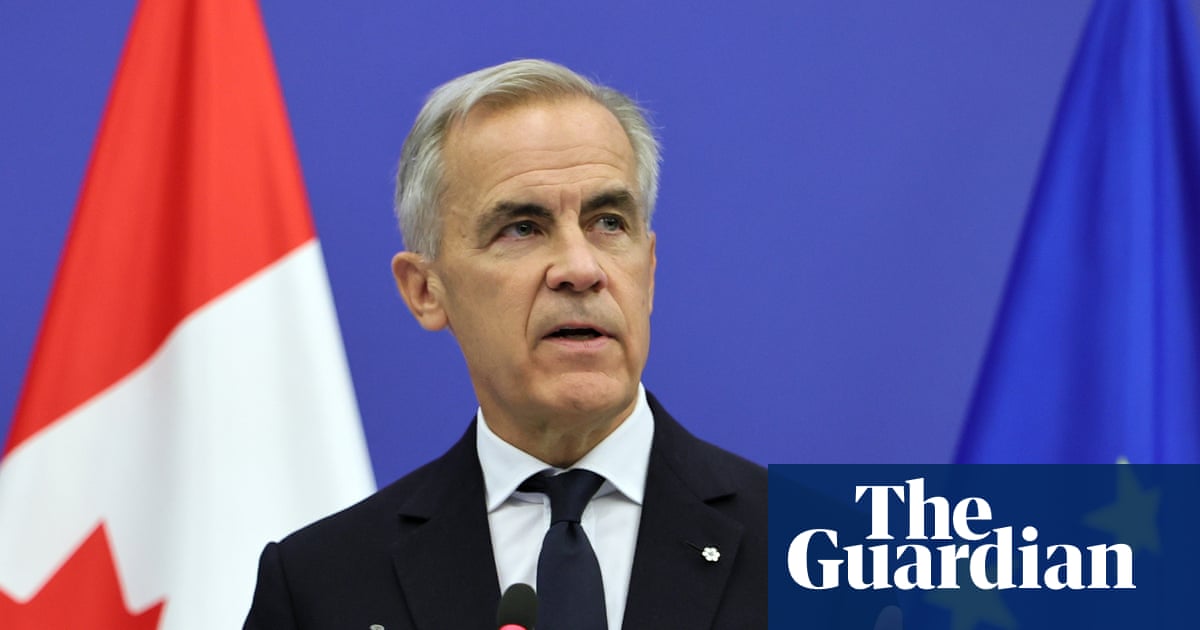
Mark Carney welcomes EU associate membership bid for Canada amid US tariffs
Canadian Prime Minister Mark Carney has welcomed proposals for Canada to become an associate member of the European Union as trade tensions with the United States escalate.
- Core Development: Canadian Prime Minister Mark Carney has welcomed proposals for Canada to become an associate member of the European Union as trade tensions with the United States escalate.
- Beat Context: Categorized under World with independent corroboration.
- Reporting Depth: 4 minute analytical read synthesized from verified newsroom sources.
Canadian Prime Minister Mark Carney has welcomed proposals for Canada to become an associate member of the European Union, laying out a vision for deep bilateral cooperation as trade tensions with the United States escalate. The development follows an overture from Ursula von der Leyen, who invited Ottawa to establish a new "Alliance for the Future" during her annual address to the European Parliament in Strasbourg.
Speaking to European lawmakers, Mark Carney argued that economic integration is increasingly being weaponized through financial coercion and trade tariffs. "Canada and Europe are each strong. Europe and Canada are stronger together," he told the assembly, receiving a standing ovation from members of the European Parliament.
Media additions


The push toward closer European integration is heavily driven by shifting trade dynamics in North America. Following subsequent tariff hikes by the US administration, Ottawa has sought to diversify its economic partnerships. Roughly seventy percent of Canadian exports traditionally head to the American market, leaving the country highly exposed. In response, Canada has implemented reciprocal levies while rejecting demands that Mark Carney asserts undermine national sovereignty.
US President Donald Trump reacted sharply to the European overture, telling reporters in North Carolina that allowing Canada to attain associate status could be interpreted as a hostile act. According to reporting highlighted by Yahoo News UK, Trump conditioned his latest threats on the underlying intentions of European leaders, warning that heavy tariffs or restrictions on transatlantic trade would follow if the proposal moves forward.
Despite the warnings, Mark Carney pressed ahead with outlining what a formalized partnership would entail. He stressed that Ottawa is not seeking full membership in the bloc, which would require surrendering jurisdictional control. Instead, Canadian officials are pursuing a unique strategic framework to secure collective resilience.
| Initiative / Program | Scope & Financials | Strategic Objective |
|---|---|---|
| CETA (Comprehensive Economic and Trade Agreement) | Bilateral trade pact provisionally enacted in 2017, eliminating 99% of tariff lines. | Foundational trade framework to be expanded into an "Alliance for the Future". |
| SAFE Defence Procurement Program | EU defense initiative funded at 150 billion euros (£128 billion). | Joint defense procurement giving Canadian firms integration access as European readiness scales up. |
The institutional mechanics of associate membership remain undefined, as the category does not currently exist within European Union treaties and would require unanimous ratification by member states. Nevertheless, PBS noted that groundwork discussions have already taken place between Ottawa and Brussels.
Jonathan Wilkinson, Canada’s ambassador-designate to the EU, confirmed that diplomatic channels had explored options stopping just short of full membership. Alongside mobility rights, the proposed alliance covers advanced manufacturing, quantum computing, space exploration, and financial market integration.
Energy cooperation forms another core pillar of the discussions. Mark Carney highlighted Canada's vast deposits of critical minerals and large-scale energy production, including liquefied natural gas and hydrogen capabilities that can support European energy security through northern and eastern maritime port infrastructure.
The deepening alignment underscores a broader realignment among democratic middle powers seeking stability in a fracturing global order. Mark Carney's willingness to challenge economic coercion has resonated strongly within European political circles, even as capitals weigh the diplomatic fallout with Washington.
What to Watch Next
- Parliamentary Scrutiny: Mark Carney has committed to holding multiple parliamentary debates followed by a formal vote in the Canadian Parliament regarding the future structure of the relationship.
- Montreal Summit: European leaders are scheduled to travel to Canada for bilateral meetings to hammer out the operational details of the proposed partnership.
- Treaty Adjustments: Brussels must determine how to legally construct an associate membership category that currently lacks a formal rulebook under existing EU treaties.
Further developments on international alignments and trade disputes can be tracked through our dedicated World coverage.
How significant is this development?
Contribute your assessment to the aggregated reader sentiment ledger.
Frequently Asked Questions
Key questions answered in this reportWhat is the key development in: Mark Carney welcomes EU associate membership bid for Canada amid US tariffs?
Canadian Prime Minister Mark Carney has welcomed proposals for Canada to become an associate member of the European Union as trade tensions with the United States escalate.
Why is this World development significant for the UK?
This report covers critical events in our World beat. Independent reporting monitors related UK statements, regulatory shifts, and public responses as further verified details emerge.
How was this reporting corroborated and verified?
Newsarchy UK compiles and cross-references reporting from primary reporting from winnmediaskn.com and cross-checked wire reports. All coverage adheres to published editorial standards.
When was this report published?
This briefing was published on September 17, 2026 and is permanently cataloged in the Newsarchy UK World archives.