Myanmar committed acts of genocide against Rohingya minority, top UN court rules
The International Court of Justice ruled that Myanmar committed genocide against the Rohingya minority, marking the first time the UN court has held a state directly responsible.

The International Court of Justice ruled on Thursday, 19 November 2026, that Myanmar committed genocide against its Rohingya minority, marking the first time the United Nations' highest court has held a state directly responsible for the crime.
Presiding Judge Yuji Iwasawa delivered the landmark verdict in the Great Hall of Justice in The Hague, Netherlands. The ruling concludes a legal battle launched by the West African nation of The Gambia. The 15-judge bench voted nine to six to find Myanmar in breach of its obligations under the 1948 Genocide Convention during military operations in northern Rakhine State.
Media additions
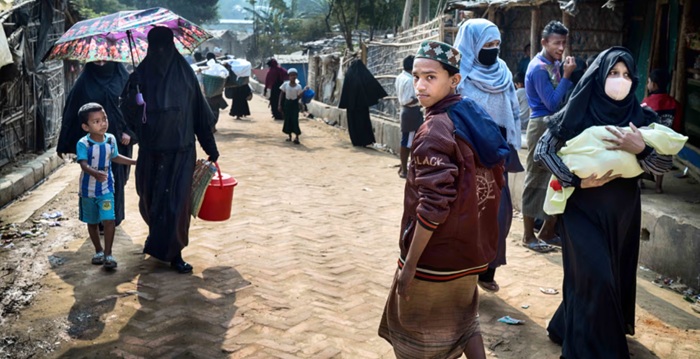

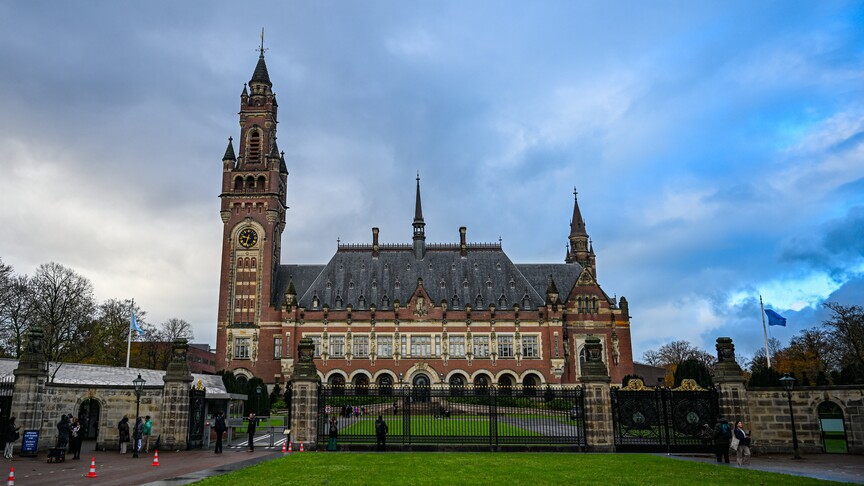
The court found that Myanmar security forces killed about 10,000 Rohingya civilians, perpetrated widespread sexual violence, and unleashed extreme violence against children while attacking fleeing families. Judges concluded that the scale and methods of the violence reflected a specific intent to destroy a substantial part of the minority Muslim population.
The proceedings stem from a sweeping military crackdown launched in August 2017 after a Rohingya insurgent group attacked police and military posts. The offensive drove more than 700,000 Rohingya across the border into neighbouring Bangladesh. Survivors and investigators detailed mass killings, gang rapes, public executions, and the burning of entire villages. Satellites captured the destruction of settlements like Tula Toli, where human rights investigators documented mass graves and children being drowned in rivers.
Myanmar consistently denied the allegations throughout the litigation, maintaining that its armed forces engaged in legitimate counterterrorism operations against guerrilla fighters. The military leader who headed the campaign, Min Aung Hlaing, later ousted Suu Kyi's elected government in a 2021 coup and was subsequently installed as civilian president following restricted elections.
Legal experts note that establishing genocide requires proving specific intent to destroy a protected group, a threshold rarely met in international tribunals. Since the Holocaust, international courts have formally recognised genocide in only a handful of instances:
| Atrocity / Event | Location | Timeframe | Tribunal / Court Ruling |
|---|---|---|---|
| Khmer Rouge Rule | Cambodia | 1975–1979 | Recognised by international tribunals |
| Rwandan Genocide | Rwanda | 1994 | Recognised by international tribunals |
| Srebrenica Massacre | Bosnia | 1995 | ICJ found Serbia failed to prevent genocide |
| Rohingya Crackdown | Myanmar | 2016–2017 | ICJ found the state directly responsible for genocide |
The court ordered Myanmar to take immediate steps to investigate perpetrators, punish those responsible, and facilitate the safe, voluntary, and dignified return of displaced Rohingya. Judges also ruled that Myanmar must provide physical and psychological rehabilitation, restore damaged property, and pay financial compensation, with compensation details left to subsequent proceedings and a two-year window set for reporting restitution measures.
The verdict carries profound international implications, particularly for other high-profile proceedings at The Hague. Legal analysts have closely monitored the case for clues on how judges will handle South Africa's 2023 genocide case against Israel regarding the war in Gaza, as well as Ukraine's case against Russia.
While ICJ rulings are final and legally binding, the court possesses no independent police force or military enforcement mechanism. If Myanmar fails to comply, the matter can be referred to the United Nations Security Council, where permanent members hold veto power. Agnes Callamard, secretary general of Amnesty International, praised the ruling on social media as courageous in the face of political pressure.
For the more than one million refugees currently surviving in crowded settlements in Cox’s Bazar, Bangladesh, the judgment offers a measure of long-awaited recognition. As the ICJ monitoring process unfolds, attention turns to whether international bodies will leverage the ruling to impose targeted diplomatic measures and sanctions against Myanmar's ruling military regime.