Netanyahu coalition loses parliamentary majority as Israeli elections end in deadlock
Israel faces profound political uncertainty after a deadlocked general election stripped Prime Minister Benjamin Netanyahu’s governing coalition of its parliamentary majority.

- Core Development: Israel faces profound political uncertainty after a deadlocked general election stripped Prime Minister Benjamin Netanyahu’s governing coalition of its parliamentary majority.
- Beat Context: Categorized under World with independent corroboration.
- Reporting Depth: 3 minute analytical read synthesized from verified newsroom sources.
Israel faces profound political uncertainty after a deadlocked general election stripped Prime Minister Benjamin Netanyahu’s governing coalition of its parliamentary majority, according to primary reporting from Albeu. As ballots continued to be tabulated following an election with the highest voter turnout in decades, neither the incumbent right-wing bloc nor the opposition led by former military chief Gadi Eisenkot secured the required seats to govern alone in the Knesset.
The inconclusive outcome represents a significant setback for Netanyahu, whose previous parliamentary alliance commanded 68 seats. According to projections and partial tallies cited by The Media Line, Netanyahu’s hard-line bloc stands at 53 seats, while Eisenkot’s opposition bloc holds roughly 48 seats. Because the Israeli parliament comprises 120 members, any governing coalition requires a minimum of 61 seats to pass a confidence vote. The remaining seats are held by predominantly Arab factions whose role in the evolving political landscape remains sharply contested.
Media additions


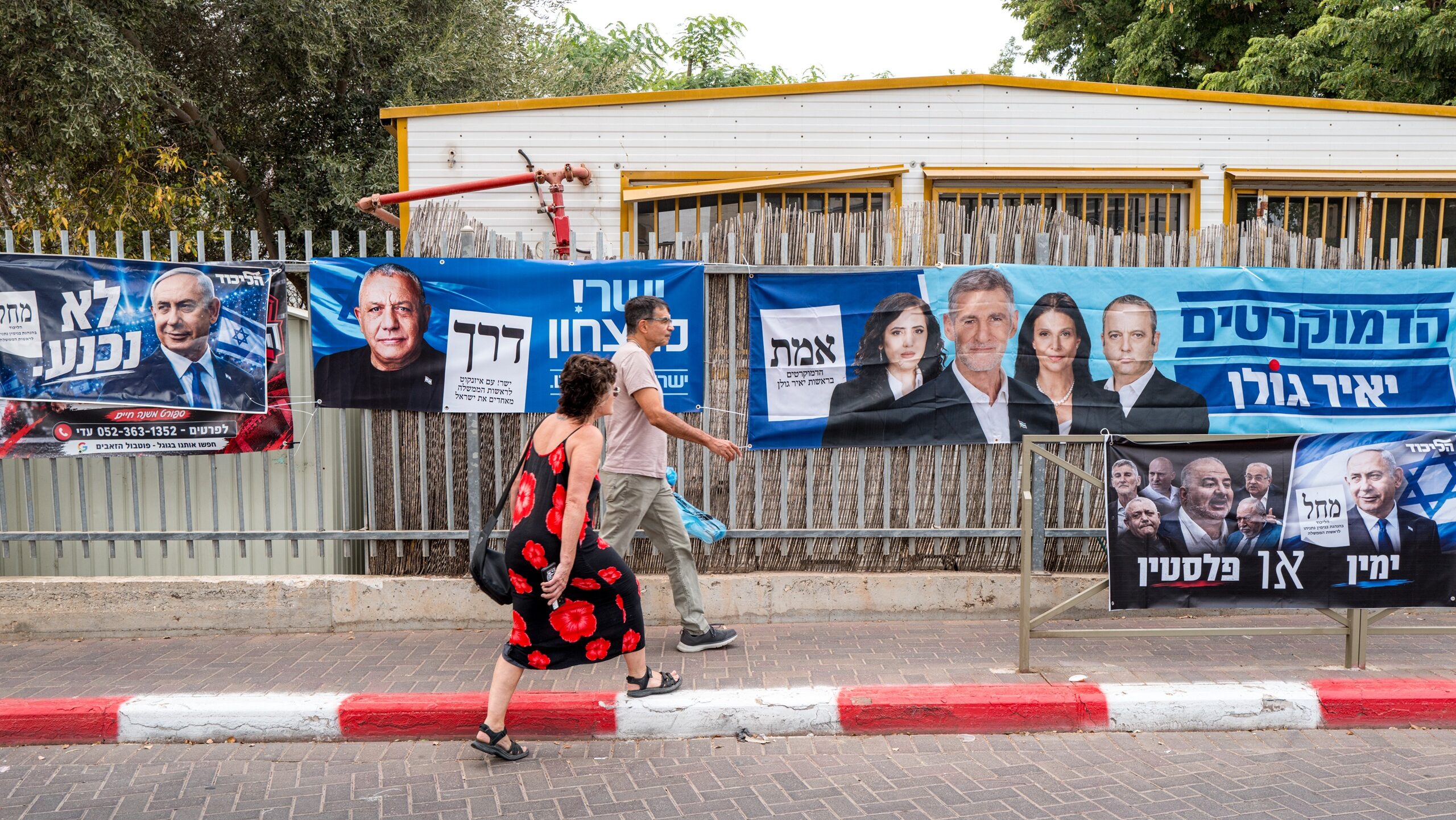
Voter turnout reached approximately 78 percent, the highest participation rate recorded since 1999, according to reports from ABC News. Analysts attribute this high mobilization to deep-seated public divisions over wartime leadership, judicial policies, and the socio-economic status of various communities. Within the Arab-Israeli sector, turnout surged dramatically compared to previous electoral cycles, propelling the Joint List and Ra’am parties to a combined total of up to 19 seats. This historic turnout reflects what Al Jazeera describes as a protest vote against the outgoing administration and its far-right ministers, Itamar Ben-Gvir and Bezalel Smotrich.
Despite the opposition's numerical proximity to unseating the incumbent prime minister, deep ideological fractures complicate any straightforward alliance. Eisenkot has stated his focus is on establishing a government committed to universal military conscription and Zionist principles, parameters that historically exclude ultra-Orthodox and Arab-led parties. Conversely, leaders of the Joint List have expressed a willingness to help remove Netanyahu from office, potentially by supporting an anti-Netanyahu minority government from outside the coalition, a strategy previously utilized during the tenure of Yitzhak Rabin.
| Political Bloc / Faction | Projected Seats | Key Characteristics |
|---|---|---|
| Netanyahu Coalition Bloc | 53 | Includes Likud, ultra-Orthodox parties, and far-right nationalist factions |
| Eisenkot Opposition Bloc | 48 | Center-left to hard-right anti-Netanyahu parties |
| Arab-Led Parties (Joint List & Ra’am) | 19 | Achieved record representation amid surging voter turnout |
Attention now shifts to Israeli President Isaac Herzog, who carries the responsibility of selecting the political figure tasked with forming the next administration. As reported by The New York Times, Herzog is not legally obligated to select the leader of the largest individual party, though customary practice and consultations with faction representatives will heavily inform his decision. Herzog has publicly emphasized his determination to avoid forcing the electorate into another round of voting.
What happens next depends on a series of critical statutory deadlines and political maneuvers:
- Final Vote Tallies: Election authorities are finalizing the count of special absentee ballots from military bases, hospitals, and diplomatic postings, with final official results expected by November 4.
- Presidential Consultations: Following the certification of results, President Herzog will consult with all party leaders to determine who holds the most viable path to a majority.
- The Mandate Phase: The designated candidate receives an initial 28-day window to negotiate a coalition agreement, with a potential 14-day extension authorized by the president.
- Parliamentary Opening: Regardless of coalition progress, the new Knesset is scheduled to be sworn in, during which opposition lawmakers could attempt to capture key legislative committees and push through procedural or anti-corruption legislation.
If coalition talks collapse entirely, or if alternate minority governments fail to secure a parliamentary majority, the country could face the unprecedented instability of recurring electoral cycles.
How significant is this development?
Contribute your assessment to the aggregated reader sentiment ledger.
Frequently Asked Questions
Key questions answered in this reportWhat is the key development in: Netanyahu coalition loses parliamentary majority as Israeli elections end in deadlock?
Israel faces profound political uncertainty after a deadlocked general election stripped Prime Minister Benjamin Netanyahu’s governing coalition of its parliamentary majority.
Why is this World development significant for the UK?
This report covers critical events in our World beat. Independent reporting monitors related UK statements, regulatory shifts, and public responses as further verified details emerge.
How was this reporting corroborated and verified?
Newsarchy UK compiles and cross-references reporting from primary reporting from Time Magazine and cross-checked wire reports. All coverage adheres to published editorial standards.
When was this report published?
This briefing was published on October 29, 2026 and is permanently cataloged in the Newsarchy UK World archives.