North Korea fires ballistic missiles toward eastern waters
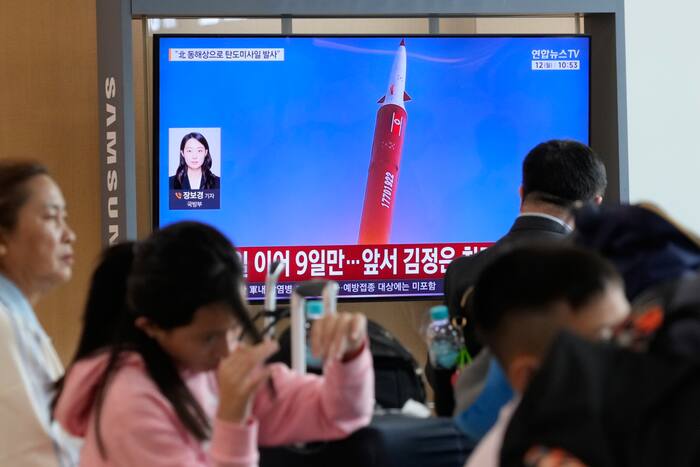
North Korea launched multiple ballistic missiles toward its eastern waters on Monday, prompting sharp protests from Seoul and Tokyo amid rising tensions.
- Core Development: North Korea launched multiple ballistic missiles toward its eastern waters on Monday, prompting sharp protests from Seoul and Tokyo amid rising tensions.
- Beat Context: Categorized under World with independent corroboration.
- Reporting Depth: 3 minute analytical read synthesized from verified newsroom sources.
North Korea fired multiple ballistic missiles toward its eastern waters on Monday, adding to an escalating sequence of weapons demonstrations that continue to heighten regional tensions during a prolonged diplomatic freeze, according to ClickOnDetroit | WDIV Local 4. The launch follows weeks of deteriorating relations across the peninsula, marked by border landmine blasts, naval arrivals, and competing hypersonic weapons tests.
Jang Do-young, spokesperson for South Korea's Joint Chiefs of Staff, stated that weapons of various types were launched from the area surrounding the North Korean capital. One of the missiles flew more than 900 kilometers before splashing down, though the military did not specify the total number of projectiles detected. Japan’s Deputy Defense Minister Takashi Koyari reported that Tokyo detected at least two missiles launched 17 minutes apart, noting that they landed outside Japan’s exclusive economic zone. Koyari specified that the first missile flew approximately 220 kilometers while the second exceeded 910 kilometers, exhibiting an irregular flight path indicative of a hypersonic weapon.
Media additions


The timing of the launch aligns closely with a tit-for-tat escalation in defense milestones. Just days prior, South Korean President Lee Jae Myung oversaw the nation's first test-firing of a domestically developed hypersonic missile. Lee's office emphasized that the weapon will enhance conventional strike capabilities in the Korean Peninsula theater of operations. South Korean military officials assess that Pyongyang's latest barrage served as a direct show of force in response to Seoul's test, while simultaneously advancing the North's own nuclear-capable systems.
| Authority | Reported Launch Count | Flight Distances / Details |
|---|---|---|
| South Korea (JCS) | Multiple ballistic missiles | One missile flew over 900 km from the Pyongyang area. Total count unspecified. |
| Japan (Defense Ministry) | At least two missiles | First missile ~220 km; second >910 km, displaying an irregular, potentially hypersonic flight path. |
Diplomatic channels remain profoundly strained. South Korea's presidential national security office called for an immediate halt to the launches, noting they violate United Nations Security Council resolutions. Tokyo similarly lodged a formal protest through diplomatic channels in Beijing. These missile events compound heavy regional friction stemming from an incident last month when three South Korean soldiers suffered injuries in landmine explosions near the inter-Korean border. A joint investigation by the South Korean military and the United Nations Command concluded that North Korea planted the devices, an allegation Pyongyang rejected as a farce while refusing demands for an apology.
Beyond regional maneuvers, international scrutiny remains fixed on Pyongyang's expanding military alignment with Moscow. Shin Won-sik, South Korea's defense minister, reported that North Korea has shipped approximately 7,000 containers filled with munitions and military equipment to Russia to support its war in Ukraine, as detailed by 朝日新聞. In exchange for artillery shells and other hardware, Pyongyang has reportedly received more than 9,000 Russian containers likely containing food, economic aid, and fuel, testing the limits of international sanctions.
Leader Kim Jong Un has largely abandoned long-term goals of reconciliation, branding South Korea a permanent adversary while rebuffing overtures from Washington. Nuclear negotiations have remained stalled since 2019, with Pyongyang demanding that the United States drop its hostile policies and denuclearization preconditions before any talks resume.
Observers will monitor several upcoming markers as tensions persist:
- Continued surveillance by South Korean, U.S., and Japanese intelligence for subsequent missile or artillery drills.
- Official responses from international bodies regarding ongoing violations of U.N. Security Council resolutions.
- Developments concerning bilateral military exchanges and supply logistics between Pyongyang and Moscow.
How significant is this development?
Contribute your assessment to the aggregated reader sentiment ledger.
Frequently Asked Questions
Key questions answered in this reportWhat is the key development in: North Korea fires ballistic missiles toward eastern waters?
North Korea launched multiple ballistic missiles toward its eastern waters on Monday, prompting sharp protests from Seoul and Tokyo amid rising tensions.
Why is this World development significant for the UK?
This report covers critical events in our World beat. Independent reporting monitors related UK statements, regulatory shifts, and public responses as further verified details emerge.
How was this reporting corroborated and verified?
Newsarchy UK compiles and cross-references reporting from primary reporting from ClickOnDetroit | WDIV Local 4 and cross-checked wire reports. All coverage adheres to published editorial standards.
When was this report published?
This briefing was published on October 12, 2026 and is permanently cataloged in the Newsarchy UK World archives.