Riyadh Airport Hit by Houthi Strike a Day After Deadly Attack
Riyadh's King Khalid International Airport has been struck by a second projectile just a day after a devastating missile attack killed 13 people, extending closures and drawing international condemnation.

- Core Development: Riyadh's King Khalid International Airport has been struck by a second projectile just a day after a devastating missile attack killed 13 people, extending closures and drawing international condemnation.
- Beat Context: Categorized under World with independent corroboration.
- Reporting Depth: 5 minute analytical read synthesized from verified newsroom sources.
Saudi Arabia’s King Khalid International Airport was struck by a projectile on Sunday, October 11, marking a second consecutive day of attacks that left the aviation hub shuttered and triggered urgent warnings from Yemen’s Houthi movement. The follow-up strike came just hours after a devastating missile attack on Saturday, October 10, struck the passenger terminal complex, resulting in a death toll that rose to 13 after an injured Indian national succumbed to their injuries on Sunday, according to the Indian Embassy in Riyadh.
Saturday’s deadly assault kills 13 and wounds hundreds
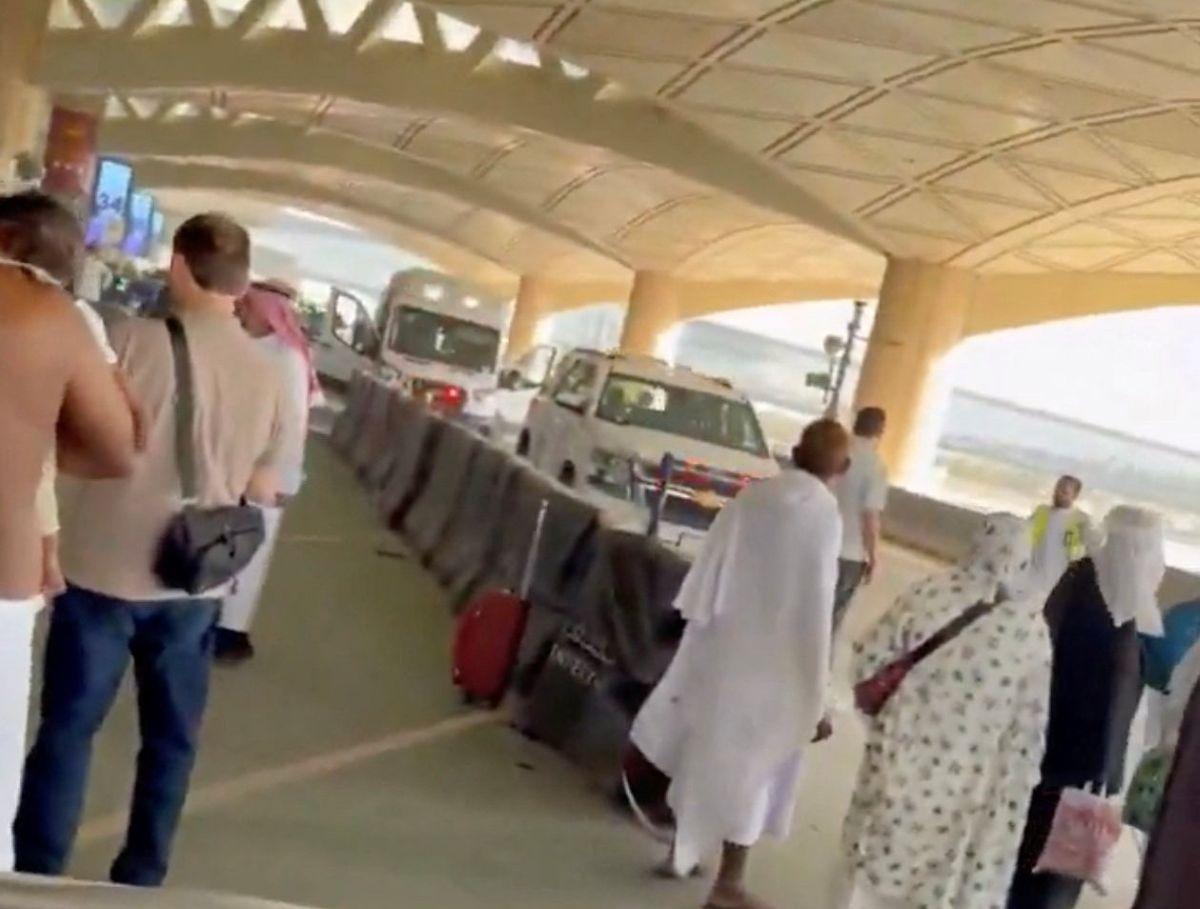
The initial missile strike on Saturday, October 10, struck terminals 3 and 4 at King Khalid International Airport, setting off a massive blaze and resulting in what officials described as the deadliest attack on Saudi soil in more than a decade. The General Authority of Civil Aviation (GACA) reported that 309 people were wounded in the blast, some critically.
Media additions


Saudi authorities released a demographic breakdown of those killed in the Saturday attack, confirming the dead included four Saudi nationals, two Bangladeshi nationals, a U.S. Citizen, an Egyptian flight attendant identified by state television as Azza Ramzy, a Jordanian, a Palestinian, a Syrian identified by the Syrian Embassy as Buthaina Ahmad Oweida, and a Sudanese national. The Saudi-led coalition condemned the attack as a "full-fledged war crime" and vowed a decisive response.
Witnesses recounted scenes of immediate terror inside the terminal buildings. People who were in Terminal 3 started running towards us. Some had lost a hand or an arm. People were running while carrying injured people, covered in blood,
a 32-year-old Riyadh resident told AFP. Health officials responded by initiating a rare mass call-up of doctors, while local residents described the capital's northern neighbourhoods shaking from the impact.
Sunday’s follow-up strike compounds airport shutdown
Operations at the facility remained completely suspended on Sunday, October 11. The Saudi-led coalition reported that an unidentified projectile slammed into terminal 4 on Sunday, sparking another fire, while air defence systems intercepted a separate cruise missile near the perimeter. GACA confirmed that Sunday's strike caused additional injuries, though no specific figures were immediately released as damage assessments got underway.
Senior aviation sources reported that radar and communications equipment sustained serious damage during the back-to-back strikes, leaving runways requiring extensive safety inspections before any resumption of traffic. Flight-tracking service Flightradar24 logged the airport's continued closure through midnight into Monday, October 12.
The disruption extended beyond aviation. Authorities in Riyadh directed schools to shift to remote learning for the week over ongoing security concerns. Meanwhile, the Saudi Ministry of Energy’s Prince Abdulaziz bin Salman Al Saud, appearing at an energy conference in the capital, struck a defiant tone regarding the infrastructure attacks: There is no way that somebody will break our back. We are like a phoenix, we come out of the ashes all the time,
he told attendees.
Houthi strategy and regional fallout
The Houthi movement claimed responsibility for the multi-wave attacks via their X account, explicitly declaring Saudi transport hubs to be operational military targets. Houthi military spokesperson Brigadier General Yahya Saree warned airlines, flight crews, and travellers to steer clear of Saudi airspace, stating that facilities remained vulnerable, though airports in the holy cities of Mecca and Medina were explicitly exempted from the threats. The group also claimed separate attacks targeting King Fahd International Airport in Dammam and oil installations in the kingdom's east.
Security analysts noted that the scale of the attacks exposes the limitations of the kingdom's defensive posture. Saudi air defences have been able to intercept some Houthi missile and drone attacks, but Saudi Arabia is so large that it’s simply impossible for them to consistently defend themselves against Houthi attacks,
said Thomas Juneau, a security analyst at Ottawa University, speaking to The Guardian.
The escalation immediately rattled global markets, threatening commercial shipping through the Bab al-Mandab Strait—an alternative waterway to the Strait of Hormuz carrying roughly 10 percent of global maritime goods—where Saudi-backed government forces have been attempting to push back recent Houthi territorial gains.
International diplomatic and military reactions
The developments drew swift condemnation from world leaders and triggered urgent travel advisories. The embassies of the United States, Canada, Germany, and Spain urged citizens to avoid Riyadh airport entirely, while Australia advised residents to stay indoors and shelter in place.
U.S. President Donald Trump addressed reporters on Saturday and Sunday regarding potential American military involvement. Asked if Washington would take part in retaliatory actions, Trump told reporters, We may. We’re going to look at it,
adding that the administration was evaluating the situation.
| Date | Fatalities | Injured | Primary Target | Operational Status |
|---|---|---|---|---|
| Saturday, October 10 | 13 | 309 | King Khalid International Airport (Terminals 3 & 4) | Suspended; fire and structural damage |
| Sunday, October 11 | Unchanged | Unspecified (injuries confirmed) | King Khalid International Airport (Terminal 4) | Extended closure; radar and communications damaged |
Timeline of key events
- Saturday, October 10 – A missile strikes the terminal complex at King Khalid International Airport, killing 13 people, injuring 309, and prompting the coalition to vow a decisive response.
- Saturday evening, October 10 – U.S. President Donald Trump states that Washington "may" weigh joining Saudi military strikes against the Houthi movement.
- Sunday morning, October 11 – Saudi air defences intercept a cruise missile near Riyadh, while a separate projectile strikes terminal 4, creating a second major fire.
- Sunday afternoon, October 11 – GACA confirms fresh injuries from the Sunday projectile strike, and flight trackers confirm airport closures extended through midnight.
- Sunday evening, October 11 – The Houthi leadership issues renewed warnings to international aviation.
What to watch next
- Whether the United States formalises direct military cooperation or offensive participation alongside the Saudi-led coalition following President Trump's remarks.
- The official timeline from Saudi aviation authorities regarding when safety checks and runway repairs at King Khalid International Airport will permit the resumption of flights.
- The trajectory of the counter-offensive led by Saudi-backed forces around the Bab al-Mandab Strait and vital shipping lanes in Yemen.
How significant is this development?
Contribute your assessment to the aggregated reader sentiment ledger.
Frequently Asked Questions
Key questions answered in this reportWhat is the key development in: Riyadh Airport Hit by Houthi Strike a Day After Deadly Attack?
Riyadh's King Khalid International Airport has been struck by a second projectile just a day after a devastating missile attack killed 13 people, extending closures and drawing international condemnation.
Why is this World development significant for the UK?
This report covers critical events in our World beat. Independent reporting monitors related UK statements, regulatory shifts, and public responses as further verified details emerge.
How was this reporting corroborated and verified?
Newsarchy UK compiles and cross-references reporting from primary reporting from theguardian.com and cross-checked wire reports. All coverage adheres to published editorial standards.
When was this report published?
This briefing was published on October 11, 2026 and is permanently cataloged in the Newsarchy UK World archives.