Panama rocked by 2 powerful earthquakes and multiple aftershocks, prompting evacuations
Twin earthquakes measuring 7.7 and 6.6 magnitude rocked southern Panama, triggering mass evacuations, damaging historic buildings, and drawing international aid offers.
- Core Development: Twin earthquakes measuring 7.7 and 6.6 magnitude rocked southern Panama, triggering mass evacuations, damaging historic buildings, and drawing international aid offers.
- Beat Context: Categorized under World with independent corroboration.
- Reporting Depth: 4 minute analytical read synthesized from verified newsroom sources.
On Friday afternoon, a 7.7‑magnitude quake rattled southern Panama, followed minutes later by a 6.6‑magnitude aftershock. The twin tremors produced fissures in roads, collapsed a colonial church and triggered evacuations across three central provinces. Though no deaths were reported to date, the attacks on Panama’s infrastructure have set the country on a path of emergency response and international aid.
The first shock, felt as far away as Colombia, struck at a depth of 10 kilometres, about 6 miles southwest of the remote community of Pitaloza Arriba in Herrera province. The U.S. Geological Survey (USGS) initially listed the event as magnitude 8, then revised it to 7.6 and finally to 7.7. A second tremor, recorded at 6.6 magnitude, followed in the same area within minutes. The two quakes produced a series of aftershocks, including several that reached 5.8, 5.5 and 5.2 magnitude. Seismologists at the University of Panama logged more than 45 aftershocks, though the majority were too weak to be felt.
Media additions


Images that circulated online showed deep fissures slicing through local roads and a colonial‑style Catholic church in Los Santos province, the Church of San Atanasio, collapsing into ruin. The building, a National Historic Heritage Site since 1938, was described by local news outlets as having “collapsed.” The cathedral in Penonome’s main square also suffered cracks, and the governor’s office building and the Dos Continentes hotel sustained damage. In Veraguas province, large fissures ran along roadways, while in Herrera province a person was struck by debris from a partially collapsed structure in the city of Penonomé, about 93 miles from Panama City.
Despite the severity of the shocks, Panamanian President José Raúl Mulino reported that no fatalities or injuries had been documented by Friday evening. He cautioned, however, that the situation could evolve in the coming hours or days. “Nobody was ready, and no one is ever ready for this type of disaster,” Mulino said, after calling for calm earlier in the day. The National Civil Protection Service’s Omar Smith confirmed that damage was concentrated in Veraguas, Herrera and Los Santos, with no reports of damage in Panama City’s skyscraper‑filled skyline.
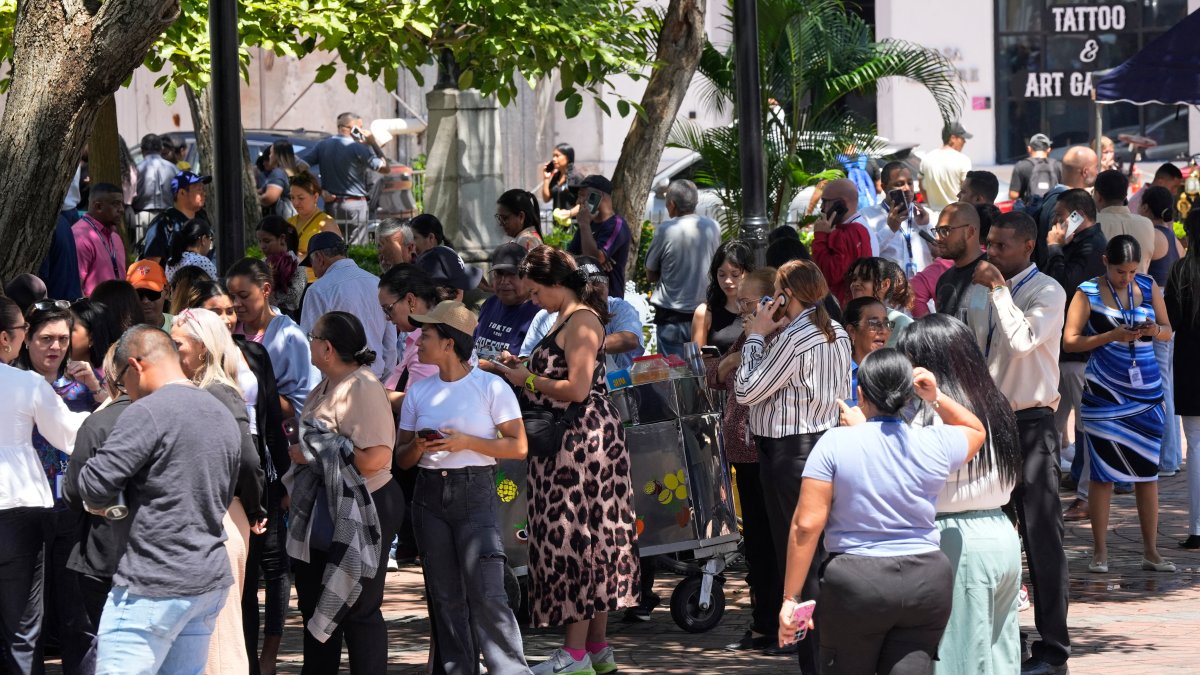
At the time of the first quake, residents of Panama City gathered outside shopping malls and public spaces, awaiting news of the impact.
The trembling continued to rattle the capital, but the city’s main thoroughfares remained largely intact.“We felt it very strongly. It knocked things over in the kitchen, but we’re okay, though we’re very scared,”
Rosendo Domínguez, 60, from Herrera province, by phone to The Associated Press
In the immediate aftermath, Tocumen International Airport briefly halted operations before reopening later that afternoon. The Panama Canal Authority announced that its operations were continuing normally, but that specialised technical teams were inspecting facilities for possible damage. The last major quake to cause widespread damage in Panama occurred in 1991, when a 7.4‑magnitude event centered in Costa Rica killed 23 people and left thousands homeless in the border region.
Panama’s position on the “Ring of Fire” – the 40 000‑km arc of volcanoes and fault lines around the Pacific Basin – explains the frequency of seismic activity in the region. The interaction of the Cocos, Nazca and Caribbean plates creates a tectonic environment that has produced devastating earthquakes in neighbouring Venezuela in June and Colombia in August of the same year, the latter of which killed at least 289 people. The comparatively low casualty count in Panama has been attributed to the country’s strict building codes, especially for skyscrapers in the capital, according to Carlos Valdés, head of the Seismology Department at the National Autonomous University of Mexico.
| Event | Magnitude | Depth | Epicentre |
|---|---|---|---|
| First quake | 7.7 | 10 km | 6 mi SW of Pitaloza Arriba, Herrera |
| Second quake | 6.6 | 10 km | Same epicentre |
The region’s response has been swift. President Mulino thanked Latin American leaders for their solidarity, noting that he had spoken with the presidents of Chile, Uruguay, Guatemala, and others. U.S. Secretary of State Marco Rubio declared that the United States was “rapidly mobilizing resources and personnel to assist” at Panama’s request. Colombian President Abelardo de la Espriella, whose country had recently endured a 7.4‑magnitude quake, offered solidarity and assistance, echoing similar offers from Venezuela’s Acting President Delcy Rodríguez, Costa Rica’s President Laura Fernández Delgado, Ecuadorian President Daniel Noboa and the Peruvian government.
How significant is this development?
Contribute your assessment to the aggregated reader sentiment ledger.
Frequently Asked Questions
Key questions answered in this reportWhat is the key development in: Panama rocked by 2 powerful earthquakes and multiple aftershocks, prompting evacuations?
Twin earthquakes measuring 7.7 and 6.6 magnitude rocked southern Panama, triggering mass evacuations, damaging historic buildings, and drawing international aid offers.
Why is this World development significant for the UK?
This report covers critical events in our World beat. Independent reporting monitors related UK statements, regulatory shifts, and public responses as further verified details emerge.
How was this reporting corroborated and verified?
Newsarchy UK compiles and cross-references reporting from primary reporting from asiaone.com and cross-checked wire reports. All coverage adheres to published editorial standards.
When was this report published?
This briefing was published on October 10, 2026 and is permanently cataloged in the Newsarchy UK World archives.