Trump claims Iran asked for Doha meeting, senior Iranian says none scheduled
Conflicting claims from Washington and Tehran regarding a potential summit have created uncertainty surrounding the status of a recent nuclear agreement.
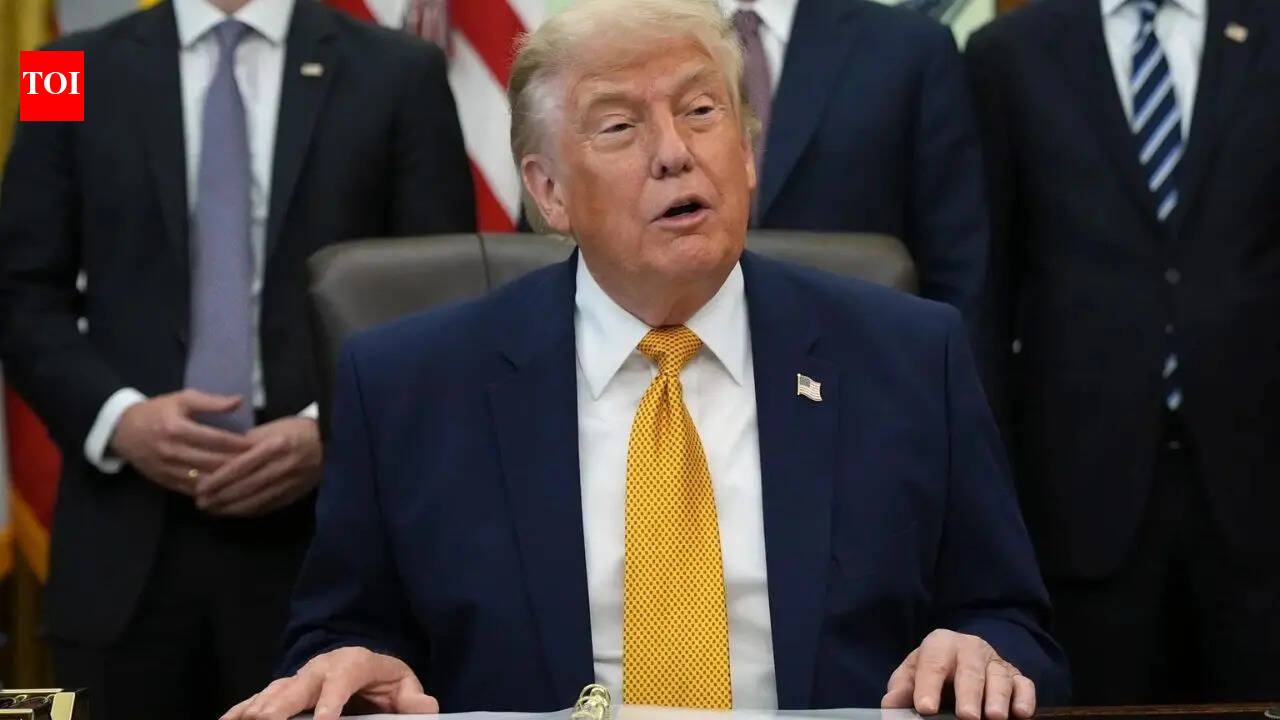
- Core Development: Conflicting claims from Washington and Tehran regarding a potential summit have created uncertainty surrounding the status of a recent nuclear agreement.
- Beat Context: Categorized under World with independent corroboration.
- Reporting Depth: 5 minute analytical read synthesized from verified newsroom sources.
Donald Trump’s claim on Thursday that Tehran had formally requested a diplomatic session in Doha has ignited fresh uncertainty over a fragile cease‑fire that has held since late June. The president’s announcement – posted on his Truth Social feed – coincides with a week‑long state funeral for the slain Supreme Leader Ayatollah Ali Khamenei, during which Trump warned that the United States could “take out” the entire Iranian leadership with a single strike but chose not to. Iran’s senior negotiator, Deputy Foreign Minister Kazem Gharibabadi, publicly rejected the notion that any talks were on the calendar, adding another layer of tension to an already volatile standoff.
Trump’s message, shared at 17:09 IST on 29 June, stated that Iran “requested a meeting with US counterparts” and that the talks would be held on Tuesday in Doha, Qatar. The assertion came as oil prices briefly slipped after the interim nuclear‑enrichment deal sealed earlier in the month, a development that the president has repeatedly linked to his domestic popularity.
Media additions


In contrast, Gharibabadi told state television that “no technical meetings of the working groups are planned for this week” and that “no further talks have been scheduled.” The deputy foreign minister’s denial aligns with Tehran’s foreign ministry, which has also rebutted claims that Iranian and American technical teams would convene in the coming days. The divergent accounts raise the question of whether a Doha summit is genuinely on the table or whether the president’s post is a political posturing move ahead of the November election.
Parallel narratives: a funeral, a warning and a diplomatic pause
The announcement about Doha unfolded against the backdrop of Trump’s repeated references to the Khamenei funeral. In interviews with the news outlet Axios, the president said:
"They are all there. One shot and we can take them all out, but we are not going to do that because then we would have nobody to negotiate with."
Donald Trump, President of the United States, via Axios
He added that the United States and Iran had agreed to suspend hostilities for a week while the funeral proceedings concluded. The same week, Iranian military commander Ali Abdollahi warned that any strike on Iranian leadership would provoke a “harsh retaliation” from the armed forces.
Iran’s embassy in Yerevan, Armenia, responded sharply to Trump’s remarks, posting on X:
You don’t understand these things because you have neither civilisation, nor history, nor honour.
Iranian embassy in Armenia, via X
The embassy’s rebuke was echoed by the Iranian embassy in Armenia, which described Trump’s comments as “offensive” and defended the late leader’s legacy.
While Trump framed the “one‑shot” comment as a demonstration of restraint – “we are nice” and “giving them a week off” – Iranian officials painted the statement as a direct threat. Foreign Minister Abbas Araghchi warned of an “instantaneous and robust response” to any aggression, and senior military commander Ali Abdollahi issued a public warning against any US or Israeli miscalculation.
Why the Doha claim matters now
Should a meeting in Doha materialise, it would be the first face‑to‑face engagement between the two sides since the interim agreement was signed on 21 June. The accord, which obliges Tehran to dilute its enriched‑uranium stockpile and lifts certain US‑backed sanctions, also grants both parties a 60‑day window to negotiate broader terms, including the future of the Strait of Hormuz.
Energy markets have already reacted to the fragility of the cease‑fire. The Strait – a chokepoint for roughly one‑fifth of global oil shipments – has seen an “elevated threat environment” despite a modest rise in commercial transits, according to a multinational maritime body overseen by the US Navy. A resumption of talks could stabilise the waterway, but a misstep would likely reignite the attacks that have already delayed oil flows and sparked a brief rally in crude prices.
In the broader geopolitical arena, Trump’s claim dovetails with his recent outreach to Israeli Prime Minister Benjamin Netanyahu, who, according to the same Axios interview, seeks a White House meeting after the NATO summit. The convergence of a potential Doha summit, a US‑Israel dialogue, and a looming Iranian nuclear discussion could reshape the diplomatic calculus for all three nations.
Timeline of key developments (June – July 2026)
- 21 June – Interim nuclear‑enrichment deal signed in Geneva.
- 24 June – Iranian drone and missile attacks on Bahrain and Kuwait trigger US airstrikes.
- 29 June – Trump posts on Truth Social that Iran “requested” a Doha meeting; Gharibabadi denies any schedule.
- 3 July – State funeral for Ayatollah Ali Khamenei begins in Tehran; processions scheduled through 9 July.
- 5 July – Trump tells Axios he could eliminate Iranian leadership with “one shot” but refrains.
- 5 July – Iranian embassy issues rebuke; Iranian military commander warns of retaliation.
- 7 July – Planned technical talks on the Strait of Hormuz to resume, according to Qatar’s mediation efforts.
- 9 July – Final burial of Khamenei in Mashhad; Doha talks, if any, expected to follow.
What to watch next
| Event | Potential impact |
|---|---|
| Doha meeting confirmation (or cancellation) | Could unlock or stall negotiations on the Strait of Hormuz and broader nuclear talks. |
| US‑Israel summit after NATO | May harden US stance toward Iran or provide leverage for a diplomatic breakthrough. |
| Resumption of technical working groups (mid‑July) | Will test the durability of the cease‑fire and affect global oil flows. |
| Iranian retaliation statements (late July) | Could signal escalation if either side perceives a breach of the “week off” agreement. |
Analysts note that the next few days will determine whether Trump’s Doha claim is a diplomatic opening or a rhetorical flourish. If Iran’s senior negotiators continue to deny a scheduled session, the United States may be forced to either provide concrete evidence of an Iranian request or pivot to other diplomatic channels, such as Qatar’s financial mediation of frozen assets.
Meanwhile, the funeral rites for Khamenei remain a poignant reminder of Iran’s internal rallying point. The public displays of grief – described by Reuters as “massive crowds” at the Imam Khomeini Grand Mosalla – coexist with hard‑line warnings from Tehran’s military establishment, creating a volatile mix of symbolism and strategic posturing.
For readers seeking a deeper dive into the regional dynamics, see our ongoing coverage of Iran’s threats in the Strait of Hormuz and the unfolding political fallout from the Khamenei funeral at the funeral procession portal. The next week will likely reveal whether Doha becomes the talking‑point of a tentative peace or another chapter in a rapidly escalating conflict.
How significant is this development?
Contribute your assessment to the aggregated reader sentiment ledger.
Frequently Asked Questions
Key questions answered in this reportWhat is the key development in: Trump claims Iran asked for Doha meeting, senior Iranian says none scheduled?
Conflicting claims from Washington and Tehran regarding a potential summit have created uncertainty surrounding the status of a recent nuclear agreement.
Why is this World development significant for the UK?
This report covers critical events in our World beat. Independent reporting monitors related UK statements, regulatory shifts, and public responses as further verified details emerge.
How was this reporting corroborated and verified?
Newsarchy UK compiles and cross-references reporting from primary reporting from timesofindia.indiatimes.com and cross-checked wire reports. All coverage adheres to published editorial standards.
When was this report published?
This briefing was published on July 5, 2026 and is permanently cataloged in the Newsarchy UK World archives.


