Trump threatens Iran trade partners with sweeping economic sanctions
Shifting from military strikes to economic warfare, the US administration has warned international partners against aiding Tehran's financial or energy sectors.
- Core Development: Shifting from military strikes to economic warfare, the US administration has warned international partners against aiding Tehran's financial or energy sectors.
- Beat Context: Categorized under World with independent corroboration.
- Reporting Depth: 3 minute analytical read synthesized from verified newsroom sources.
The United States has shifted its strategy from military strikes to an aggressive economic campaign, with President Donald Trump warning of severe economic penalties for any nation or entity aiding Tehran, as reported by The Guardian. The pivot comes after months of military conflict neared its six-month mark. Pentagon advisers indicated that the US had nearly exhausted its list of targets and running down munition stockpiles, while nightly strikes failed to bring Tehran to the negotiating table, according to reporting detailed by The Guardian.
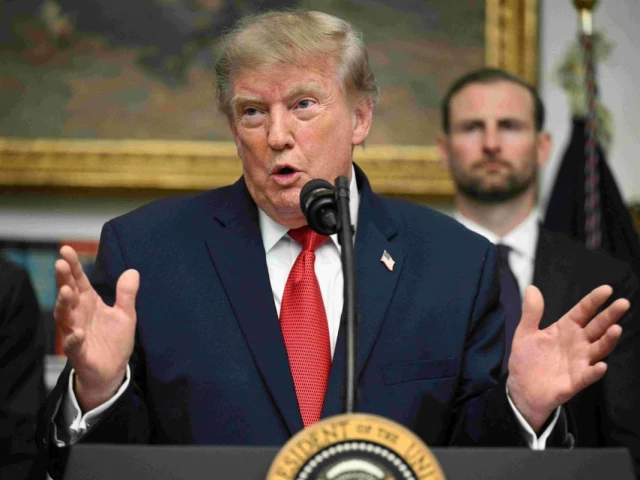
Writing on Truth Social, President Trump threatened an unprecedented level of economic warfare. As covered by Cyprus Mail, the US president warned that any country allowing financial institutions, businesses, airports, or government entities to provide a lifeline to Iran would face tremendous consequences. The measures target oil smuggling, swap lines, cash transfers, exchange houses, ship registries, and front companies.
Media additions

US Treasury Secretary Scott Bessent expanded on the strategy, framing it in stark terms to international partners. Bessent stated that allies and rivals alike must choose a side, declaring that the administration is building the greatest coordinated economic isolation in history under a "you are either with us or against us" policy.
The sweeping threats place intense focus on Beijing, as China remains the primary destination for Iranian oil. Data cited by Tribune shows that China purchased over eighty percent of Iran's shipped oil, relying on a ring-fenced system of independent refiners and intermediaries where Iranian petroleum is often rebranded. Chinese Foreign Ministry spokesperson Lin Jian responded that sanctions and pressure will not solve the problem, urging political and diplomatic solutions, as noted by Tribune and Cyprus Mail.
Tehran swiftly dismissed the threats. Iranian Foreign Minister Abbas Araqchi labeled the move economic terrorism designed to distract from domestic American financial pressures, including rising interest rates and record debt, per Cyprus Mail. Mohammad Mokhber, an adviser to Iran's supreme leader, stated that military pressure and sanctions would not break the nation's resolve, though Tehran remained open to dialogue, according to The Guardian and Cyprus Mail. Deputy Foreign Minister Kazem Gharibabadi echoed these sentiments, noting via CBS News that Washington was forced to rebrand its military failure as an economic war.
Regional dynamics continue to shift alongside the US announcement. The United Arab Emirates announced a total suspension of trade and financial transactions with Iran after detecting two missiles launched from the country, a claim Tehran dismissed as baseless, as reported by The Guardian and Tribune. Prior to the conflict, the UAE provided a vital economic lifeline, supplying a significant share of Iran's imports.
Key Regional Trading Partners and Exposure
- China: Purchases over 80% of shipped Iranian oil, utilizing independent refiners and complex intermediaries, according to Tribune.
- United Arab Emirates: Historically supplied roughly 30% of Iranian imports, though commercial ties were recently suspended following reported missile activity, as detailed by Tribune and The Guardian.
- Turkey: Maintains $5 billion to $6 billion in annual bilateral trade, relying on Iran for approximately 13% of its natural gas imports.
- Iraq: Engages in over $10 billion in trade, paying billions annually for Iranian natural gas to fuel domestic electricity production, per Tribune.
Simultaneously, maritime security in the Strait of Hormuz remains constrained. While the US military has facilitated the transit of select oil tankers nightly under a naval blockade, traffic has generally remained low, and oil prices have climbed, hovering near three-week highs around $93 to $94 a barrel, according to The Guardian and CBS News. Treasury Secretary Bessent argued that markets are misinterpreting the policy, asserting that maximum economic pressure makes a large-scale kinetic war less likely, as cited by CBS News.
As the administration prepares its enforcement steps, the evolving situation points toward several key developments:
- Chinese President Xi Jinping is scheduled to visit the White House next month, where Iranian trade compliance and energy imports are expected to be central agenda items, per The Guardian and CBS News.
- Global energy markets will monitor whether secondary sanctions target major Chinese financial institutions or if independent trade channels continue to absorb sanctioned petroleum.
How significant is this development?
Contribute your assessment to the aggregated reader sentiment ledger.
Frequently Asked Questions
Key questions answered in this reportWhat is the key development in: Trump threatens Iran trade partners with sweeping economic sanctions?
Shifting from military strikes to economic warfare, the US administration has warned international partners against aiding Tehran's financial or energy sectors.
Why is this World development significant for the UK?
This report covers critical events in our World beat. Independent reporting monitors related UK statements, regulatory shifts, and public responses as further verified details emerge.
How was this reporting corroborated and verified?
Newsarchy UK compiles and cross-references reporting from primary reporting from theguardian.com and cross-checked wire reports. All coverage adheres to published editorial standards.
When was this report published?
This briefing was published on August 20, 2026 and is permanently cataloged in the Newsarchy UK World archives.