US military destroys five Iranian oil tankers following missile attacks
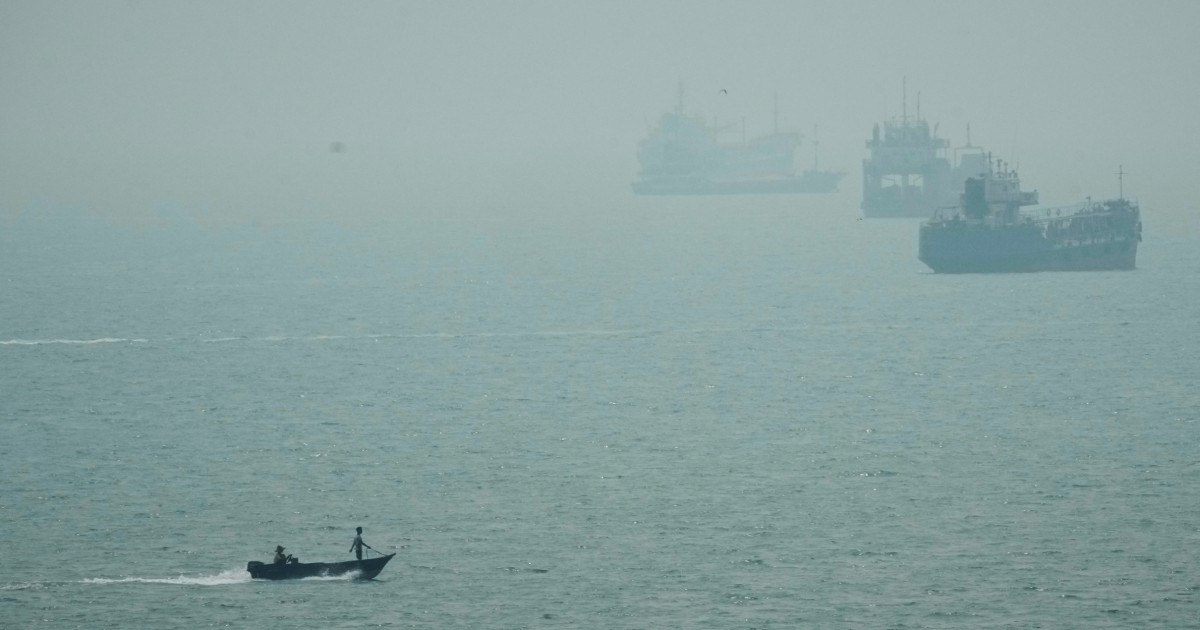
The U.S. military destroyed five Iranian oil tankers in retaliatory strikes following ballistic missile attacks on American warships by the IRGC.
- Core Development: The U.S. military destroyed five Iranian oil tankers in retaliatory strikes following ballistic missile attacks on American warships by the IRGC.
- Beat Context: Categorized under World with independent corroboration.
- Reporting Depth: 5 minute analytical read synthesized from verified newsroom sources.
The conflict in the Middle East has entered a severe new phase as the United States military carried out retaliatory strikes against five Iranian oil tankers following repeated ballistic missile attacks on American warships by the Islamic Revolutionary Guard Corps. According to U.S. Central Command, the latest maritime strikes took place on Tuesday, Sept. 8, 2026, compounding an earlier round of attacks from the weekend and rattling international crude markets as energy prices surged.
The hostilities escalated rapidly after the IRGC targeted a U.S. Navy warship with ballistic missiles twice over a two-day span, as reported by NBC News. The targeted American vessel successfully evaded the incoming ordnance and continued its patrol duties without suffering any personnel casualties. In swift retribution, American forces struck four crude oil carriers in the Gulf of Oman and a fifth near Kharg Island, which serves as the primary terminal for Iran's oil export industry. Before launching the strikes, U.S. Forces directed the vessel crews to abandon ship.
Media additions


The destruction of the tankers forms part of a broader strategy combining military force with an aggressive economic squeeze, as detailed by the New York Post. CENTCOM identified the specific vessels destroyed in the Gulf of Oman on Tuesday as the M/T Kaviz, M/T Charminar, M/T Horizon 1, and M/T Riesco, alongside the M/T Derya near Kharg Island. U.S. Officials maintain that these vessels belong to a multibillion-dollar shadow shipping network that generates vital funding for the IRGC and its regional proxy groups, operating outside international oversight to bypass trade restrictions.
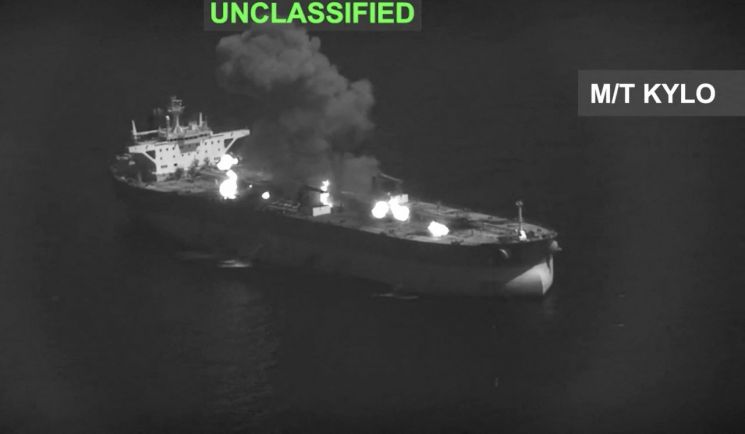
This kinetic exchange follows an earlier operation on Saturday, Sept. 5, 2026, when U.S. Forces permanently disabled or destroyed three other Iranian vessels—the M/T Downy near Kharg Island, the M/T Stark 1 near Jask, and the M/T Kylo in the Gulf of Oman—after an attempted missile assault on an American aircraft carrier and a guided-missile destroyer, according to Newsradiori. Admiral Brad Cooper, commander of CENTCOM, issued a stark warning regarding the ongoing maritime tit-for-tat:
"Let the message to the IRGC be clear: If you shoot at two of our ships, we will impose an even higher economic cost — taking out three of yours."
Admiral Brad Cooper, CENTCOM Commander, via CNBC
Tehran's response extended far beyond the immediate waters of the Persian Gulf. Following Tuesday's tanker destructions, Iran launched a barrage of ballistic missiles toward U.S. Military installations in Jordan, according to reports. Jordanian armed forces stated that their integrated air defense systems successfully intercepted 18 ballistic missiles, while two additional missiles landed in unpopulated areas without causing casualties or damage. Meanwhile, the IRGC Navy issued a severe warning to all oil tanker crews operating near the ports of Kuwait and Bahrain, accusing those nations of complicity and urging mariners to evacuate their vessels immediately because they would be targeted in retaliation.
| Operation Date | Vessels Targeted | Locations | U.S. / Allied Response & Outcomes |
|---|---|---|---|
| Sept. 5, 2026 | M/T Downy, M/T Stark 1, M/T Kylo | Kharg Island, Jask, Gulf of Oman | Three tankers permanently disabled or destroyed after IRGC targeted an aircraft carrier and destroyer; no U.S. Casualties. |
| Sept. 8, 2026 | M/T Kaviz, M/T Charminar, M/T Horizon 1, M/T Riesco, M/T Derya | Gulf of Oman, Kharg Island | Five crude carriers struck and rendered inoperable after missile attacks on a U.S. Warship; crews ordered to abandon ship. |
The friction surrounding navigation rights in the Strait of Hormuz remains the core catalyst for the hostilities, as outlined by CNBC. Before the war, roughly one-fifth of the global oil supply traversed the strait. The implementation of a strict U.S. Naval blockade in mid-April has severely constrained Iran's ability to export crude from Kharg Island, which historically accounted for up to ninety percent of the country's oil exports. While the U.S. Military provides armed escort along an authorized southern corridor, Iran demands that commercial traffic follow alternative routes defined by Tehran. Furthermore, Iranian officials announced plans to establish a new maritime exclusion zone, declaring that any unauthorized vessel entering the area would be placed on domestic sanctions lists.
International observers and regional experts have expressed growing alarm over the trajectory of the conflict. Danny Citrinowicz, an Iran specialist at Israel's Institute for National Security Studies, noted via CBC that there is no straightforward kinetic fix for the security dilemma in the Strait of Hormuz, warning that escalating retaliatory cycles risk pulling Washington and Tehran into a wider conflagration. Secretary of State Marco Rubio defended the American posture during a diplomatic trip to Colombia, affirming that Washington will maintain its hardline stance. "Iran continues to try to hit U.S. Naval ships, and for every time they do that, or try to do that, they're going to lose tankers," Rubio told reporters.
The U.S. Treasury Department has simultaneously stepped up non-military isolation measures under Operation Economic Outcast, targeting aviation networks and financial conduits used by Tehran. Treasury Secretary Scott Bessent emphasized the dual pressure campaign during media appearances, describing the alignment of naval might and economic sanctions as an unprecedented squeeze designed to asphyxiate the Iranian regime's war financing. As regional air traffic adjustments are monitored and allied military bases remain on high alert following the Jordan missile barrage, the coming days will test whether both nations can deter further escalation or if the conflict will expand deeper into Gulf shipping lanes ahead of upcoming political milestones.
How significant is this development?
Contribute your assessment to the aggregated reader sentiment ledger.
Frequently Asked Questions
Key questions answered in this reportWhat is the key development in: US military destroys five Iranian oil tankers following missile attacks?
The U.S. military destroyed five Iranian oil tankers in retaliatory strikes following ballistic missile attacks on American warships by the IRGC.
Why is this World development significant for the UK?
This report covers critical events in our World beat. Independent reporting monitors related UK statements, regulatory shifts, and public responses as further verified details emerge.
How was this reporting corroborated and verified?
Newsarchy UK compiles and cross-references reporting from primary reporting from NBC News and cross-checked wire reports. All coverage adheres to published editorial standards.
When was this report published?
This briefing was published on September 9, 2026 and is permanently cataloged in the Newsarchy UK World archives.