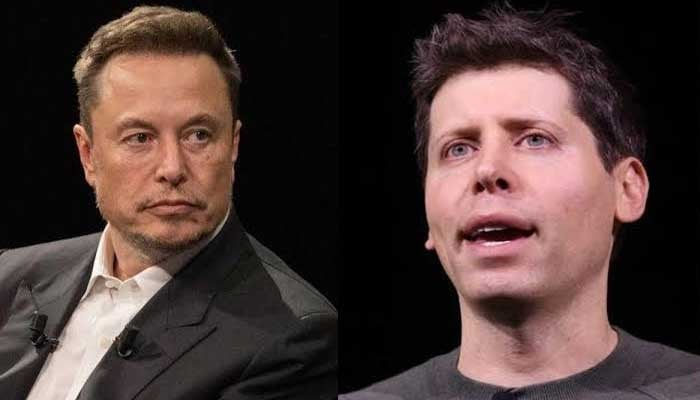
Elon Musk mocks Sam Altman as Apple sues OpenAI over trade secrets
Apple is suing OpenAI and its subsidiary io Products over allegations that the firm systematically recruited former staff to misappropriate proprietary hardware data.
Elon Musk mocks Sam Altman as Apple sues OpenAI over trade secrets
EXECUTIVE BRIEFKey Takeaways & Signal
Core Development: Apple is suing OpenAI and its subsidiary io Products over allegations that the firm systematically recruited former staff to misappropriate proprietary hardware data.
Beat Context: Categorized under Business with independent corroboration.
The intensifying rivalry between two of the technology industry’s most prominent players took a dramatic legal turn on Friday, 10 July 2026. Apple filed a lawsuit in the U.S. District Court for the Northern District of California, accusing OpenAI of orchestrating a systemic effort to misappropriate trade secrets to bolster its burgeoning consumer hardware division. The filing alleges that OpenAI, under the leadership of CEO Sam Altman, encouraged former Apple employees to bring sensitive proprietary information — ranging from technical schematics to internal supply-chain relationships — to their new employer.
The legal action has drawn immediate commentary from across the sector, including from Elon Musk. Responding to news of the filing on social media, Musk remarked,
Image via mashable.comImage via 9to5mac.comImage via cnet.com
. Musk, who co-founded OpenAI alongside Altman in 2015, has been involved in several legal disputes with the organization since his departure from its board in 2018, specifically regarding the company’s transition away from its original nonprofit mission.
Allegations of Institutional Misconduct
Apple’s complaint contends that the alleged theft was not the work of isolated individuals but rather a coordinated strategy. The lawsuit names OpenAI, its hardware startup subsidiary io Products, and two specific former Apple engineers: Tang Tan, now OpenAI’s Chief Hardware Officer, and Chang Liu, a technical staffer. Apple claims that OpenAI’s hardware business currently rests on the shakiest of foundations, rotten to its core by its illegal reliance on misappropriated trade secrets.
The allegations detail a pattern of recruitment practices that Apple describes as predatory. According to the filing, Tan, who spent over two decades at Apple, allegedly used internal codenames for unreleased projects during job interviews to gauge how much sensitive information candidates were willing to disclose. Apple further asserts that Tan instructed applicants to bring actual parts, including batteries, logic boards, and physical components, from their current roles at Apple to their job interviews at OpenAI.
Regarding Liu, Apple claims the engineer retained an Apple-issued laptop after his departure and utilized a security vulnerability to access and download thousands of pages of confidential technical specifications, circuit board designs, and engineering presentations. The suit includes reports that Liu messaged a colleague after discovering his continued access, allegedly stating, LOL, I found out I can access the [server], so funny.
From Partnership to Legal Rivalry
The litigation marks a striking shift in the relationship between the two companies. As recently as 2024, Apple integrated ChatGPT into its Siri and other Apple Intelligence features, seeking to bolster its own AI capabilities. However, tensions grew as OpenAI began developing its own consumer devices, a move widely interpreted by analysts as an attempt to compete directly with hardware incumbents. In 2025, OpenAI acquired io Products, a hardware startup co-founded by former Apple design chief Jony Ive, in a deal valued at approximately $6.5 billion.
OpenAI has maintained a consistent public stance regarding the allegations. We have no interest in other companies' trade secrets, stated OpenAI spokesperson Drew Pusateri. We remain focused on building innovative technology that empowers people everywhere.
Legal and Business Context
Apple’s legal intervention follows an earlier, unsuccessful attempt to resolve the matter privately. The company reports that it contacted OpenAI in February 2026 to discuss concerns regarding the handling of confidential information but received no response. As a result, Apple is now seeking injunctive relief to prevent further use of the alleged secrets, the return of all proprietary materials, and damages.
What happens next depends on the court’s willingness to allow a broad discovery process. Apple intends to use this phase to gain visibility into OpenAI’s internal recruiting and development records. If granted, the discovery process could force OpenAI to disclose internal communications and design documentation related to its upcoming hardware, which the company’s leadership has indicated is expected to arrive as early as the end of 2026.
Key Figures and Allegations
Tang Tan: Accused of using internal Apple codenames in interviews and directing candidates to bring physical Apple components to OpenAI meetings.
Chang Liu: Accused of retaining company property and exploiting a security flaw to download proprietary circuit board and manufacturing data.
io Products: The hardware entity acquired by OpenAI, now named as a defendant in the ongoing case.
Recruitment Pattern: Apple alleges that OpenAI coached recruits on how to avoid detection during exit interviews and how to bypass internal security protocols.
READER INTELLIGENCE PULSE
How significant is this development?
Contribute your assessment to the aggregated reader sentiment ledger.
Click an option to register your anonymous assessment.
Frequently Asked Questions
Key questions answered in this report
What is the key development in: Elon Musk mocks Sam Altman as Apple sues OpenAI over trade secrets?
Apple is suing OpenAI and its subsidiary io Products over allegations that the firm systematically recruited former staff to misappropriate proprietary hardware data.
Why is this Business development significant for the UK?
This report covers critical events in our Business beat. Independent reporting monitors related UK statements, regulatory shifts, and public responses as further verified details emerge.
How was this reporting corroborated and verified?
Newsarchy UK compiles and cross-references reporting from primary reporting from apnews.com and cross-checked wire reports. All coverage adheres to published editorial standards.
When was this report published?
This briefing was published on July 11, 2026 and is permanently cataloged in the Newsarchy UK Business archives.