Brent oil tops $100 per barrel, as tumbles for Tesla and Alphabet yank Wall Street lower
Brent crude oil prices climbed past $100 per barrel amid Middle East volatility. Meanwhile, declining share prices for Tesla and Alphabet weighed on the S&P 500.

- Core Development: Brent crude oil prices climbed past $100 per barrel amid Middle East volatility. Meanwhile, declining share prices for Tesla and Alphabet weighed on the S&P 500.
- Beat Context: Categorized under Business with independent corroboration.
- Reporting Depth: 3 minute analytical read synthesized from verified newsroom sources.
Global financial and energy markets experienced sharp volatility on Thursday, 23 July 2026, as escalating regional hostilities in the Middle East drove Brent crude oil prices above the $100 per barrel threshold.
Brent crude, the international benchmark, jumped 7% to settle at $100.69, having touched a daily high of $102. This represents the commodity's highest price point since May. The upward pressure on oil follows a series of attacks on Saudi oil tankers in the Red Sea, which the Houthi rebels in Yemen claimed responsibility for. The Houthis, acting as proxies for Iran, have declared a maritime blockade in the region, threatening a critical transit route that has become a vital alternative to the Strait of Hormuz.
Media additions
President Donald Trump responded to the maritime attacks by issuing a stern warning regarding the potential for U.S. Intervention. In a statement posted to Truth Social, the President noted that while the Houthis had previously acted with restraint, their recent interference with commercial shipping is unacceptable. He declared:
"If they do this again, the US will hold Iran responsible, in that the Houthis are a surrogate and/or proxy of Iran, and major military punishment will be inflicted upon Iran and, of course, the Houthis themselves."
Donald Trump, President of the United States, via Truth Social
The geopolitical instability has extended beyond the Red Sea. On Thursday, the Jordanian military reported intercepting a salvo of Iranian missiles and drones, while Germany’s Defense Ministry announced the planned repositioning of two naval vessels — the minesweeper Fulda and the supply ship Mosel — away from the Red Sea region due to the volatile security climate. United Nations Secretary-General Antonio Guterres addressed these developments at a Security Council meeting, describing the situation as being teetering on the edge of the unimaginable
while warning that political objectives are increasingly being obscured by the cycle of confrontation.
The economic ramifications of rising oil prices have sparked immediate concern regarding global inflation. As fuel costs climb, analysts fear a reversal of recent progress in price stabilization, potentially forcing the Federal Reserve to implement interest rate hikes. According to data from CME Group, market participants are pricing in a 36% probability of a rate increase at the Federal Reserve’s upcoming meeting, a substantial rise from the 12% probability estimated just one week prior. The shift has pushed the yield on the 10-year Treasury note to 4.69%, contributing to elevated borrowing costs for U.S. Households.
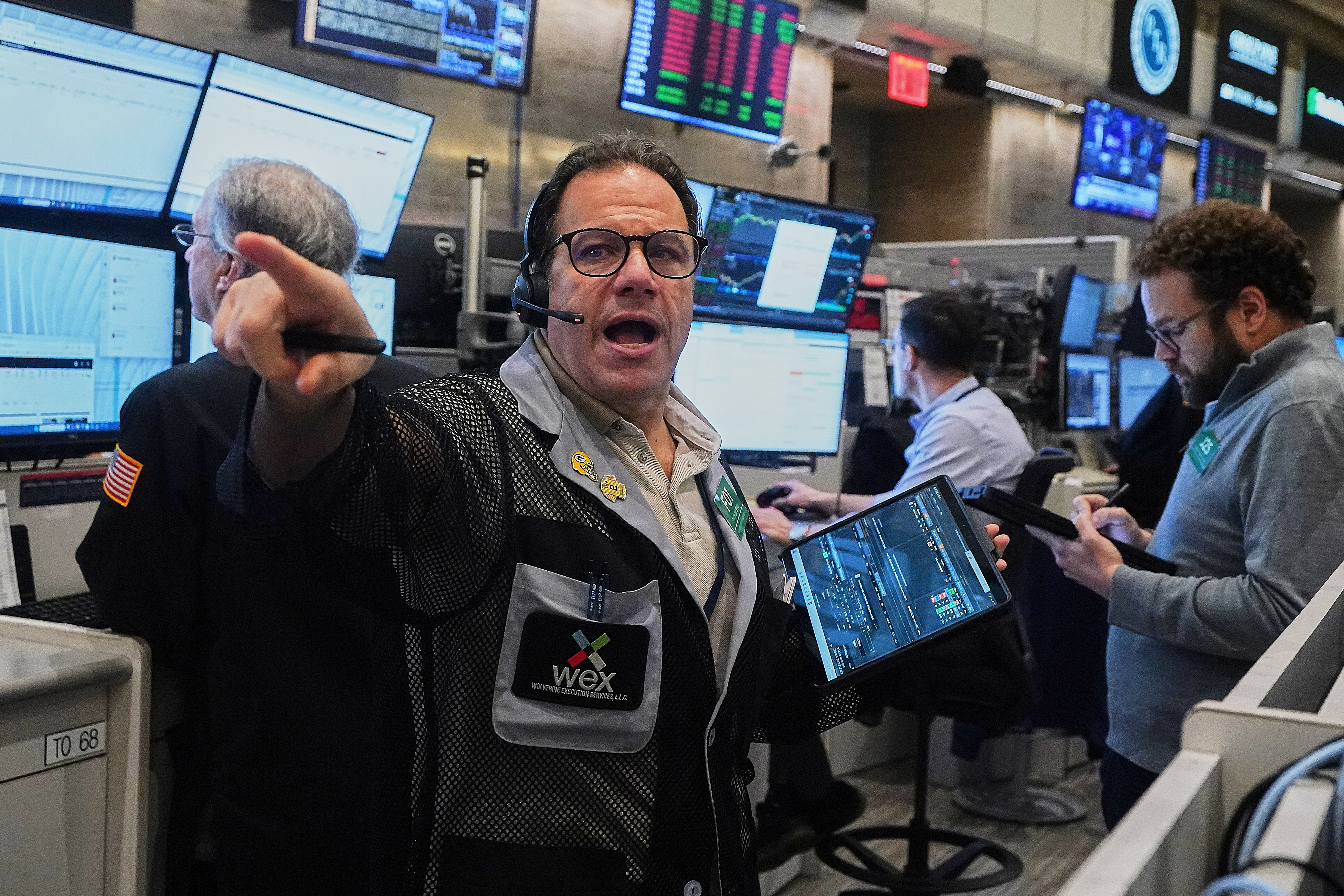
On Wall Street, the energy price spike amplified losses for sectors reliant on fuel. American Airlines and Southwest Airlines both saw their share prices decline, despite reporting quarterly profits that exceeded analyst expectations. The broader market was further weighed down by underperforming technology giants. Tesla shares tumbled 14.5% following a weaker-than-anticipated profit report, while Alphabet shares dropped 7.1%. Although Alphabet reported strong revenue growth, investors reacted to the company’s aggressive capital expenditure forecast, which saw investments double to nearly $45 billion as the firm intensifies its spending on artificial intelligence.
Market indices reacted sharply to the dual pressures of geopolitical tension and corporate earnings: the S&P 500 fell 1.2% to 7,408.30, potentially positioning the index for its first back-to-back weekly loss since March. The Dow Jones Industrial Average dropped 506.93 points to 51,711.65, and the Nasdaq composite declined 2.2% to 25,137.69.
Looking ahead, market focus remains on the Federal Reserve’s policy meeting scheduled for next week. Concurrently, diplomatic focus has shifted to the status of a U.S.-Saudi nuclear deal. President Trump confirmed on Thursday that this agreement, which covers civilian nuclear facilities and forbids the enrichment of material, is contingent upon Saudi Arabia joining the Abraham Accords. While the International Atomic Energy Agency has expressed readiness to support verification efforts for such a program, it confirmed that it has not yet received a formal request from the parties involved.
How significant is this development?
Contribute your assessment to the aggregated reader sentiment ledger.
Frequently Asked Questions
Key questions answered in this reportWhat is the key development in: Brent oil tops $100 per barrel, as tumbles for Tesla and Alphabet yank Wall Street lower?
Brent crude oil prices climbed past $100 per barrel amid Middle East volatility. Meanwhile, declining share prices for Tesla and Alphabet weighed on the S&P 500.
Why is this Business development significant for the UK?
This report covers critical events in our Business beat. Independent reporting monitors related UK statements, regulatory shifts, and public responses as further verified details emerge.
How was this reporting corroborated and verified?
Newsarchy UK compiles and cross-references reporting from primary reporting from apnews.com and cross-checked wire reports. All coverage adheres to published editorial standards.
When was this report published?
This briefing was published on July 24, 2026 and is permanently cataloged in the Newsarchy UK Business archives.