Linguists trace historical roots to determine the oldest English accent
Linguists are moving beyond popular assumptions to explore how regional dialects preserve ancient linguistic features that predate modern standard English.
- Core Development: Linguists are moving beyond popular assumptions to explore how regional dialects preserve ancient linguistic features that predate modern standard English.
- Beat Context: Categorized under Business with independent corroboration.
- Reporting Depth: 3 minute analytical read synthesized from verified newsroom sources.
The pursuit of the oldest English accent is less a hunt for a single, pristine relic and more an investigation into 1,500 years of migration, social stratification, and linguistic evolution. While popular culture often equates the southern-based Received Pronunciation with historical authority, linguists suggest that the roots of the English language are far more varied and geographically dispersed than the standard "BBC English" tradition might imply.
A Fragmented Origin
Modern English emerged following the arrival of Germanic tribes — the Angles, Saxons, and Jutes — beginning in the 5th century. This early period was marked by rapid fragmentation as newcomers established separate kingdoms, including Kent, Wessex, Sussex, Essex, East Anglia, Mercia, and Northumbria. Old English developed as a shifting blend of Germanic roots, Celtic remnants, and later, Scandinavian influences. By the 9th century, the linguistic map of England was heavily influenced by Danish rule in Yorkshire, the East Midlands, and East Anglia, while the Anglo-Saxons maintained strongholds in the southwest and West Midlands.
Media additions
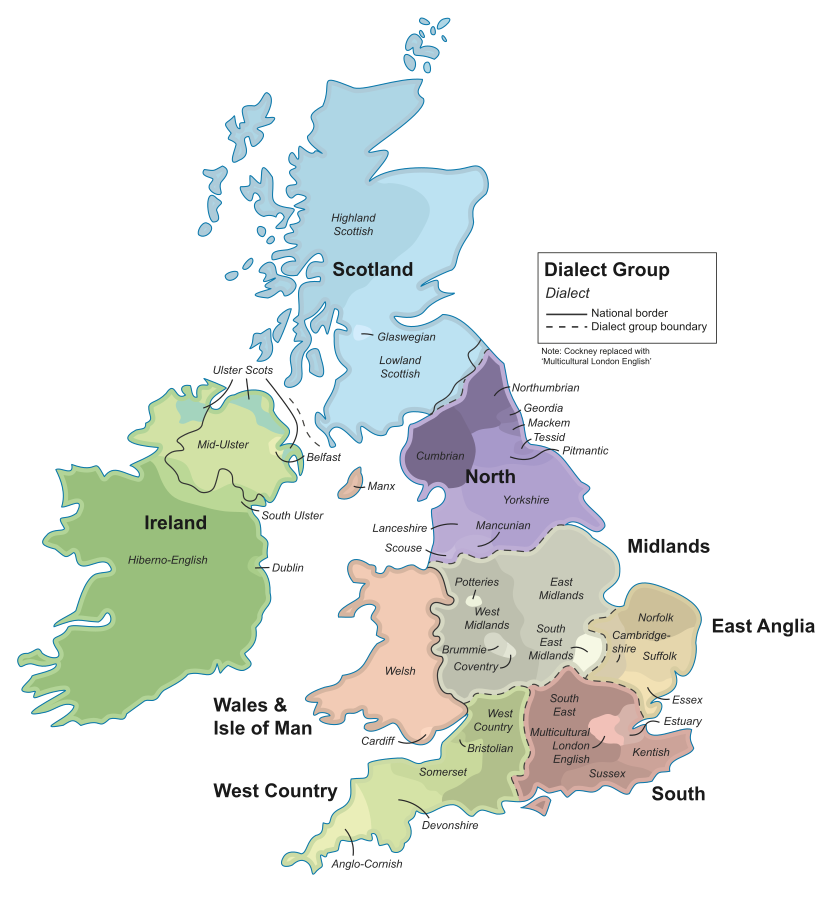
The search for the "oldest" sound often centers on "living fossils", archaic features preserved in regional speech that have been lost in the standard form. One prominent example is rhoticity, the heavy pronunciation of the "r" sound, which was common in early English and persists today in parts of the southwest of England, as well as in Scottish, Irish, and American dialects. Conversely, some argue that northern accents hold the title for antiquity. Linguists point to the "foot/strut" split as a defining rift: while the south shifted to a new "uh" vowel sound for "strut" around the 17th century, northern speakers retained the original short "oo" pronunciation, effectively preserving a sound that predates the southern innovation.
Social Influence and Standardisation
The perception of what constitutes a "correct" or "original" accent is inextricably linked to class. Following the Norman Conquest of 1066, French became the language of the elite, relegating English to a lower social status. It was not until the 15th century that English regained prestige, a shift accelerated by the introduction of the printing press to England in 1476. By standardising spelling, the press helped establish the dialect of the southeast as the basis for the written form, eventually paving the way for the development of Received Pronunciation, which only emerged as a distinct, prestige-associated accent in the 18th century.
Research indicates that this social hierarchy continues to influence how accents are perceived today. According to experts, southern voices are often rated higher on "status traits" such as wealth and intelligence, while northern and north-eastern accents frequently score higher on "solidarity traits" like trustworthiness. This bias is not merely academic; it remains a factor in housing and employment accessibility.
Comparative Linguistic Features
Tracing the evolution of these sounds requires understanding historical developments like the Great Vowel Shift, which occurred between the 12th and 18th centuries. The following characteristics highlight where different regions preserve ancient or diverging traits:
| Feature | Historical Context | Regional Persistence |
|---|---|---|
| Rhoticity | Original Germanic standard | Southwest England, Scotland, Ireland, USA |
| Foot/Strut Vowel | Original short "oo" sound | Northern England |
| Yod-retention | Older pronunciation (e.g., "Tuh-yews-day") | Received Pronunciation (traditional) |
Future Directions
Linguistic consensus emphasizes that no single region has remained static. Language is inherently dynamic, and while global media, increased social mobility, and immigration continue to introduce new speech patterns and blend existing varieties, regional diversity remains a core component of the linguistic landscape.
The ongoing competition between various language forms, as noted by linguists, suggests that the "oldest" accent is a shifting target rather than a fixed point in time, with regional speech continuing to act as a guardian of ancient linguistic fossils even as the language adapts to the needs of its current users.
How significant is this development?
Contribute your assessment to the aggregated reader sentiment ledger.
Frequently Asked Questions
Key questions answered in this reportWhat is the key development in: Linguists trace historical roots to determine the oldest English accent?
Linguists are moving beyond popular assumptions to explore how regional dialects preserve ancient linguistic features that predate modern standard English.
Why is this Business development significant for the UK?
This report covers critical events in our Business beat. Independent reporting monitors related UK statements, regulatory shifts, and public responses as further verified details emerge.
How was this reporting corroborated and verified?
Newsarchy UK compiles and cross-references reporting from primary reporting from bbc.com and cross-checked wire reports. All coverage adheres to published editorial standards.
When was this report published?
This briefing was published on July 12, 2026 and is permanently cataloged in the Newsarchy UK Business archives.