SpaceX Starship launch aborted due to engine failure during ignition
A technical failure involving the Super Heavy booster forced SpaceX to scrub the thirteenth Starship test flight, impacting both satellite deployment plans and stock value.
SpaceX Starship launch aborted due to engine failure during ignition
EXECUTIVE BRIEFKey Takeaways & Signal
Core Development: A technical failure involving the Super Heavy booster forced SpaceX to scrub the thirteenth Starship test flight, impacting both satellite deployment plans and stock value.
Beat Context: Categorized under Business with independent corroboration.
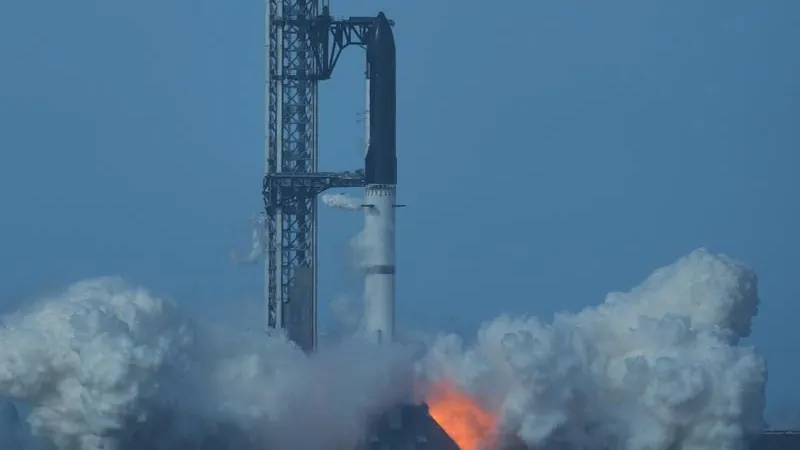
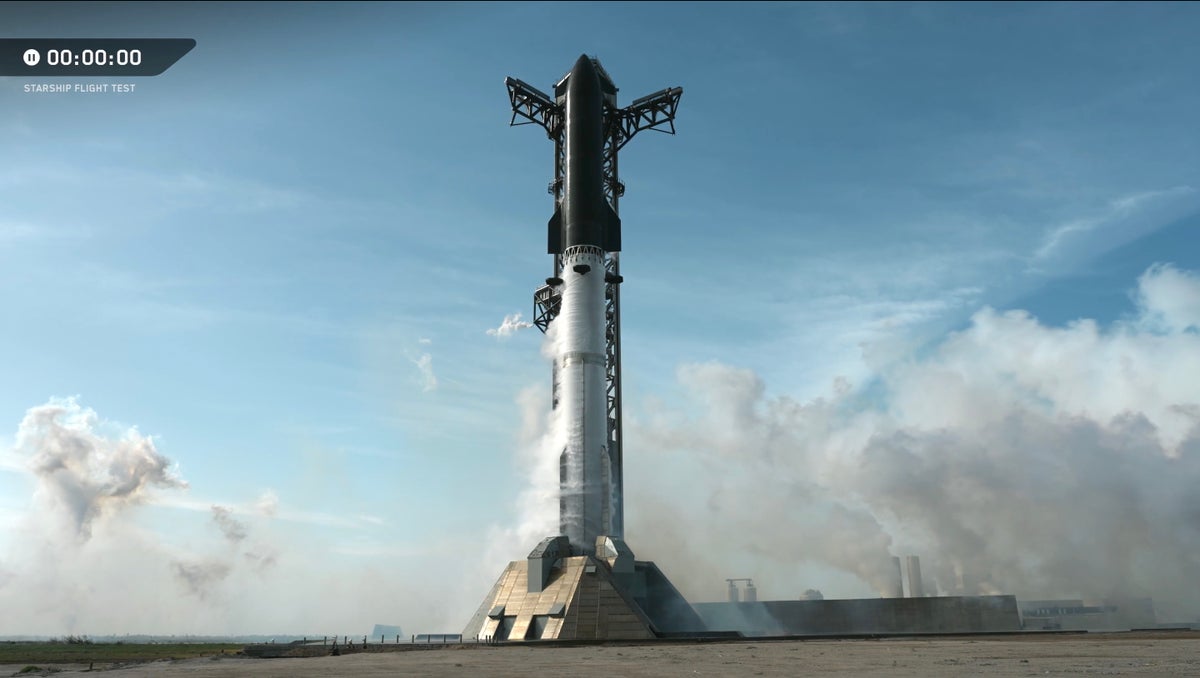
The thirteenth flight test of SpaceX’s Starship vehicle, the world’s largest and most powerful rocket, was aborted on 16 July at the company's Starbase facility in Boca Chica, Texas. The launch, which had been scheduled for 6:45 p.m. Eastern time, was suspended by the vehicle’s automated safety systems at the point of ignition.
Viewers watching the company's live webcast observed the abort as the Super Heavy V3 booster initiated its ignition sequence. While the SpaceX launch team did not immediately detail the technical cause during the broadcast, on-screen data displayed during the event indicated that four of the rocket's 33 Raptor engines failed to fire, causing the remaining engines to shut down and keeping the rocket secured to the pad. Dan Hewitt, a spokesperson for the company, confirmed the nature of the delay:
"We got all the way down to startup, triggered a hold on the booster, and that shut down the engines right as they were starting to ignite."
Image via yahoo.comImage via scientificamerican.comImage via spacenews.com
Dan Hewitt, spokesperson, via Yahoo News
Operational Impact and Next Steps
Following the abort, personnel began the process of draining propellant from the vehicle. In a statement released shortly after the event, Chief Executive Elon Musk announced that two Raptor engines will be removed and replaced to ensure the vehicle is prepared for a successful flight. While Musk indicated a preference for a new attempt within a few days, official scheduling remains fluid, with current expectations pointing to early next week.
The aborted launch also marks a point of tension for the company’s recent financial debut. According to Spacenews, the company's shares, which had been trading near $132, fell to nearly $125 within five minutes of the abort before seeing a slight rebound. This follows a broader trend in which the company's shares closed at $131.11, dipping below the initial public offering price of $135 for the first time.
Technological Goals
This mission represents the second flight of the upgraded Starship V3 configuration. The flight profile is intended to mirror the objectives of the previous mission, including a suborbital trajectory and a controlled splashdown for the Super Heavy booster in the Gulf of Mexico. Unlike previous tests that utilized mass simulators, this mission is carrying 20 functional Starlink V3 satellites.
These satellites are designed for significantly higher capacity—delivering 1 terabit per second of downlink bandwidth—but are currently too large to be launched on the company's existing Falcon 9 fleet. As International Business Times reports, the delay carries consequences for the company’s expanding user base, as the current satellite network faces increasing congestion. During the brief planned flight, the satellites were set to execute a "speed run" of deployment and communications testing before reentering the atmosphere.
Strategic Importance to NASA
The success of the Starship program is closely monitored by external stakeholders, specifically NASA. Under the Artemis program, the space agency relies on a lunar-lander variant of Starship to transport astronauts to the moon's surface. With the timeline for Artemis III targeted for next year, the ability of SpaceX to reach orbit and execute complex maneuvers remains a prerequisite for meeting these commitments. Despite these goals, a watchdog report published in March noted that the company is currently trailing NASA’s intended lunar timeline, leading the agency to fund alternative lander development through Blue Origin.
What to Watch Next
Engine Replacement: Technicians must successfully remove and replace the two identified Raptor engines on the Super Heavy booster.
Propellant Loading: The vehicle must undergo another full propellant-loading sequence for the next launch window.
Investor Sentiment: Market reaction following the aborted attempt and the subsequent rescheduled window.
Satellite Testing: If the next attempt proceeds, observers will watch for the deployment of the 20 Starlink V3 satellites and the accompanying heat-shield imaging tests.
READER INTELLIGENCE PULSE
How significant is this development?
Contribute your assessment to the aggregated reader sentiment ledger.
Click an option to register your anonymous assessment.
Frequently Asked Questions
Key questions answered in this report
What is the key development in: SpaceX Starship launch aborted due to engine failure during ignition?
A technical failure involving the Super Heavy booster forced SpaceX to scrub the thirteenth Starship test flight, impacting both satellite deployment plans and stock value.
Why is this Business development significant for the UK?
This report covers critical events in our Business beat. Independent reporting monitors related UK statements, regulatory shifts, and public responses as further verified details emerge.
How was this reporting corroborated and verified?
Newsarchy UK compiles and cross-references reporting from primary reporting from gizmodo.com and cross-checked wire reports. All coverage adheres to published editorial standards.
When was this report published?
This briefing was published on July 17, 2026 and is permanently cataloged in the Newsarchy UK Business archives.