Charitable Food Demand Stays Elevated as Costs Climb and Benefits Shrink
Charitable food organizations across the US report that high demand has become permanent as persistent cost pressures outpace wages and federal assistance programs undergo restrictive changes.
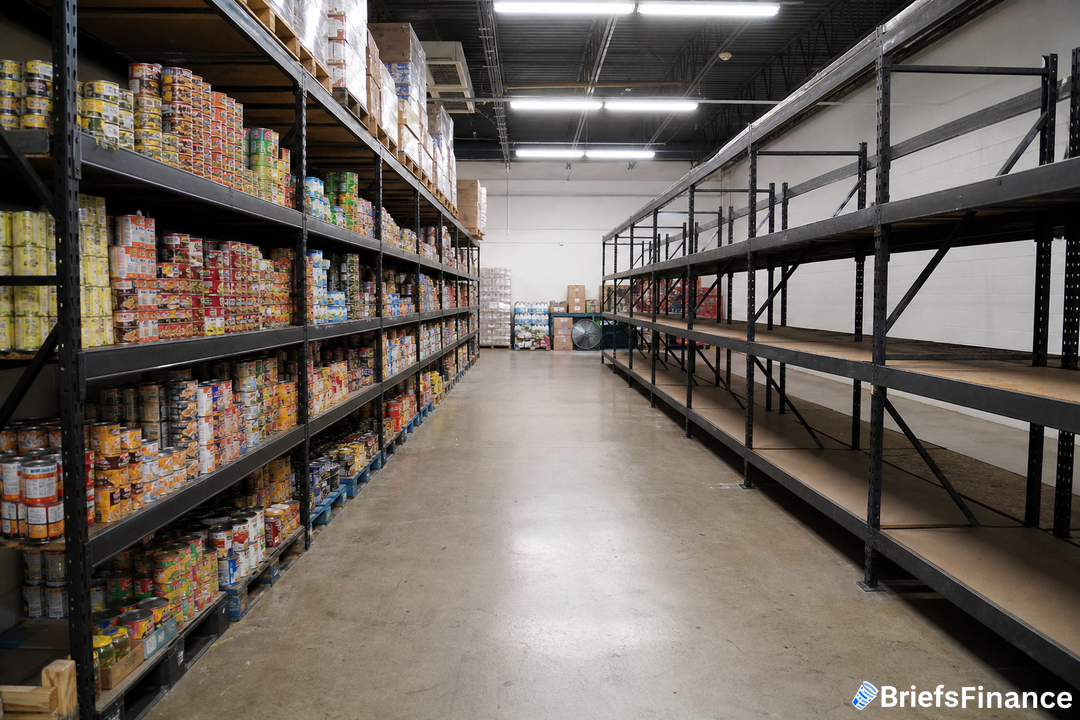
Charitable food demand remains severely elevated as persistent cost pressures outpace wages and federal benefit programs undergo restrictive changes.
Across the United States, charitable food organizations report that lines matching or exceeding pandemic-era peaks have become a permanent fixture rather than a temporary emergency. According to Briefs reporting, the United States Department of Agriculture documented that 13.7% of U.S. Households experienced food insecurity in 2024, surpassing every year from 2016 through 2021. Feeding America's Map the Meal Gap study, published on July 28, 2026, indicated that nearly 48 million people experienced food insecurity nationwide in 2024. Denis McDonough, CEO of Feeding America in Chicago, Illinois, stated that food banks continue answering acute, prolonged pressure according to Insurance Business Magazine.
Media additions
In New York City, City Harvest President Carlos Rodriguez reported that average monthly visits to pantries and soup kitchens sit 85% above pre-pandemic levels. He noted that roughly one in five residents currently experiences food insecurity, driven by wages failing to keep pace with living costs over the past five years. West Side Campaign Against Hunger leader Greg Silverman observed that working individuals, including city employees, regularly rely on food lines. Meanwhile, Plentiful CEO Catherine Compitello reported that the overwhelming majority of pantries utilizing the platform's reservation features operate at or over capacity. Compitello added that first-time pantry users in New York City climbed about 56% between August and October, representing the second-largest autumn spike since 2016.
Policy changes to federal assistance programs have compounded these pressures. Ashley Spires, Director of Philanthropy at Harvest Hope Food Bank in South Carolina, told South Carolina Public Radio that ongoing adjustments to Supplemental Nutrition Assistance Program benefits following last year's historic government shutdown left many recipients with reduced aid. In New York, City Harvest estimated that at least 8.7% of SNAP recipients lost benefits over the past year following work certification requirements and eligibility changes advanced by congressional Republicans and President Donald Trump. In Los Angeles County, roughly 260,000 CalFresh recipients faced broadened federal work rules implemented in June, introducing additional uncertainty for strained households according to a Los Angeles Regional Food Bank spokesperson.
At the same time, charitable food providers face shrinking operational resources and inflating expenses. Amy Breitmann, CEO of Golden Harvest Food Bank, noted that all food streams are down, including individual donations, retailer and farmer contributions, and USDA federal commodities, while bulk purchasing and diesel expenses have climbed. A Los Angeles Regional Food Bank spokesperson reported that refrigerated trucking and delivery expenses spiked in September after its diesel bill more than doubled. In Greater Atlanta, Atlanta Community Food Bank President and CEO Kyle Waide explained that over 60% of clients earn incomes exceeding strict state SNAP gross income caps, typically falling in the mid-to-upper $30,000 range, leaving them dependent on private charity despite not qualifying for federal assistance.
| Organization / Region | Reported Metric or Finding | Attribution / Source |
|---|---|---|
| Harvest Hope Food Bank (South Carolina) | Sustained high demand and reduced benefit amounts following SNAP disruptions | Ashley Spires, via South Carolina Public Radio |
| City Harvest (New York City) | Monthly pantry visits 85% above pre-pandemic levels; 1 in 5 residents food insecure | Carlos Rodriguez, via Briefs |
| Atlanta Community Food Bank | Serves roughly 270,000 households monthly; over 60% of clients exceed SNAP income limits | Kyle Waide, via Briefs |
| Feeding America | Nearly 48 million people experienced food insecurity in the US in 2024 | Denis McDonough, via Insurance Business Magazine |
Private philanthropy has stepped in to offset shortfalls. On November 23, 2026, the Nationwide Foundation committed $11 million in year-end grants, pushing its total 2026 giving past $50 million. Funded by Nationwide, the foundation directed approximately $8 million of that round to the Feeding America network across 24 food banks, while the remainder supports emergency shelters. Nationwide Foundation President Chad Jester noted that the funding responds directly to urgent conditions on the ground. This support arrives as corporate sustainability practices increasingly incorporate environmental, social, and governance due diligence, with Crawford & Company reporting that a significant share of global insurance claims leaders value sustainability and community investment when selecting commercial partners.
What Happens Next
- Food bank networks including Harvest Hope and the Atlanta Community Food Bank continue year-round fundraising and grant writing to maintain continuous food supplies without relying solely on traditional November and December food drives.
- Foundations and corporate donors plan to maintain distributions through established nonprofit networks rather than building new delivery infrastructure throughout 2027.
- Food security advocates prepare for elevated demand to persist as federal benefit rules remain tight and broader cost-of-living pressures continue to outpace household wages.