Lebanese President Aoun proposes extending UN peacekeepers during withdrawal
Lebanese President Joseph Aoun proposed extending the mission of United Nations peacekeepers during a phased withdrawal to prevent a security vacuum.
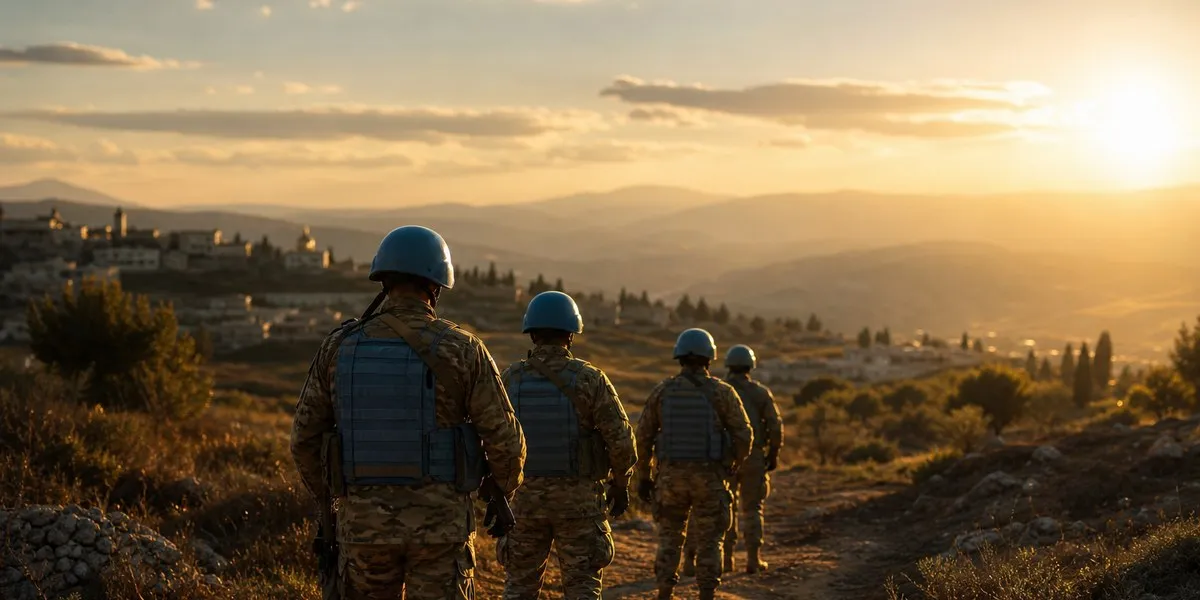
Lebanese President Joseph Aoun proposed extending the mission of United Nations peacekeepers during a phased withdrawal to prevent a security vacuum, as regional diplomatic efforts continued against a backdrop of ongoing hostilities and international disagreement.
The proposal emerged during discussions in Beirut, where Anadolu Agency reported that Aoun met with Jens Plötner, State Secretary at Germany’s Federal Ministry of Defence. Aoun emphasized that any successor forces must operate under the legal basis of UN Security Council Resolution 1701. According to reporting from Tass, the Lebanese president stated that Lebanon is keen to end hostilities and implement the Washington-brokered framework agreement signed on June 26.
Media additions

That framework agreement envisions the gradual restoration of Lebanese state control across the south alongside an Israeli troop withdrawal. However, implementation has stalled. As NewsCord and Naharnet reported, Aoun publicly asserted that Israel has failed to abide by the terms of the agreement, citing ongoing military operations and delays in withdrawal. Beirut remains in a holding pattern while awaiting the formation of a new Israeli government to determine future policy compliance, according to those reports.
The wider diplomatic architecture remains fraught with contradictions. While Washington has engaged in bilateral mediation — highlighted by White House talks covered by Al Jazeera — US and Israeli officials have frequently maintained that Lebanon was distinct from broader regional ceasefire understandings involving Iran. Conversely, Tehran and various intermediaries have insisted that all fronts, including Lebanon, must be included in cessation-of-hostility frameworks, as detailed by DW.com.
As detailed by Anadolu Agency, the UN Security Council adopted Resolution 2790 on August 28, 2025, extending the mandate of the United Nations Interim Force in Lebanon for the last time until December 31, 2026, with a phased withdrawal planned for 2027. UN peacekeepers have operated in southern Lebanon since 1978, with their mandate significantly expanded under Resolution 1701 in 2006 to monitor hostilities and support the deployment of the Lebanese army south of the Litani River.
During discussions in Beirut, Aoun noted that the framework agreement provides for expanding the powers of the Lebanese army, though he stressed that the military still requires international military support. Plötner stated that southern Lebanon's reconstruction depends on consistent progress toward stability, adding that Germany will contribute through a European support mission to establish a legal basis for continued bilateral cooperation and support for the Lebanese Navy.
The domestic political landscape in Lebanon intersects directly with these international efforts. Aoun has pursued goals that include the withdrawal of Israeli forces from the south, the deployment of the Lebanese army, the return of displaced people, the release of detainees, and placing weapons under state authority, as aggregated by NewsCord. While the Lebanese presidency highlighted appreciation for French assistance, including efforts by a delegation led by Valérie Pécresse involving school grants and municipal twinning agreements, tensions persist over Hezbollah's role. Hezbollah has criticized Aoun's direct talks with Israel, while Aoun has accused the group of dragging Lebanon into war on behalf of Iran, maintaining that the Lebanese military must be the sole armed force in the country.
| Entity / Source | Stance on Lebanon in Ceasefire / Framework | Key Action or Position Reported |
|---|---|---|
| Lebanese Presidency (TASS / Naharnet) | Seeks comprehensive end to hostilities and Israeli withdrawal; cites non-compliance. | Proposed extending UNIFIL duties during withdrawal to prevent a security vacuum. |
| United States Administration (Al Jazeera / DW.com) | Maintained that Lebanon was treated separately from specific Iran-focused understandings. | Brokered framework agreements while offering no definitive timeline for Israeli withdrawal. |
| Iranian Officials (DW.com / NBC News) | Insisted that cessation understandings must apply to all fronts, including Lebanon. | Warned that commitments would not be honored if military operations in Lebanon continued. |
What to Watch Next
- The official formation of the new Israeli government and its subsequent policy signals regarding the June framework agreement.
- Decisions by the UN Security Council regarding the operational modalities of the peacekeeping mandate as the December 31 deadline approaches.
- Further diplomatic talks in Washington and alternative venues concerning regional security arrangements and bilateral transit developments.