UK bans Iran's Revolutionary Guard and IMCR after Jewish site attacks
Home Secretary Shabana Mahmood announced that supporting the IRGC is now a criminal offense in the UK, punishable by up to 14 years in prison. The decision follows a series of arson and vandalism attacks on British Jewish sites.
- Core Development: Home Secretary Shabana Mahmood announced that supporting the IRGC is now a criminal offense in the UK, punishable by up to 14 years in prison. The decision follows a series of arson and vandalism attacks on British Jewish sites.
- Beat Context: Categorized under Transport with independent corroboration.
- Reporting Depth: 3 minute analytical read synthesized from verified newsroom sources.
The United Kingdom government formally designated the Islamic Revolutionary Guard Corps (IRGC) as a threat to national security. This move, announced by the Home Secretary, prohibits support for the organization, which has been linked to intimidation and death threats within Britain. The government simultaneously proscribed the Islamic Movement of the Companions of the Right (IMCR)—also known as Harakat Ashab al-Yamin al-Islamia—and the volunteer corps of Russia’s foreign military intelligence agency, the GRU.
The legal instrument imposes significant penalties for those found to be assisting the IRGC or expressing positive opinions regarding the group. Under the new measures, such actions constitute an offence punishable by up to 14 years in prison. The decision follows a series of arson and vandalism attacks targeting the Jewish community in Britain. The government stated that the IMCR is responsible for seven separate attacks in the U.K., including incidents involving synagogues and Jewish charity ambulances, as well as a Persian-language media organization identified as critical of the Iranian government.
Media additions
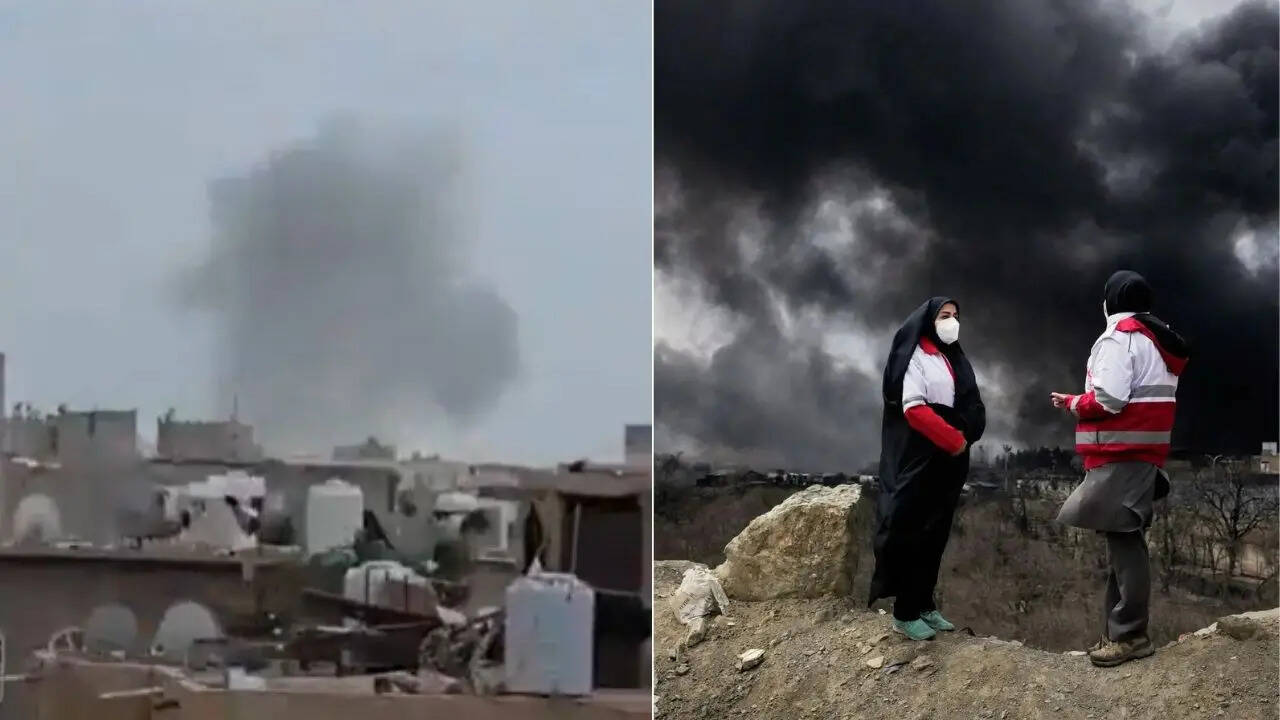
According to the Security Minister, members of the IRGC’s Qods Force, acting as an expeditionary unit, were almost certainly responsible for directing these proxy attacks across Europe. Intelligence experts and law enforcement officials report that Iran-backed proxy groups are increasingly recruiting members of criminal organizations to execute sabotage and attacks against European targets, particularly those associated with the Jewish community and Persian-language media. The IMCR, which reportedly emerged online earlier this year, has also claimed responsibility for synagogue attacks in Belgium and the Netherlands. While the recent blazes in Britain resulted in no reported injuries, the broader campaign of intimidation has prompted an intensified domestic response.
The UK’s move arrives as military hostilities between the United States and Iran escalate across the Middle East. Following a weekend of US operations against Iranian air defence systems, coastal radar, missile and drone capabilities, and naval assets, the IRGC launched retaliatory strikes against US military facilities. Iran claimed to have struck sites in Bahrain and Kuwait, radar installations in Oman, and fuel and ammunition depots at Prince Hassan Air Base in Jordan. The Jordanian military subsequently confirmed that its air defence systems intercepted and destroyed four missiles entering its airspace.
The surge in regional conflict has centred on the Strait of Hormuz, a critical energy corridor. Tehran announced the closure of the waterway following the strikes, further challenging the status of an interim US-Iran agreement intended to keep the route open. Tensions are reflected in shipping data; on Sunday, transit through the Strait of Hormuz dropped to its lowest level in five weeks, with only six vessels passing through the waterway. The volatility has affected global markets, with reports indicating a rise in oil prices amid fears of potential supply disruptions. The situation remains fluid as both nations assert control over the maritime passage, complicating regional stability and international diplomatic efforts to facilitate a ceasefire.
Diplomatic channels have not entirely collapsed, with the Iranian Foreign Ministry reporting ongoing mediation efforts with Washington. However, Iran maintains that it will not honour commitments under the memorandum of understanding with the US unless Washington fulfils its own obligations. Meanwhile, Iran continues to face domestic unrest, with human rights reports noting an intensified crackdown on the Baha'i community, including allegations of imprisonment, forced confessions, and persecution. As regional maritime and military exchanges continue, authorities in nations including Bahrain and Kuwait remain on high alert, with missile sirens and air defence activations reported as part of the broader, unfolding conflict.
How significant is this development?
Contribute your assessment to the aggregated reader sentiment ledger.
Frequently Asked Questions
Key questions answered in this reportWhat is the key development in: UK bans Iran's Revolutionary Guard and IMCR after Jewish site attacks?
Home Secretary Shabana Mahmood announced that supporting the IRGC is now a criminal offense in the UK, punishable by up to 14 years in prison. The decision follows a series of arson and vandalism attacks on British Jewish sites.
Why is this Transport development significant for the UK?
This report covers critical events in our Transport beat. Independent reporting monitors related UK statements, regulatory shifts, and public responses as further verified details emerge.
How was this reporting corroborated and verified?
Newsarchy UK compiles and cross-references reporting from primary reporting from timesofindia.indiatimes.com and cross-checked wire reports. All coverage adheres to published editorial standards.
When was this report published?
This briefing was published on July 13, 2026 and is permanently cataloged in the Newsarchy UK Transport archives.