Colombian Forces Rescue Hostages After 17-Hour Supermarket Siege in Cartagena
Colombian security forces ended a 17-hour hostage crisis at a Cartagena supermarket, successfully rescuing all captives and neutralizing one captor.

Colombian security forces ended a 17-hour hostage crisis at an Éxito supermarket in Cartagena early on Wednesday, November 25, rescuing every captive held inside and killing one of the captors in a pre-dawn assault that capped a day of extraordinary security pressure on President Abelardo de la Espriella.
The siege began on Tuesday morning after a botched attempt to rob an armored cash-in-transit vehicle outside the Paseo de La Castellana shopping corridor. Cornered by police, five hooded, armed men forced their way into the supermarket and took approximately 30 employees and shoppers captive, according to reporting carried by Latin Times. Negotiators secured the release of ten hostages during the day, including several elderly women, leaving roughly 20 people inside as night fell.
Media additions
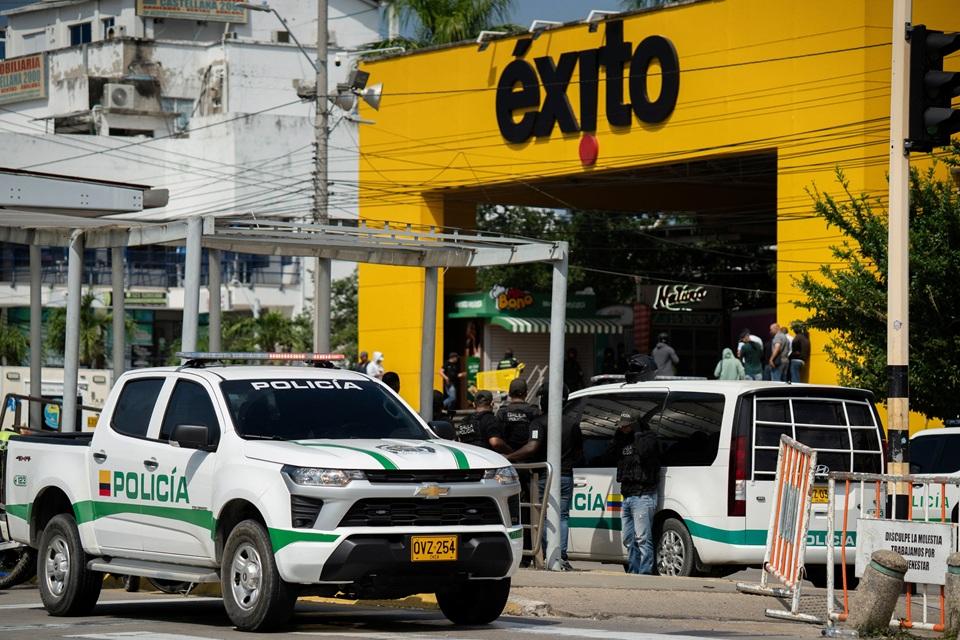
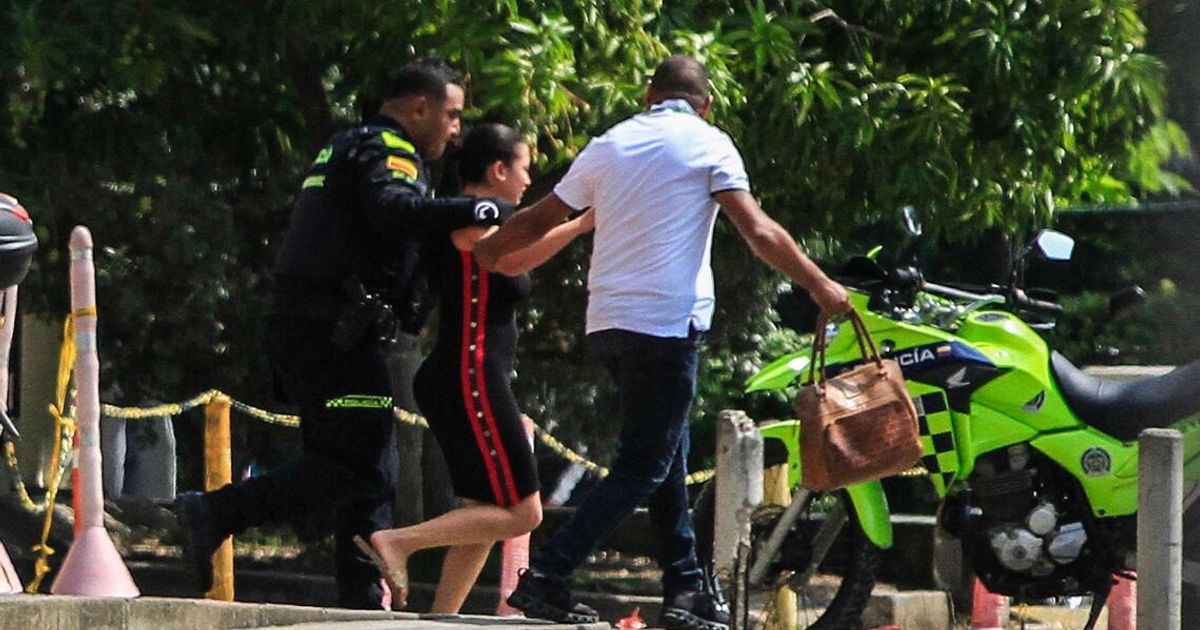

Shortly after midnight, a police helicopter hovered low over the shopping center while tactical teams massed outside. Several explosions echoed through the complex before forces entered the building. Soldiers were later seen inside the Exito supermarket securing the area.
President de la Espriella, who had travelled to Cartagena after visiting Villavicencio following an overnight car bombing, authorized the operation after reviewing the situation with senior military and police officials. Speaking on camera at the scene at 1:30 a.m., he confirmed that all hostages had been rescued.
"In an extraordinary joint operation between the National Police and the Armed Forces, all the hostages have been successfully rescued."
President Abelardo de la Espriella, via Jetss
"This operation was absolutely flawless ... One of the criminals was neutralized."
President Abelardo de la Espriella, via GMANetwork
The president described the captors as criminals caught off guard by a swift police response rather than members of a terrorist organization. He said authorities had given the hostage-takers an opportunity to surrender and free the hostages, but acted decisively after they refused.
| Measure | Figure | Source |
|---|---|---|
| Hostages initially taken | About 30 | Jetss, GMANetwork, Straitstimes |
| Released during negotiations | 10 | Jetss, Straitstimes, News.az |
| Remaining inside before raid | Roughly 20 | Jetss, Straitstimes |
| Duration of siege | 17 hours | Jetss, Latin Times |
| Captors killed | 1 | Jetss, GMANetwork, Straitstimes |
| Captors taken into custody | 4 | Latin Times |
| Airport landing suspension | About 45 minutes | GMANetwork, News.az, The City Paper Bogotá |
Cartagena’s mayor said the rescued hostages were safe and would be reunited with their families after medical evaluations. As sunrise broke over the Caribbean port, freed hostages were escorted from the Metropolitan Police Command headquarters, where they received medical evaluations and psychological support.
The crisis unfolded against a backdrop of wider instability. Hours before the supermarket siege ended, de la Espriella was in Villavicencio, the capital of the central department of Meta, where a car bomb near government offices injured 22 people and damaged about 500 properties, including homes and businesses. The government blamed the blast on dissidents from the former FARC rebels who reject the 2016 peace deal. The president warned those responsible that they would answer for every drop of blood spilled.
For more than 60 years, Colombia’s left-wing rebel groups have battled the government and right-wing paramilitaries turned crime gangs in a civil war fueled by the cocaine trade. The 2016 peace deal brought some respite, but crime gangs remain hugely powerful and smaller rebel groups persist.
Grupo Exito, the supermarket chain, said in a statement that protecting people’s lives and safety is its priority. The Rafael Núñez airport in Cartagena briefly suspended landings as the armed forces used one of its runways in connection with the incident, reopening about 45 minutes after the suspension.
The siege gripped Cartagena, a Caribbean port famed for its colonial walled old town, beach resorts and cruise-ship tourism. Supermarket employees had been among those feared trapped inside. Jacob Perez, the father of one worker, told AFP earlier in the standoff that his son had not left work and was not answering his phone.
Images broadcast by Colombian media and shared on social media appeared to show masked gunmen in tactical gear carrying long guns alongside zip-tied hostages inside the store. Reuters could not immediately independently verify the images.
Local media reported that the hostage-takers were demanding nearly US$2 million, two armored vehicles and safe passage to the city of Barranquilla, about 130 kilometers north-east of Cartagena. The siege unfolded on the 10th anniversary of Colombia’s landmark peace accord with FARC guerrillas and a series of attacks across the country.
Late on November 23, authorities blamed a dissident FARC faction for a car bomb attack in Villavicencio that wounded 25 people and caused extensive damage, according to Straitstimes. Separately, the presidency said a “terrorist attack” on electrical infrastructure had disrupted power supplies in several south-western departments.
De la Espriella went to Cartagena after visiting Villavicencio following the overnight car bombing the government blamed on FARC dissidents. He appeared at the scene wearing fatigues and carrying a sidearm and a radio, describing the operation as a roaring success and congratulating the members of the National Police and Armed Forces who participated.
“When the State makes up its mind, it never loses,” de la Espriella said. “Anyone who seeks to bring the State, the Government or working citizens to their knees will find a lethal response from this Government and our Public Forces.”
What to watch next
- Investigators will examine how the armed men accessed the supermarket’s restricted staff entrance without triggering internal security protocols, a question Colombian authorities have not yet addressed publicly, according to Latin Times.
- The government faces pressure to launch a decisive offensive against FARC dissident commander Antonio Medina and the Estado Mayor Central following the Villavicencio car bombing.
- Authorities must determine whether preexisting intelligence about a planned attack on the armored vehicle was relayed to the retail chain or its security contractor.
- The four remaining suspects taken into custody will face judicial processing as the government pursues its stated policy of confronting criminal and armed organizations through forceful deployment of the state.
The Cartagena operation represents a significant test for the new government. A hostage situation involving some 30 people in a busy commercial district in a city that depends on tourism could have ended in a devastating loss of life. Instead, every captive was freed, and no hostage or security-force member sustained serious injury.
For de la Espriella, the message to Colombians is unmistakable: the state will not surrender authority to any criminal group. In Cartagena, at least, that message was accompanied by the safe return home of every hostage.
Read more international developments in our World coverage, including Russian strikes near Kyiv and Israeli strikes in Gaza.