US unveils proposed tariffs on major partners, including EU and China
The United States has proposed new tariffs on 14 trading partners, including China and the European Union, following an investigation into excess industrial capacity.
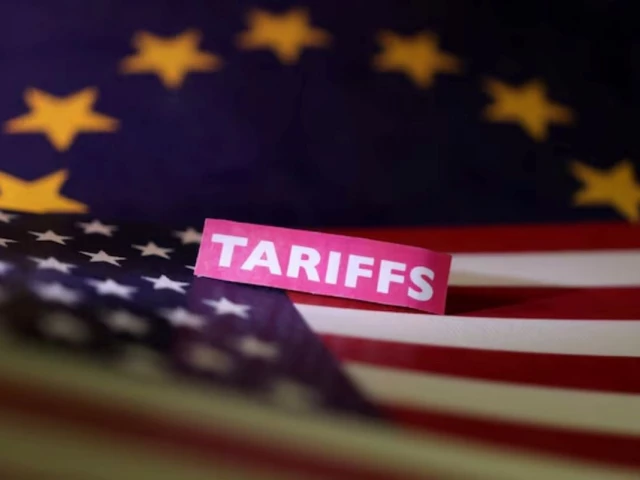
The United States has proposed new tariffs on 14 trading partners, including China and the European Union, in a move that revives a trade agenda previously blocked by the Supreme Court.
The duties, announced on Wednesday, follow an eight-month investigation by the Office of the US Trade Representative into alleged excess industrial capacity. Washington argues that targeted economies are promoting production beyond market demand, flooding global markets with cheap goods and undercutting American producers.
Media additions

The proposal marks President Donald Trump’s most significant attempt to restore his tariff programme after the Supreme Court struck down sweeping duties imposed under emergency powers in February. The administration is now proceeding under Section 301 of the Trade Act of 1974, which allows Washington to counter foreign trade practices deemed unfair or burdensome to US commerce.
| Economy | Proposed rate | Notes |
|---|---|---|
| China | 20%, potentially rising to 40% | Could stack on top of existing 2018 tariffs; trade truce expires January 2027 |
| Vietnam | Up to 35% | Among the highest proposed rates |
| India | Up to 25% | No finalised trade deal with the US |
| Taiwan | Up to 25% | Subject to a 15% cap under existing trade deal |
| European Union | Up to 20% | Capped at 15% under existing agreement |
| Japan | Up to 20% | Capped at 15% under existing agreement |
| Switzerland | Up to 20% | |
| Singapore | Up to 20% | Could be adjusted to 10% if reciprocal trade agreement is reached |
| Bangladesh | Up to 20% | |
| Cambodia | Up to 25% | |
| Indonesia | Up to 25% | |
| South Korea | Up to 25% | Capped at 15% under existing agreement |
| Malaysia | Up to 25% | Capped at 19% under existing agreement |
| Thailand | Up to 25% |
The full list of economies covered includes China, the European Union, India, Bangladesh, Cambodia, Indonesia, Japan, South Korea, Malaysia, Singapore, Switzerland, Taiwan, Thailand and Vietnam. Mexico and Norway were investigated but not included in the announcement, with the US Trade Representative’s office still reviewing excess capacity probes into both countries.
China faces the most severe treatment. The proposed 20% excess-capacity tariff would sit on top of roughly 25% tariffs imposed during Trump’s first term, though a 20% cap agreed under a bilateral trade truce remains in place until it expires on January 10, 2027. According to reporting by CNBC, the new duties could jump to 40% if Beijing fails to honor commitments made under a trade truce reached in Busan, South Korea, in October 2025. The US Trade Representative’s office has also exempted approximately US$30 billion worth of Chinese imports from the newly proposed duties, as tariff reductions on those items are under review through a bilateral process.
Beijing has rejected the overcapacity allegations. China’s foreign ministry said on Wednesday that the so-called overcapacity “does not really exist,” arguing that its exports reflect competitive advantages rather than state distortion. A senior US official said Washington did not expect Beijing to retaliate against the new duties, adding that Trump’s meeting with Chinese President Xi Jinping last week went well and that both sides are seeking stable relations.
The proposed tariffs will not stack on top of existing duties for most economies, except for China. They will also not be added on top of the 10% to 12.5% tariffs imposed in July on roughly 60 trading partners over alleged failures to prevent forced labour. Where both sets of tariffs apply, the higher rate would prevail. Exemptions are planned for energy products such as oil and gas, food that cannot be grown in the US, critical minerals, fertilizers, and certain semiconductor chips and pharmaceuticals.
Rates for countries that have already negotiated trade deals will remain within agreed caps. The European Union, Japan, South Korea and Taiwan face a 15% ceiling, while Malaysia is capped at 19%. Several countries, including India and Vietnam, do not yet have finalised trade deals with Washington.
The new levies come three weeks after Democrats won control of both houses of Congress in the November midterm elections, in part by campaigning on cost-of-living pressures worsened by tariffs. A Reuters/Ipsos opinion poll following the elections showed 62% of respondents would support efforts to repeal the tariffs. US consumer inflation came in at 3.7% year-on-year in September, close to a three-year high.
The duties could add further pressure on US businesses already squeezed by earlier tariffs, with firms now likelier to pass on costs to consumers. US Federal Reserve policymakers, responsible for keeping inflation to a long-term 2% target, say that most price effects of Trump’s previous tariff rollout have passed through the economy, but any new levies could push prices up further.
The tariffs are subject to a public notice and comment period, with a hearing scheduled before they go into effect. Specific country-wise rates are expected to be published in the US Federal Register, and implementation could be pushed into January 2027 at the earliest. Countries that negotiate with the administration could see reduced rates, while those that do not respond could face higher rates.
The announcement comes as Trump prepares to host G20 leaders in Miami in December. A senior US official said the administration does not expect the tariffs to create tension at the summit and suggested more agreements could be signed in their wake.
Trade lawyer Ryan Majerus, a partner at King & Spalding and a former US trade official under Trump and President Joe Biden, described the excess capacity probe as among “the most important” actions for the administration. He warned that factories with excess capacity start operations abroad and “never get turned off, even if there’s no demand,” potentially leading to oversupply, depressed prices and a “hollowing out” of US manufacturing.
Critics argue the move will not lower costs or bring jobs home. Alex Jacquez, chief of policy and advocacy at the left-leaning think tank Groundwork Collaborative, said the latest wave of tariffs would be “another source of uncertainty for an economy that is already wobbling” and would continue to raise costs for families. Nathaniel Halvorson, a partner with Baker McKenzie and a former US trade official, said trade policy does not line up neatly along party lines and that Congress has generally been willing to let the executive make costly political decisions.
Overcapacity concerns affect a range of sectors, from batteries to cement, chemicals to processed food.
What to watch next
- The US Trade Representative’s office is expected to publish specific country-wise tariff rates in the US Federal Register.
- A public notice and comment period, followed by a hearing, will precede implementation.
- Tariffs could take effect in January 2027 at the earliest.
- The US-China trade truce cap expires on January 10, 2027.
- The G20 Leaders’ Summit in Miami in December could produce additional trade agreements.
- US Trade Representative reviews into excess capacity probes for Mexico and Norway remain ongoing.
The administration’s legal strategy now rests on Section 301 rather than the emergency powers rejected by the Supreme Court. Section 301 allows for tariffs that expire after four years but can be renewed. A legal challenge to the July forced-labour tariffs is being considered by the US Court of International Trade.
For affected economies, the proposal adds pressure to ongoing trade negotiations. India and Vietnam are among the countries that have not yet finalised trade agreements with the US, and Washington has indicated the latest tariff proposal could help speed up negotiations, with the possibility of more deals being finalised around the G20 summit.
Read more: World coverage | Trump lands in China for trilateral summit with Xi and Putin


