Donald Trump threatens to seize Strait of Hormuz as US war with Iran grinds on
Donald Trump threatened to declare the Strait of Hormuz a United States territory, escalating the ongoing conflict with Iran that has disrupted global shipping.

- Core Development: Donald Trump threatened to declare the Strait of Hormuz a United States territory, escalating the ongoing conflict with Iran that has disrupted global shipping.
- Beat Context: Categorized under World with independent corroboration.
- Reporting Depth: 4 minute analytical read synthesized from verified newsroom sources.
Donald Trump has threatened to declare the Strait of Hormuz a territory of the United States, escalating a conflict that has ground global shipping to a virtual halt.
Speaking on Friday at a police academy in suburban Long Island, New York, Donald Trump claimed that Washington would take over the vital petroleum artery after defeating Tehran. According to reporting from the Mirror, the American president asserted that the waterway had essentially already become a United States territory through an ongoing naval blockade. "No ships get through unless we want them to," Trump told the crowd, defending the military campaign as a service to the global community.
Media additions
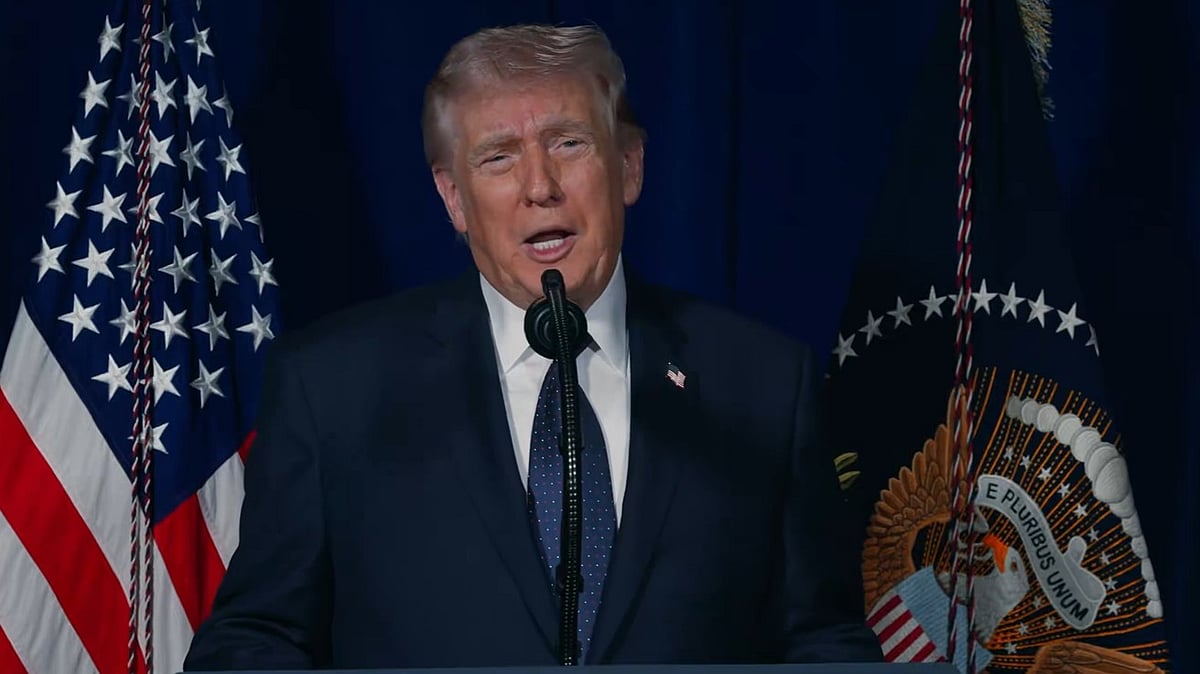
The remarks followed a social media post earlier in the week where Trump wrote that the United States had total control over the strait and would keep it. Observers and reporters have questioned whether the territorial threat represents a concrete policy shift or an unplanned rhetorical detour. The Free Press Journal noted that incorporating the lengthy waterway into American jurisdiction would require overriding international law, disregarding the territorial waters of Oman and the United Arab Emirates, and militarily occupying the Iranian coastline.
Tehran swiftly rejected the takeover threat. Iranian Deputy Foreign Minister Kazem Gharibabadi posted on X that the strategic route would remain under Iranian command until Washington acknowledges defeat. As reported by The Business Standard, Gharibabadi dismissed the presidential statements directly, writing that the strait cannot be seized by a tweet, an aircraft carrier, an order, or an election speech.
Iranian Foreign Minister Abbas Araghchi added that Tehran has not decided to resume peace talks with the United States. Speaking to Iranian outlet Shahrara News, Araghchi stated that Washington must meet specific conditions regarding the waterway before shipping can resume. President Masoud Pezeshkian also blamed domestic inflation on the ongoing American blockade of Iranian ports and sanctions on oil exports.
The military confrontation began on 28 February, when the United States and Israel launched a joint campaign of bombardment against Iran. The resulting stalemate has heavily disrupted the Strait of Hormuz, a chokepoint through which a significant share of global oil supplies historically travels. Ship-tracking data from Kpler indicates that daily traffic has collapsed from more than one hundred vessels before the conflict to just a handful. Analysis shows that only two vessels traversed the strait on Friday, neither carrying crude oil, while ship-tracking figures cited by the Free Press Journal placed the daily count at nine.
Vessels attempting to navigate the passage without Iranian authorization face severe danger. The United Arab Emirates reported that three vessels operated by the Abu Dhabi National Oil Company were attacked in the strait, while the United Kingdom Maritime Trade Operations Centre noted that a bulk carrier was struck in the hull by an unknown projectile. Meanwhile, Yemen's internationally recognized government stated that Iran-backed Houthis fired six ballistic missiles at the Red Sea port of Mocha, killing four civilians.
The economic fallout has rippled through global markets and domestic politics. Crude oil futures rose on Friday, with benchmark Brent futures heading for a significant weekly gain. Gasoline prices in the United States have climbed sharply, becoming a central campaign issue ahead of the November midterm elections. According to data from the American Automobile Association cited by The Business Standard, the average price of a gallon of gasoline reached approximately $4.08, marking an increase from the previous year. Treasury Secretary Scott Bessent announced that further financial measures and sanctions against Iran are scheduled to be revealed.
Despite facing an unprecedented slump in approval ratings and voter discontent over inflation, Trump remained unapologetic about the economic cost. He urged Americans to accept paying slightly higher prices for fuel to prevent what he termed an evil nation from acquiring nuclear weapons.
Key Developments and Current Status
- Conflict Timeline: The war initiated by the US and Israel entered its sixth month with no formal peace agreement in sight.
- Stipulations for Shipping: Iran maintains that the waterway will stay closed under its command until Washington accepts defeat and meets reopening conditions.
- Market Impact: Energy prices continue to climb, with Brent crude rising and domestic fuel costs drawing fierce criticism from opposition Democrats ahead of the November midterms.
- Enforcement Measures: Washington and Tehran remain deadlocked through opposing naval blockades and retaliatory strikes on merchant vessels.
What happens next depends on upcoming policy announcements from the Treasury Department regarding new sanctions against Iran, alongside potential naval deployments to relieve strained assets like the USS Abraham Lincoln. Voters and international markets will watch for any shifts in energy pricing and maritime security as the midterm elections approach.
How significant is this development?
Contribute your assessment to the aggregated reader sentiment ledger.
Frequently Asked Questions
Key questions answered in this reportWhat is the key development in: Donald Trump threatens to seize Strait of Hormuz as US war with Iran grinds on?
Donald Trump threatened to declare the Strait of Hormuz a United States territory, escalating the ongoing conflict with Iran that has disrupted global shipping.
Why is this World development significant for the UK?
This report covers critical events in our World beat. Independent reporting monitors related UK statements, regulatory shifts, and public responses as further verified details emerge.
How was this reporting corroborated and verified?
Newsarchy UK compiles and cross-references reporting from primary reporting from freepressjournal.in and cross-checked wire reports. All coverage adheres to published editorial standards.
When was this report published?
This briefing was published on August 16, 2026 and is permanently cataloged in the Newsarchy UK World archives.