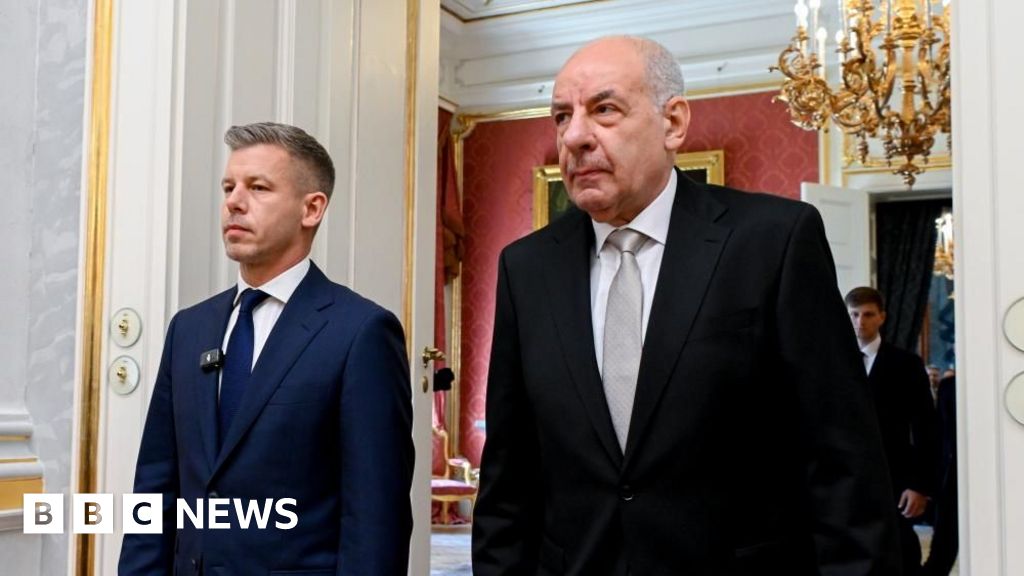
Hungary parliament votes to remove President Sulyok in constitutional shift
Prime Minister Péter Magyar successfully passed a constitutional amendment to force the immediate removal of President Tamás Sulyok. The legislation also introduces new term limits and judicial reforms as part of a broader shift in Hungarian politics.
Hungary parliament votes to remove President Sulyok in constitutional shift
Hungary’s parliament approved a wide-reaching constitutional amendment on Monday, 13 July 2026, aimed at removing President Tamás Sulyok from office. The legislation, which passed with 139 votes in favour and six against in the 199-member chamber, represents a significant escalation in Prime Minister Péter Magyar’s campaign to dismantle the institutional legacy of his predecessor, Viktor Orbán.
The amendment ends Sulyok’s presidential term immediately upon taking effect. Prime Minister Magyar, who led the centre-right Tisza Party to a landslide victory over Orbán’s nationalist Fidesz party in April 2026, argued before the chamber that the mandate granted by voters necessitates a swift structural overhaul of the state.
"It would be a betrayal of the Hungarian nation if we did not touch this constitution,"
Media additions
Image via bbc.comImage via balkaninsight.comImage via aljazeera.com
Péter Magyar, Prime Minister, via Reuters
"They (Fidesz) arranged the country in such a way that one man’s will became the source of legislative work."
Péter Magyar, Prime Minister, via Reuters
A Shift in Legislative Control
The move marks a departure from the political status quo established over the previous 16 years. By securing a supermajority in the April elections, the Tisza Party is now leveraging the same constitutional mechanisms to roll back those changes. This includes the removal of Constitutional Court judges over the age of 70—a provision that would force the retirement of court head Péter Polt—and the introduction of a 12-year term limit for members of parliament.
The impact of these limits was felt immediately. Gergely Gulyás, the leader of Fidesz’s parliamentary group, announced his resignation on Monday, noting that the new rules would disqualify him from seeking re-election due to his length of service. Meanwhile, the former Prime Minister, Viktor Orbán, remained absent from the proceedings, reportedly traveling to the United States to attend the football World Cup finals.
The Path Ahead
President Sulyok, who was appointed in 2024 following the resignation of his predecessor, Katalin Novák, has so far refused to vacate his position. He maintains that he has no political agenda and has sought an assessment of the constitutional amendment from the Venice Commission, an advisory body of the Council of Europe. The commission has not commented on the matter. Under the current legislation, Sulyok has five days to sign the amendment. Should he refuse, Prime Minister Magyar has declared that the government will initiate impeachment proceedings.
The opposition, led by Fidesz, boycotted the vote, characterizing the amendment as an unprecedented assault on democratic order and accusing the government of establishing a form of tyranny. Conversely, civil society groups offer a mixed perspective. While some, such as Amnesty International Hungary, agree that Sulyok is unsuited for the office, they have expressed reservations regarding the methods being employed. Áron Demeter, the communications director of the organisation, stated, If we want to break with the methods used during the Orban regime, the new government should not fall into the trap of using the same methods.
Key Measures of the 17th Amendment
Presidential Mandate: Immediate termination of Tamás Sulyok’s term.
Judicial Reform: Implementation of a 70-year age limit for Constitutional Court judges.
Parliamentary Tenure: A 12-year maximum service limit for lawmakers.
Interim Governance: Parliament to elect a new president until a new constitution is ratified or for up to five years.
Future Planning: Drafting of a new constitution, scheduled to commence in the autumn.
The 17th amendment is intended to guide the country until a new constitution can be adopted. Péter Rona, a former opposition presidential candidate, noted that the situation reflects the irony of Fidesz falling foul of its own concept of power, which previously relied on the principle that the winner takes all. While András Baka, the former head of the Supreme Court, expressed support for the removal of the president, he cautioned against the limitations placed on parliamentary deputies, arguing it restricts the public's right to vote for whom they wish.