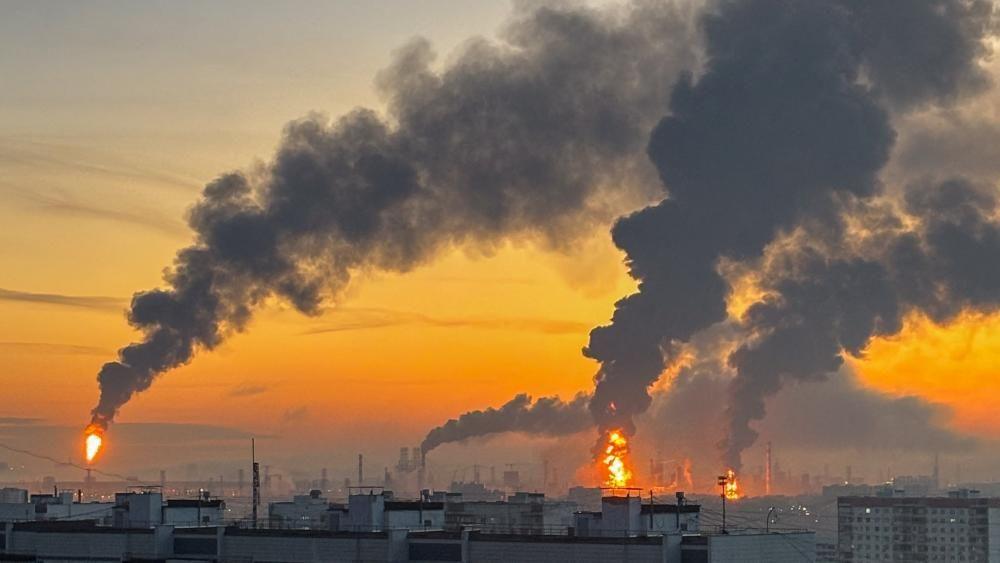
Iran missile attack ends ceasefire, prompting US retaliatory strikes
A surprise Iranian missile barrage ended a week-long ceasefire in the Middle East, leading to joint U.S. and Saudi airstrikes on targets in Iraq and Iran.
- Core Development: A surprise Iranian missile barrage ended a week-long ceasefire in the Middle East, leading to joint U.S. and Saudi airstrikes on targets in Iraq and Iran.
- Beat Context: Categorized under World with independent corroboration.
- Reporting Depth: 3 minute analytical read synthesized from verified newsroom sources.
The fragile pause in hostilities between Washington and Tehran shattered on Tuesday, July 28, 2026, when Iran launched a ballistic missile barrage that U.S. Forces in the region described as a surprise attack. Within minutes the incoming missiles were intercepted, but the strike ended a ceasefire and set off a rapid escalation that saw the United States and Saudi Arabia launch coordinated air raids on Iranian-aligned targets across Iraq and a heavy wave of strikes inside Iran itself.
The timing of the missile launch followed a high-profile meeting between Israeli Prime Minister Benjamin Netanyahu and President Donald Trump at the White House. The new round of fighting has already claimed two U.S. Service members at the Muwaffaq Salti Air Base in Jordan, including Isabella Gonzalez, raising the American death toll in the conflict.
Media additions
"We're going to be hitting them very hard because it's our turn to hit them."
Donald Trump, President, via Yahoo News
At about 8 p.m. ET on July 29, 2026, U.S. Central Command announced a powerful response to the attempted Iranian attacks, describing the retaliation as a joint effort with Saudi air forces. The strikes targeted Iran-aligned militants in eastern Iraq, a region where Iranian-backed militias operate alongside official Iraqi security units.
According to military statements, the attacks were coordinated with the Saudi Ministry of Defense, which confirmed it had also hit Iranian-linked militants in Iraq on Wednesday, July 29, 2026. The Saudi involvement marks direct military action against Iranian proxies in the current conflict, following attacks on Saudi energy infrastructure attributed to the same militias.
"These are many different campaigns and many different battles."
Behnam Ben Taleblu, Foundation for Defense of Democracies, via Yahoo News
Behnam Ben Taleblu, senior director of the Iran program at the Foundation for Defense of Democracies, warned that the surprise attack was part of an ongoing pattern where Tehran seeks to draw the United States into a protracted war by exploiting perceived American restraint. Taleblu added that President Trump's willingness to act makes the regime more likely to escalate.
Later on Thursday, July 30, 2026, the United States escalated the response with a heavy wave of airstrikes deep inside Iranian territory, targeting military command centers and missile facilities, according to Central Command. Iran countered by claiming that one of the strikes hit a residential building, killing two children.
Jordan’s own air defenses reported that five Iranian missiles were shot down early on Thursday, July 30, 2026, protecting Jordanian airspace but not preventing the loss of American service personnel at the Muwaffaq Salti Air Base.
The Iranian-backed militias in Iraq responded to the joint U.S.–Saudi raids by issuing a week-long deadline to the Iraqi government for a reaction. The militias stated that at least twenty fighters were killed in the Wednesday attacks, and the Islamic Revolutionary Guard Corps (IRGC) confirmed four of its advisors died.
The broader regional context involves deep-seated political and sectarian dynamics. The attacks coincided with a major Shia religious commemoration, Arbaeen, drawing millions of pilgrims to Karbala. Funeral rites in Baghdad featured chants against the United States and Saudi rulers.
U.S. Diplomatic efforts continue despite the flare-up. President Trump met with newly appointed Iraqi Prime Minister Ali al-Zaidi in Washington in July, praising the chemistry between the two leaders. Zaidi, a businessman with limited political experience, was selected after the United States vetoed a candidate seen as too close to Tehran. Following the attacks, Zaidi reportedly canceled a planned visit to Saudi Arabia.
In the strategic Strait of Hormuz, Iran announced on Thursday, July 30, 2026, that it had turned back two oil tankers escorted by U.S. Aircraft, claiming one caught fire. The same statement said a Qatari tanker was allowed to pass after coordination with Tehran, though Qatar has not confirmed the passage.
"The unwarranted attacks against U.S. forces were not successful."
U.S. Central Command, via Yahoo News
How significant is this development?
Contribute your assessment to the aggregated reader sentiment ledger.
Frequently Asked Questions
Key questions answered in this reportWhat is the key development in: Iran missile attack ends ceasefire, prompting US retaliatory strikes?
A surprise Iranian missile barrage ended a week-long ceasefire in the Middle East, leading to joint U.S. and Saudi airstrikes on targets in Iraq and Iran.
Why is this World development significant for the UK?
This report covers critical events in our World beat. Independent reporting monitors related UK statements, regulatory shifts, and public responses as further verified details emerge.
How was this reporting corroborated and verified?
Newsarchy UK compiles and cross-references reporting from primary reporting from boisestatepublicradio.org and cross-checked wire reports. All coverage adheres to published editorial standards.
When was this report published?
This briefing was published on July 31, 2026 and is permanently cataloged in the Newsarchy UK World archives.