Trump Pushes for Lowest US Rates as Fed Weighs Hike
President Donald Trump has renewed demands for the lowest global borrowing costs, setting up a high-stakes confrontation with Federal Reserve Chair Kevin Warsh as policymakers weigh an interest rate increase.

President Donald Trump has renewed his demands for the United States to maintain the lowest borrowing costs in the world, setting up a high-stakes confrontation with Federal Reserve Chair Kevin Warsh as central bank policymakers weigh whether to increase interest rates.
The latest pressure campaign arrives as official data shows inflation remaining stubbornly elevated. According to reporting from BigGo Finance, the core Consumer Price Index recorded its largest monthly increase in four months during August. That hotter-than-expected reading pushed investors' expectations for a rate increase at the Federal Open Market Committee meeting scheduled for September 15–16 above 85% in futures markets.
Media additions

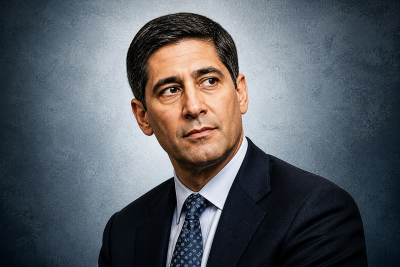
Speaking to reporters during a visit to Doonbeg, Ireland, Trump defended his push for looser monetary policy by pointing to the nation's credit standing. Trump Renews Push for Lowest US Rates as Fed Weighs Hike, noted the president's remarks arguing that America's economic position warrants the world's lowest interest rates regardless of inflation formulas.
The White House has attempted to navigate a middle path between the executive branch's preferences and central bank autonomy. National Economic Council Director Kevin Hassett stated that while the president holds a strong view in favor of lower rates and would not be happy with a rate hike, the administration fully respects Warsh's independence as Fed chair.
This institutional dynamic represents a major test for Warsh, who assumed leadership of the central bank in May following the conclusion of Jerome Powell's second term. In a speech at the Jackson Hole Economic Symposium, Warsh made it clear that combating inflation remains his primary mandate. As detailed in The Fiscal Times, Warsh emphasized that underlying inflation must move toward the 2% objective at a sufficient speed, signaling to markets that officials are prepared to tighten conditions further.
| Metric / Factor | White House Position | Federal Reserve / Market Reality |
|---|---|---|
| Federal Funds Rate Target | Demanding the lowest rates globally | Currently sitting between 3.50% and 3.75% |
| Inflation Trajectory | Downplays persistence, blames external factors | Running above the 2% target for 65 consecutive months |
| September Meeting Outlook | Strong preference for rate cuts or holding steady | Futures markets pricing an 85%+ probability of a rate hike |
Multiple structural factors compound the inflation challenge facing the Federal Reserve. Analysts point to "Trumpflation" pressures stemming from reinstated tariffs on international trading partners, alongside severe energy disruptions. Following the outbreak of military conflict involving Iran, tanker traffic through the Strait of Hormuz has been heavily restricted, fueling a prolonged energy supply squeeze examined further in Bond yields surge as Iran conflict pushes oil above 100 dollars a barrel. Furthermore, surging demand for artificial intelligence infrastructure has granted hardware manufacturers extensive pricing power, keeping cost pressures elevated across the broader economy.
Observer consensus highlights the difficult political calculus confronting the central bank. Maurice Obstfeld, a senior fellow at the Peterson Institute for International Economics, observed via Yahoo Finance that policymakers face a no-win scenario regarding presidential friction and institutional credibility. Similarly, Navy Federal Credit Union chief economist Heather Long noted that Warsh risks drawing public criticism from the executive branch if he tightens policy, or market backlash if he holds steady.
At the same time, analysts note that Warsh retains several mechanisms to assert institutional independence. Notably, former chair Powell chose to remain on the Fed's Board of Governors after stepping down from the top post, creating a distinct governance structure.
What happens next will be determined at the upcoming Federal Open Market Committee meeting. Investors and administration officials will monitor whether Warsh and his colleagues proceed with a rate increase to suppress persistent inflation, or choose a steady stance that risks intensifying the ongoing policy collision with the White House.