World Liberty Financial Token Plummets 50 Percent to Record Low
World Liberty Financial's governance token crashed over 50% to a record low, triggering fraud accusations from Justin Sun and intensifying regulatory scrutiny.

World Liberty Financial’s governance token suffered a steep drop over the weekend, falling more than fifty percent to a record low and renewing scrutiny over digital asset governance and political risk across business markets, according to reporting by Ceoworld and The Business Times.
The turbulent stretch saw World Liberty Financial’s WLFI token lose over half its value during a twenty-four-hour period ending early on Saturday, November 28, dropping from roughly $0.039 to a low near $0.016 before edging back to approximately $0.020, as reported by Ceoworld. At the same time, the venture’s USD1 stablecoin slipped from its intended one-to-one parity, touching 94 cents before recovering to near parity. The sharp descent leaves the token trading roughly ninety-five percent below its opening peak from September 2025.
Media additions
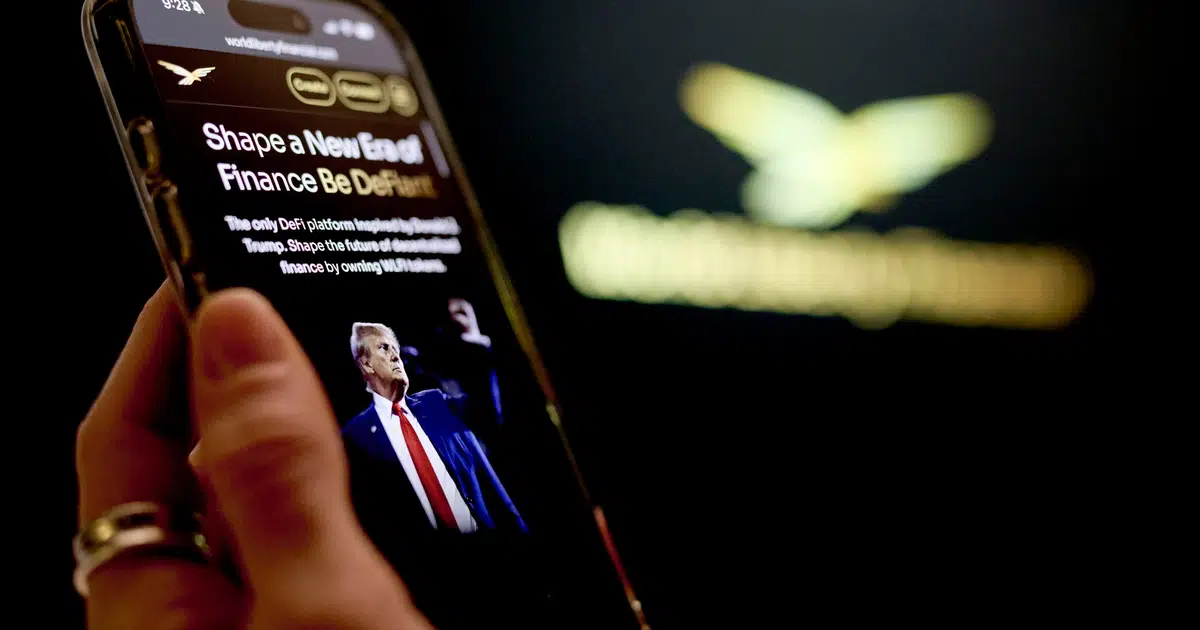
The collapse triggered immediate fallout across the digital asset sector. Justin Sun, the Tron founder and former project backer who invested tens of millions in the venture, renewed his attacks on the platform. Writing on the social media platform X, Sun accused project insiders of engaging in investor fraud through unauthorized selling and insider circular lending. He called on global exchanges, regulators, and judicial authorities to freeze assets, place tokens on warning lists, and delist both WLFI and USD1.
World Liberty and its representatives have strongly contested those assertions. Co-founder Zach Witkoff previously dismissed the billionaire's claims as entirely meritless. Legal battles between the two sides began earlier in the year, following a dispute over frozen wallet holdings.
| Metric / Asset | Previous Level | Recent Low |
|---|---|---|
| WLFI Token Price | ~$0.039 | ~$0.016 |
| USD1 Stablecoin Value | $1.00 (Parity) | $0.94 |
| USD1 Market Capitalisation | $5.4 billion (Feb) | $2.9 billion |
Operational pressures compounded the market panic. Blockchain data compiled by Arkham Intelligence showed a wallet labeled as the project's strategic reserve selling thousands of ether at a steep realized loss to acquire stablecoins. Furthermore, the venture utilized its own WLFI tokens as collateral to borrow stablecoins on Dolomite, a lending platform co-founded by the venture's chief technology officer. The maneuver intensified trader anxieties regarding the potential liquidation of underlying collateral in a falling market.
In a statement posted to X, World Liberty defended its actions, stating:
"When markets experience a significant downturn, reducing leverage and strengthening financial positions is the prudent thing to do. We will continue to take the necessary steps to further reduce leverage, strengthen our financial position, and protect our ecosystem."
World Liberty Financial, Official Statement via The Business Times
A spokesperson for World Liberty added in an emailed statement that every USD1 token remains redeemable for one US dollar, while tracker CoinGecko noted that the stablecoin's broader market capitalization has experienced a sharp contraction over preceding months.
The turmoil reaches far beyond standard market volatility, touching upon political risk and corporate governance. Government financial disclosure documents filed with the US Office of Government Ethics revealed substantial revenues generated for the family of President Donald Trump through digital asset ventures, with World Liberty accounting for hundreds of millions of dollars in income from token sales and business interests.
Corporate boards and institutional treasurers examining their balance sheets face pressing questions regarding counterparty risk, freeze powers embedded in smart contracts, and the reliability of stablecoins during market stress.
What to Watch Next
- Federal court proceedings in the Northern District of California regarding ongoing litigation between World Liberty and Justin Sun.
- Exchanges reviewing execution data and deciding whether to act upon delisting demands.
- Future reserve attestations published by USD1 to satisfy institutional holders.
- Potential policy and regulatory updates from Washington concerning politically connected stablecoin issuers.