OPEC+ delays 2027 output and capacity decisions until mid-year amid Iran war
OPEC+ postponed its 2027 output and capacity decisions during an online meeting amid ongoing disruptions from the U.S.-Iran war and internal disputes over production baselines.

OPEC+ postponed decisions on its 2027 output quotas and capacity baselines during an online meeting on Sunday, leaving supply policy uncertain as the U.S.-Iran war disrupts Gulf crude flows and internal rifts strain the alliance.
The virtual gathering, reported by Investing.com via Yahoo Finance, concluded without formal agreement on production volumes for the coming year. According to Reuters reporting carried by Yahoo News UK, the alliance left output targets unchanged for now, with delegates indicating that current ceilings would be maintained through the first quarter of 2027. In a departure from previous practice, the official post-meeting statement issued by OPEC omitted any listing of upcoming quotas.
Media additions

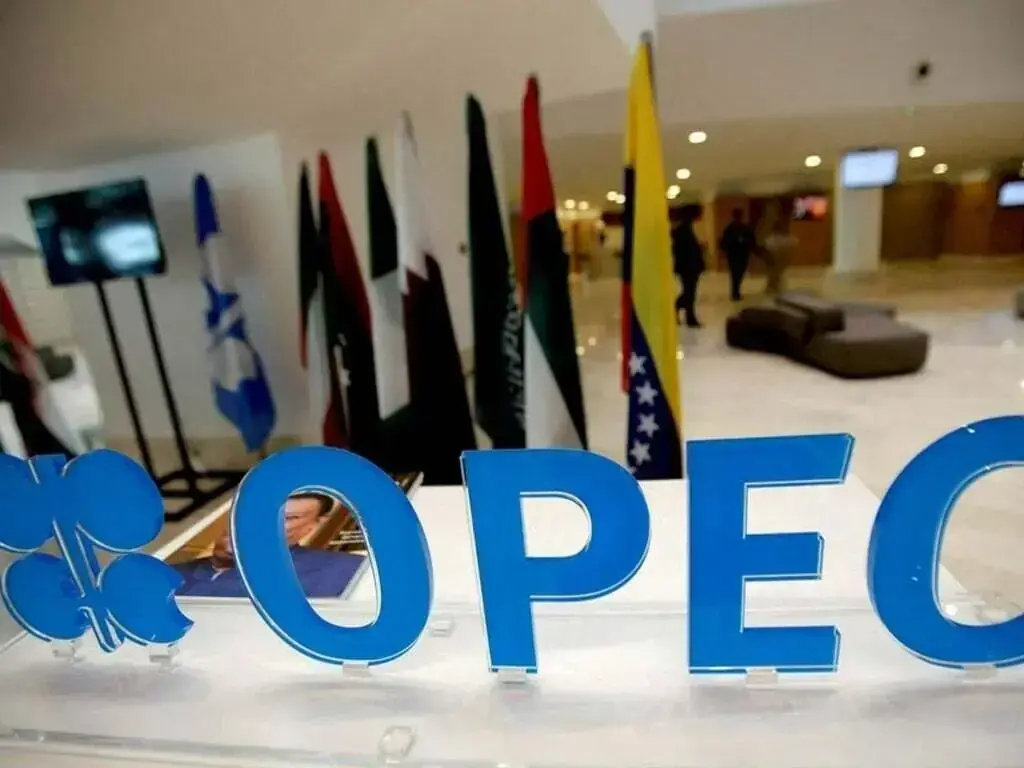

The impasse stems from the alliance's first-ever audit of member production capacity. OPEC+ had intended to use the review to establish new baseline quotas for 2027. However, the effort stalled when Iraq and Kazakhstan challenged the preliminary findings of the audit as too low. Sources with knowledge of the matter told Reuters that consultants had assessed Iraq’s production capacity at 4.9 million barrels per day, a figure Baghdad rejected. Iraq has warned it may exit the cartel if its quota is not increased.
Internal friction has already hollowed out the producer group in recent years. Angola departed the Organization of the Petroleum Exporting Countries and its broader alliance at the start of 2024. The United Arab Emirates subsequently exited OPEC+ in May, following decades of membership, in order to pursue higher independent production after long-standing disputes over its allocation. Additional reporting from 740 The FAN and Business Recorder notes that pressure from Washington has further complicated the geopolitical landscape for the alliance, giving rival producers such as the United States an opening to capture additional market share.
External supply shocks continue to cast a long shadow over the broader landscape. Russia’s Deputy Prime Minister Alexander Novak stated in a television interview on Sunday that the oil market remains unstable because flows through the Strait of Hormuz have not returned to normal since disruptions began with the outbreak of the Iran war in late February. Novak estimated that approximately 4 million barrels per day of oil and petroleum products from Middle East Gulf countries—representing roughly 4% of global demand—remain blocked from reaching international markets.
Despite these severe Middle East disruptions, market fundamentals have shifted in recent weeks. Rising Gulf exports and growing expectations of a supply glut have caused crude prices to ease, though they spiked above $100 per barrel earlier in the year. CNBC noted that Brent crude futures closed at $95.44 a barrel on Friday, following a decline, while U.S. West Texas Intermediate traded at $83.08 a barrel. Rystad Energy projects that the global oil surplus could reach 5 million barrels per day in 2027, even if Gulf supplies recover only partially.
Complicating matters further, seven OPEC+ members that had been raising output in monthly increments also met on Sunday alongside the broader group. Having fully unwound two separate layers of production cuts by September 2026, these nations now face uncertainty regarding a third tranche of cuts dating from 2022. Sunday's meeting left no clear plan for how or when those barrels will return to the market.
"What was meant to be one of the most consequential OPEC+ meetings in years ended with a decision not to decide. The group has bought time rather than resolved its problems."
Jorge Leon, head of geopolitical analysis at Rystad Energy and former OPEC secretariat official, via Yahoo Finance
| Metric / Event | Status / Figure | Context |
|---|---|---|
| Iraq Assessed Capacity | 4.9 million barrels per day | Challenged by Baghdad as too low |
| Strait of Hormuz Blockage | ~4 million barrels per day | Equates to ~4% of world oil demand |
| Projected 2027 Global Surplus | 5 million barrels per day | Forecast by Rystad Energy |
| Brent Crude Close | $95.44 per barrel | Down $1.13, or 1.2%, on Friday |
| WTI Crude Close | $83.08 per barrel | Down 60 cents, or 0.7% |
What to watch next
- Consultants and member states will continue discussions regarding the contested production capacity audit through the end of March 2027.
- The seven-member panel participating in the Joint Ministerial Monitoring Committee will maintain ongoing consultations, though no specific date has been set for their next formal gathering.
- OPEC+ has scheduled its next full ministerial meeting for June 2027, or potentially sooner if market conditions dictate, where a formal decision on production levels for the remainder of the year is expected.