Green Party leader backs rent freeze research projecting 2bn annual saving
A new research report proposes that freezing private rents at 2024 levels could save the government £2bn annually and provide household savings. Green Party leader Zack Polanski has voiced his support for the findings as the debate over housing affordability continues.
- Core Development: A new research report proposes that freezing private rents at 2024 levels could save the government £2bn annually and provide household savings. Green Party leader Zack Polanski has voiced his support for the findings as the debate over housing affordability continues.
- Beat Context: Categorized under Cost of Living with independent corroboration.
- Reporting Depth: 3 minute analytical read synthesized from verified newsroom sources.
A new research report authored by Dr. Beth Stratford of the UCL Institute for Innovation and Public Purpose and Dr. Joe Beswick of the Rosa Luxemburg Foundation has reinvigorated the debate regarding rent controls in England. The study, titled Taking Back Control of Rents, proposes that implementing a rent freeze could provide immediate relief to households while generating substantial savings for the public sector. Specifically, the researchers contend that a freeze on private rents at 2024 levels would save the government at least £2bn annually in housing benefit expenditure.
The findings have received public support from Green Party leader Zack Polanski, who described the current housing situation as an economic disaster and a moral failure
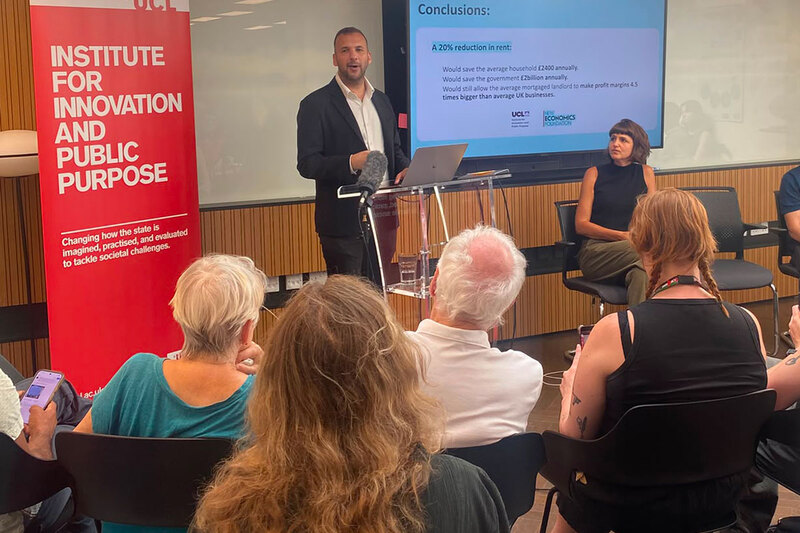
. Speaking at the report's launch, Polanski argued that the inability of renters to save for the future or contribute to the wider economy due to high housing costs demands urgent policy intervention. He has previously advocated for councils to receive expanded powers to restrict rent increases, a position reflected in the Green Party’s 2026 local election campaign.
Media additions



The research models two distinct interventions using data obtained from HM Revenue and Customs. It estimates that a 10% reduction in rents, which the authors align with freezing rents at May 2024 levels, would save the average renting household £1,300 per year. Under this scenario, only 2.3% of individual landlords would become unprofitable. The report contrasts this with the 4.8% of landlords who were rendered unprofitable by tax changes and interest rate increases between 2021 and 2026. A more aggressive 20% reduction could increase annual household savings to £2,400, according to the report, while still leaving the majority of landlords profitable.
This discussion unfolds as England navigates the aftermath of the Renters’ Rights Act, which took effect on 1 May 2026. The legislation introduced significant structural shifts, including the abolition of Section 21 "no-fault" evictions, the transition of all assured shorthold tenancies into open-ended periodic tenancies, and a prohibition on rental bidding wars. Despite these protections, market data from Realyse covering the 12 months to July 2026 shows that asking rents continue to rise. Detached houses saw a 3.2% increase year-on-year, while flats rose by 2.4%.
Supply constraints are cited by analysts as a primary driver of these rising costs. Research from TwentyCi indicates that the share of homes coming to market that were previously rented dropped from 22.5% in the first quarter of 2025 to 12.4% in the first quarter of 2026, a 45% year-on-year decline. Pepper Money estimates that approximately 220,000 rental homes could exit the market by the end of 2026, with over 65,000 of these departures linked directly to the Renters’ Rights Act.
The policy landscape remains in flux. While the IIPP report suggests that rent controls could facilitate a managed transfer of homes from the private sector to councils and housing associations, other voices in the sector warn of unintended consequences. Looking ahead, the next phase of the Renters’ Rights Act is expected in late 2026, which will mandate registration on a new Private Rented Sector Database and require membership in a PRS Ombudsman scheme. Willow Private Finance has advised investors to conduct portfolio stress testing, noting that while no legislation for rent control is currently confirmed, policy risk is becoming a significant factor in long-term investment planning. Meanwhile, the Institute for Public Policy Research (IPPR) continues to lobby for alternative solutions, such as a "double lock" on rent increases linked to either inflation or wage growth, ensuring the debate over how to manage housing affordability will remain a central focus for policymakers through the remainder of 2026.
How significant is this development?
Contribute your assessment to the aggregated reader sentiment ledger.
Frequently Asked Questions
Key questions answered in this reportWhat is the key development in: Green Party leader backs rent freeze research projecting 2bn annual saving?
A new research report proposes that freezing private rents at 2024 levels could save the government £2bn annually and provide household savings. Green Party leader Zack Polanski has voiced his support for the findings as the debate over housing affordability continues.
Why is this Cost of Living development significant for the UK?
This report covers critical events in our Cost of Living beat. Independent reporting monitors related UK statements, regulatory shifts, and public responses as further verified details emerge.
How was this reporting corroborated and verified?
Newsarchy UK compiles and cross-references reporting from primary reporting from theguardian.com and cross-checked wire reports. All coverage adheres to published editorial standards.
When was this report published?
This briefing was published on July 15, 2026 and is permanently cataloged in the Newsarchy UK Cost of Living archives.