Eisenkot downplays unity government with Netanyahu after talks
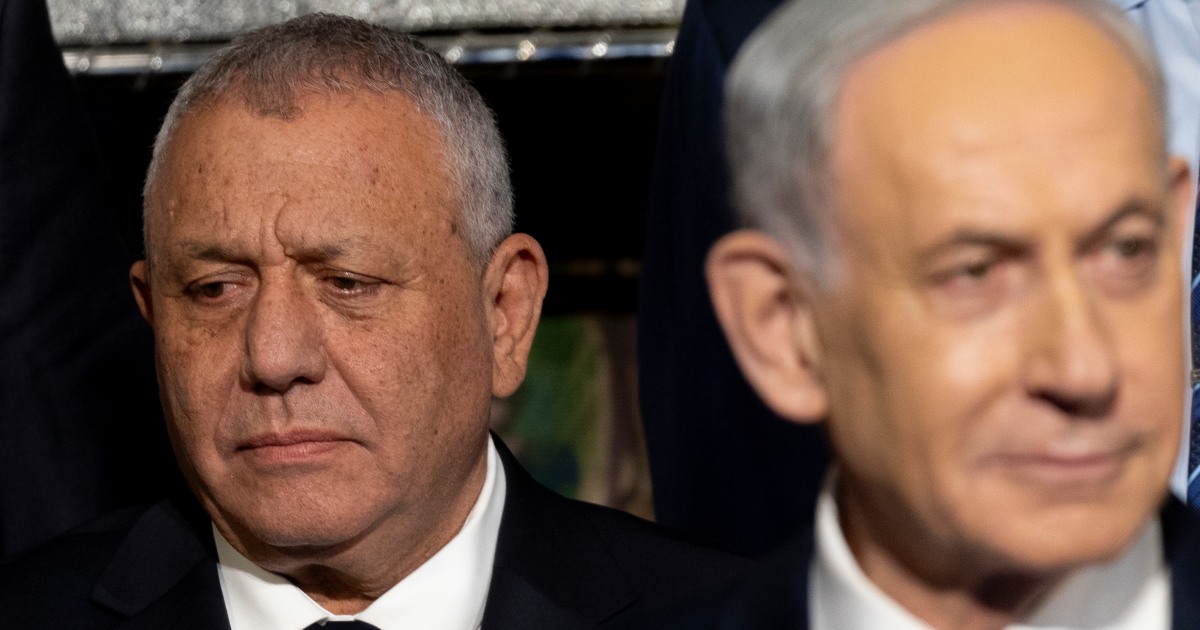
Israeli opposition leader Gadi Eisenkot has dampened hopes for a grand coalition with Benjamin Netanyahu following a two-hour meeting in Tel Aviv.

Israeli opposition leader Gadi Eisenkot downplayed the prospect of a unity government with Prime Minister Benjamin Netanyahu, dampening hopes for a grand coalition as postelection deadlock persists.
The political maneuvering follows an inconclusive election held on October 27, 2026, which left neither major camp with a straightforward path to power in the 120-seat Knesset. Eisenkot, leader of the centre-right Yashar party and a former military chief, met with Netanyahu for two hours at the Israel Defense Forces’ defense headquarters in Tel Aviv. According to Sacbee reporting, Sunday's encounter was the second meeting between the two men this month, following an earlier session characterized as a security briefing.
Media additions

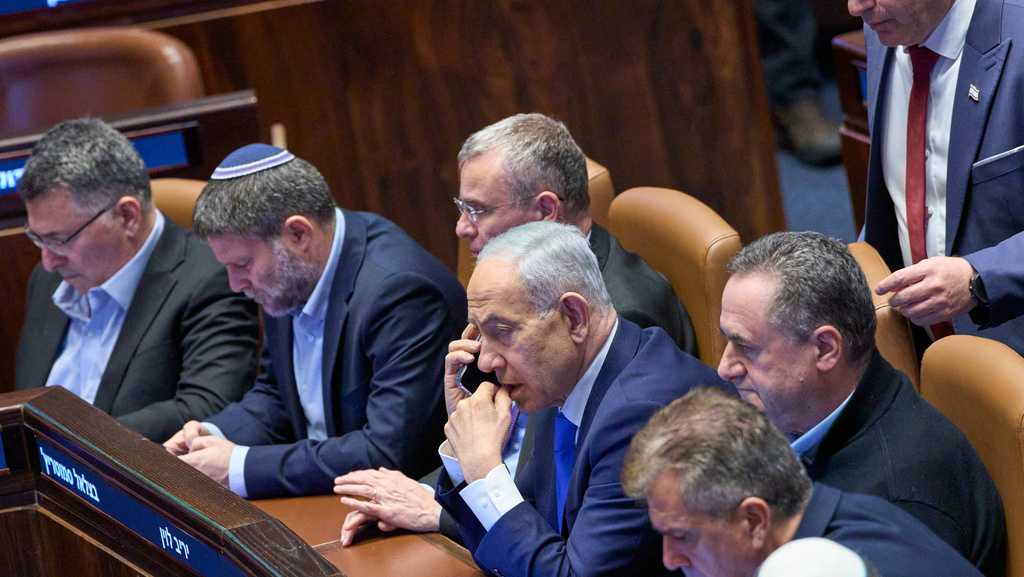
The urgency behind the talks intensified after Netanyahu announced he would be willing to temporarily relinquish power by letting Eisenkot serve first as prime minister in a rotation agreement between Likud and Yashar. Caretaker Prime Minister Netanyahu posted on social media that his responsibility as a leader obligated him to put everything aside to ensure Israel’s security and future, according to NBC News coverage. Despite the offer, Rte reported that Israel's Channel 12 news indicated no further meetings were planned. Eisenkot reportedly told Netanyahu during their discussions, I'm committed to my partners in the bloc. You're welcome to join after the government is formed.
A representative for Eisenkot later confirmed the accuracy of that exchange to The Independent.
Both political camps released a joint statement describing the session as businesslike, noting that both sides sought to bridge substantial differences. For months, Eisenkot had targeted Netanyahu during the campaign, accusing him of ignoring warnings ahead of the Hamas-led attacks on October 7, 2023, and calling him unfit for office. H.A. Hellyer, a senior associate fellow at the Royal United Services Institute in London, noted via NBC News that working with Netanyahu might prove less problematic for Eisenkot's voting base than partnering with non-Zionist or Arab Palestinian parties, though public hesitation toward the latter underscores the complex divisions in Israeli society.
| Political Party / Bloc | Seats Won | Key Allies |
|---|---|---|
| Likud and Allies | 53 | Far-right and ultra-Orthodox parties |
| Yashar and Allies | 48 | Democrats, Yisrael Beiteinu |
| Arab-led Parties | 19 | Includes Ra'am, Joint List |
Political analysts cited by Sacbee suggest Eisenkot remains more likely to assemble a governing coalition with parties seeking to oust the veteran premier. Israeli President Isaac Herzog tasked Eisenkot with forming a government earlier in November. Eisenkot has signed preliminary coalition agreements with the left-wing Democrats and the right-wing Yisrael Beiteinu party, and has also held discussions with Naftali Bennett, head of the B'Yachad party.
Reactions to the prospect of a unity government have divided political figures and experts. Tamar Hermann, who directs the Israel Democracy Institute's Viterbi Center for Public Opinion and Policy Research in Jerusalem, criticized the concept in reporting from Kasu, stating that a shared Netanyahu-Eisenkot government would be seen as a betrayal by voters seeking change. Conversely, Bennett welcomed Netanyahu's rotation offer, arguing that any unity government should be built around parties representing citizens who perform military or national service. Meanwhile, Yair Lapid called the offer a scam, and Yousef Jabareen, head of the Joint List of Arab parties, urged the opposition to reject it and oust Netanyahu. Yair Golan, head of the Democrats, posted on X that the public supported Eisenkot's efforts to bring real change.
Key Issues in Coalition Negotiations
- Mandating military service for ultra-Orthodox Jews, an issue complicated by United Torah Judaism's opposition to draft rules.
- A proposed state-led investigation into security failures surrounding the October 7, 2023, attacks.
- Divergent positions on whether to incorporate Arab-led parties into the ruling coalition.
- Broader regional security challenges stemming from ongoing conflicts in Gaza, Lebanon, and interactions with Iran, which was jointly attacked by Israel and the United States on February 28.
As CBS News notes, the country continues to reel from years of war and national trauma. Eisenkot faces a pressing constitutional deadline to finalize his government, with significant implications for the future of world affairs in the region.
What happens next depends heavily on the fast-approaching coalition deadline. Eisenkot has until December 6, 2026, to successfully form a government, though he retains the option to request a 14-day extension from the president if negotiations stall further. If Eisenkot fails to strike a deal, the mandate could shift to Netanyahu, raising the distinct possibility that the nation will be forced into fresh elections.