Iran escalates regional attacks and declares Strait of Hormuz closed
Tensions have surged in the Persian Gulf as Iran closes the Strait of Hormuz and attacks regional targets following a large-scale U.S. military offensive.
- Core Development: Tensions have surged in the Persian Gulf as Iran closes the Strait of Hormuz and attacks regional targets following a large-scale U.S. military offensive.
- Beat Context: Categorized under World with independent corroboration.
- Reporting Depth: 3 minute analytical read synthesized from verified newsroom sources.
Regional tensions reached a new peak on Sunday, 12 July 2026, as Iran announced the closure of the Strait of Hormuz and launched a widespread series of missile and drone attacks against neighboring Gulf states. The move followed a major escalation in hostilities between Tehran and Washington, marked by a massive wave of U.S. Airstrikes across Iranian territory.
The latest cycle of violence began when Iran’s Islamic Revolutionary Guard Corps (IRGC) fired on a Cyprus-registered container ship, the GFS Galaxy, accusing it of sailing an "unauthorised route" through the strait. The vessel suffered significant engine room damage, leaving its crew to abandon ship while one Indian national remains missing. In response to the attack, U.S. Central Command (CENTCOM) launched what it described as its heaviest offensive of the week, striking 140 military targets in Iran, including missile and drone launch sites, communication networks, and ammunition depots. This brings the total number of U.S. Strikes against Iran to more than 300 over the past three nights.
Media additions
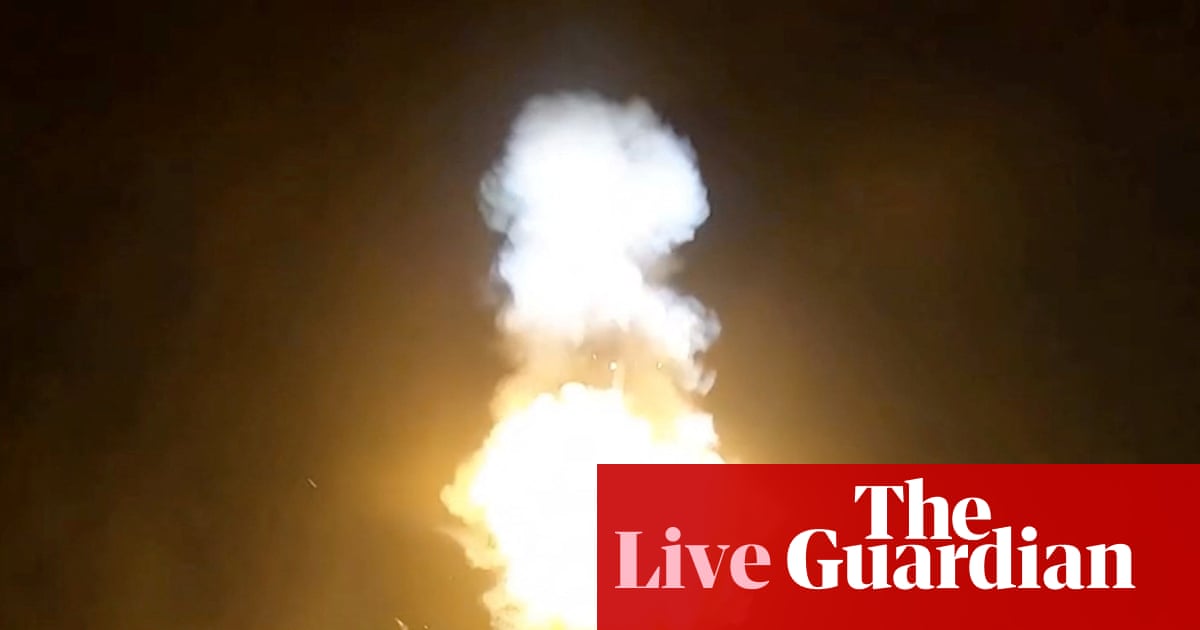


Following the U.S. Offensive, the IRGC claimed it had destroyed a command and control centre and drone hangars in Jordan, targeted a U.S. Radar site in Kuwait, and struck refueling and support platforms in Oman. Additionally, the IRGC announced it had destroyed a jet maintenance and command facility in Qatar. Regional governments reported a barrage of aerial threats throughout Sunday morning. In Qatar, the Ministry of Interior reported that three people, including a child, were injured by falling shrapnel. Jordan confirmed that three Iranian missiles landed within its borders, causing minor material damage but no casualties. Defensive systems in the United Arab Emirates and Kuwait also engaged incoming missiles and drones.
The conflict has centered heavily on the status of the Strait of Hormuz. Despite Iran’s declaration that the waterway is closed "until further notice," U.S. Officials maintain that the area remains open to international traffic.
The U.S. Navy-led Joint Maritime Information Center has advised that an "expanded" southern route near Oman remains available for two-way transit, though it warns the overall maritime security threat level is "severe."
This surge in violence has severely undermined efforts to salvage an interim ceasefire agreement signed last month. The deal, intended to end the war that began with joint U.S.-Israeli strikes on 28 February, had sought to stabilize the flow of energy exports through the strait. U.S. President Donald Trump has recently suggested that the ceasefire is over, while Iranian officials have expressed deep dissatisfaction with the state of negotiations.
"The era of one-sided deals is OVER. We told you: keep your word or pay the price. Reality is knocking."
Mohammad Baqer Qalibaf, speaker of the Iranian parliament and chief negotiator, via X
The atmosphere in Tehran remains defiant. Supreme Leader Ayatollah Mojtaba Khamenei, who has not been seen in public since the start of the conflict, released his first formal statement since the funeral of his father, Ayatollah Ali Khamenei. The new leader vowed that revenge for his father’s killing in the initial February strikes "will most certainly be carried out."
Despite the current military exchange, high-level diplomatic channels remain active. Iranian Foreign Minister Abbas Araqchi met with his Omani counterpart, Badr Albusaidi, in Oman on Saturday to discuss maritime transit. Both nations have agreed to continue talks at the technical and political levels, though no consensus on navigation rights has been reached. officials from Pakistan, Qatar, and Iran have been in communication in an attempt to preserve the possibility of further mediation.
What to watch next
- Shipping traffic: Global observers are monitoring whether commercial vessels attempt to use the contested northern shipping lanes or shift entirely to the southern route near Oman.
- Diplomatic status: Qatar, previously a key mediator, has warned that such aggression undermines its ability to facilitate talks. The potential withdrawal of key regional mediators remains a primary concern.
- Economic impact: Markets remain sensitive to the disruption in the Persian Gulf, where a significant portion of global oil and liquefied natural gas exports originate.
- Escalation potential: Iran has explicitly warned that it would consider targeting "additional enemy bases in the region" should further U.S. Strikes occur.
How significant is this development?
Contribute your assessment to the aggregated reader sentiment ledger.
Frequently Asked Questions
Key questions answered in this reportWhat is the key development in: Iran escalates regional attacks and declares Strait of Hormuz closed?
Tensions have surged in the Persian Gulf as Iran closes the Strait of Hormuz and attacks regional targets following a large-scale U.S. military offensive.
Why is this World development significant for the UK?
This report covers critical events in our World beat. Independent reporting monitors related UK statements, regulatory shifts, and public responses as further verified details emerge.
How was this reporting corroborated and verified?
Newsarchy UK compiles and cross-references reporting from primary reporting from apnews.com and cross-checked wire reports. All coverage adheres to published editorial standards.
When was this report published?
This briefing was published on July 12, 2026 and is permanently cataloged in the Newsarchy UK World archives.