US Strikes Iran Over Vessel Hit in Strait of Hormuz, Tehran Responds
The US launched a third round of strikes on Iranian targets after an Iranian attack on a Cyprus-flagged container ship in the Strait of Hormuz. Iran subsequently closed the strait.
- Core Development: The US launched a third round of strikes on Iranian targets after an Iranian attack on a Cyprus-flagged container ship in the Strait of Hormuz. Iran subsequently closed the strait.
- Beat Context: Categorized under World with independent corroboration.
- Reporting Depth: 5 minute analytical read synthesized from verified newsroom sources.
US Strikes Iran Over Vessel Hit in Strait of Hormuz, Tehran Responds With Retaliation
The United States carried out a third series of air, sea and missile strikes against Iranian military facilities on Sunday, after an Iranian attack on a Cyprus‑flagged container ship in the Strait of Hormuz. The U.S. Central Command (CENTCOM) said the operation hit approximately 140 targets, including missile and drone sites, naval capabilities, ammunition stockpiles, communications networks and coastal surveillance facilities. AP News
Iran’s Revolutionary Guard Corps (IRGC) reported that the vessel, the M/V GFS Galaxy, suffered significant engine‑room damage after a warning shot and was left unable to continue its voyage. The ship’s crew abandoned the vessel and entered a lifeboat. ABC News
Media additions
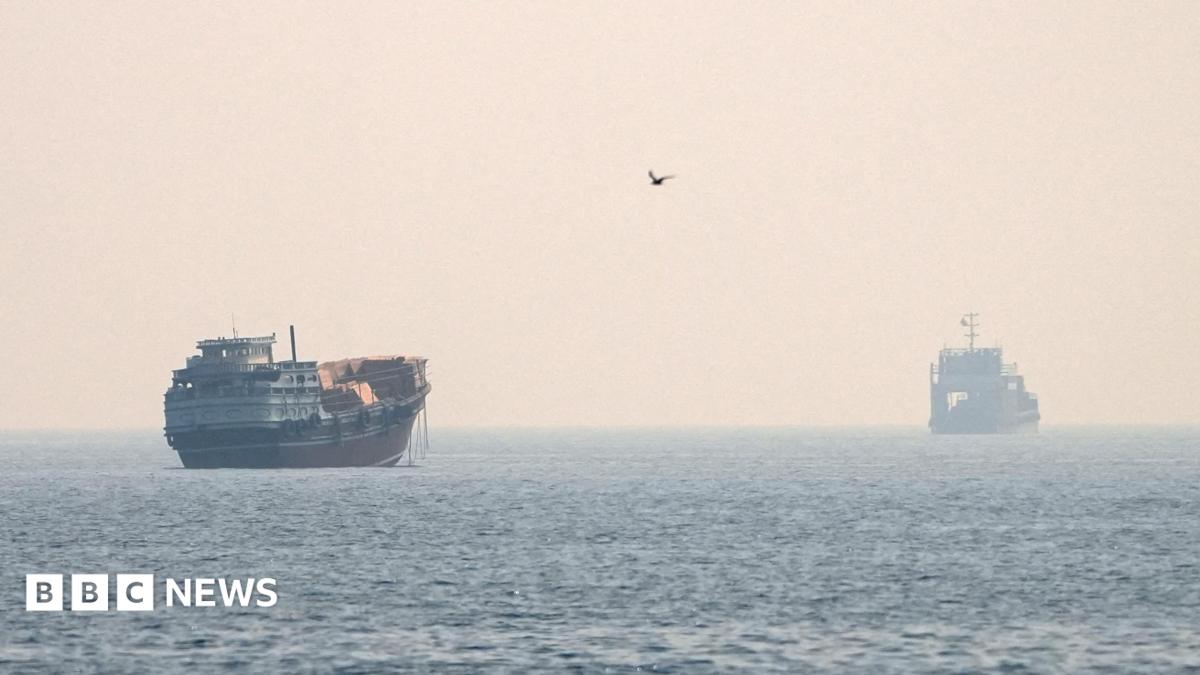

Following the attack, Iran declared the Strait of Hormuz closed “until further notice.” The IRGC said the closure would remain in place until the end of U.S. Interference in the region, and that no vessel would be permitted to transit. The statement also warned that any further military action against Iran would trigger a severe response. RFE/RL
In the same day, Iranian forces launched missile and drone strikes on U.S. Military bases in Bahrain, Kuwait, Qatar and Jordan. The Iranian Ministry of Defense said the attacks targeted command and control centers, drone hangars and refueling facilities. RFE/RL
Iranian state media reported explosions across southern provinces, including Bandar Abbas, Sirik and Qeshm Island. The United Kingdom Maritime Trade Operations (UKMTO) said it had received a report of a container ship sustaining damage near Oman, which was consistent with CENTCOM’s description of the incident. RFE/RL
U.S. Defense Secretary Pete Hegseth posted on social media that “Iran made a poor choice. Now they pay.” The statement was echoed by CENTCOM, which said the strikes were conducted on the orders of President Donald Trump and were intended to degrade Iran’s ability to attack civilian mariners and commercial ships freely transiting the strait. ABC News
Iran’s main negotiator and speaker of parliament, Mohammad Bagher Ghalibaf, posted on X that “the era of one‑sided deals is over.” He added that “reality is knocking.” RFE/RL
Supreme Leader Mojtaba Khamenei released a statement on state television following his father’s funeral, declaring that Iranians would avenge the death of the former leader. He said that revenge “must inevitably be carried out.” RFE/RL
Iran’s Foreign Minister Abbas Araghchi traveled to Oman on Saturday to discuss safe navigation through the Strait of Hormuz. He met with Omani Foreign Minister Sayyid Badr Albusaidi, and the two sides agreed to continue talks “at the technical and political levels.” The Omani state news agency said that negotiations would continue at those levels. RFE/RL
U.S. Officials have stated that the strikes were a response to the Iranian attack on the container ship and that the U.S. Is demanding that Iran publicly commit to stopping attacks on commercial vessels and to open all shipping lanes in the strait without tolls. The U.S. Also called on Iran to maintain the opening of the waterway. Abc News
During the same week, the Iranian health ministry spokesperson Hossein Kermanpour reported that U.S. Strikes on six cities in Iran on Wednesday and Thursday had killed at least 17 people and injured 115 others. RFE/RL
U.S. And Iranian forces have exchanged strikes three times in the past week, raising the risk of broader regional instability. The war, which began in late February, has seen U.S. And Israeli strikes on Iranian targets and Iranian retaliation against commercial shipping. The U.S. Has declared that the interim cease‑fire is over while remaining open to renewed negotiations. RFE/RL
Oman has drafted a proposal that would allow traffic through the strait on two separate routes: a southern corridor through Omani territory, where vessels would be able to transit freely, and a northern corridor that would require vessels to obtain prior approval from Iran but would not impose tolls. The proposal was reported by CNN. CNN
In the broader context, the Strait of Hormuz is a critical maritime chokepoint that has historically handled a large share of global oil transit. The U.S. And Iran have long contested control over shipping lanes, with Iran’s closure of the strait historically contributing to energy price volatility. The current escalation has drawn attention from multiple regional and international actors, including the United Arab Emirates, Bahrain, Qatar, and Jordan. AP News
Readers may find the following timeline helpful for tracking the sequence of events:
- July 10: Iranian Revolutionary Guard attacks the Cyprus‑flagged container ship M/V GFS Galaxy in the Strait of Hormuz.
- July 11: U.S. Central Command announces a third round of strikes, hitting roughly 140 Iranian military targets.
- July 12: Iran declares the Strait of Hormuz closed until further notice and reports explosions in Bandar Abbas, Qeshm Island and Sirik.
- July 12: Iranian forces launch missile and drone strikes on U.S. Bases in Bahrain, Kuwait, Qatar and Jordan.
- July 12: Iranian Foreign Minister Abbas Araghchi meets Omani Foreign Minister Sayyid Badr Albusaidi to discuss navigation through the strait.
- July 12: Supreme Leader Mojtaba Khamenei releases a statement about vengeance for his father’s death.
| Strike Round | Targets Hit | Date |
|---|---|---|
| First | Fewer than 140 | Earlier in the week |
| Second | Fewer than 140 | Earlier in the week |
| Third | ~140 | July 11 |
For further coverage on the conflict and its implications for global shipping, see World, Iran closes Strait of Hormuz, U.S. Strikes Iran, and U.S. Launches fresh strikes on Iran.
How significant is this development?
Contribute your assessment to the aggregated reader sentiment ledger.
Frequently Asked Questions
Key questions answered in this reportWhat is the key development in: US Strikes Iran Over Vessel Hit in Strait of Hormuz, Tehran Responds?
The US launched a third round of strikes on Iranian targets after an Iranian attack on a Cyprus-flagged container ship in the Strait of Hormuz. Iran subsequently closed the strait.
Why is this World development significant for the UK?
This report covers critical events in our World beat. Independent reporting monitors related UK statements, regulatory shifts, and public responses as further verified details emerge.
How was this reporting corroborated and verified?
Newsarchy UK compiles and cross-references reporting from primary reporting from economictimes.indiatimes.com and cross-checked wire reports. All coverage adheres to published editorial standards.
When was this report published?
This briefing was published on July 12, 2026 and is permanently cataloged in the Newsarchy UK World archives.