Trump wraps up historic summit with Xi and Putin addressing Ukraine and nuclear issues
President Donald Trump concluded a historic trilateral summit in Shenzhen with Xi Jinping and Vladimir Putin, addressing nuclear risks and UN reform.
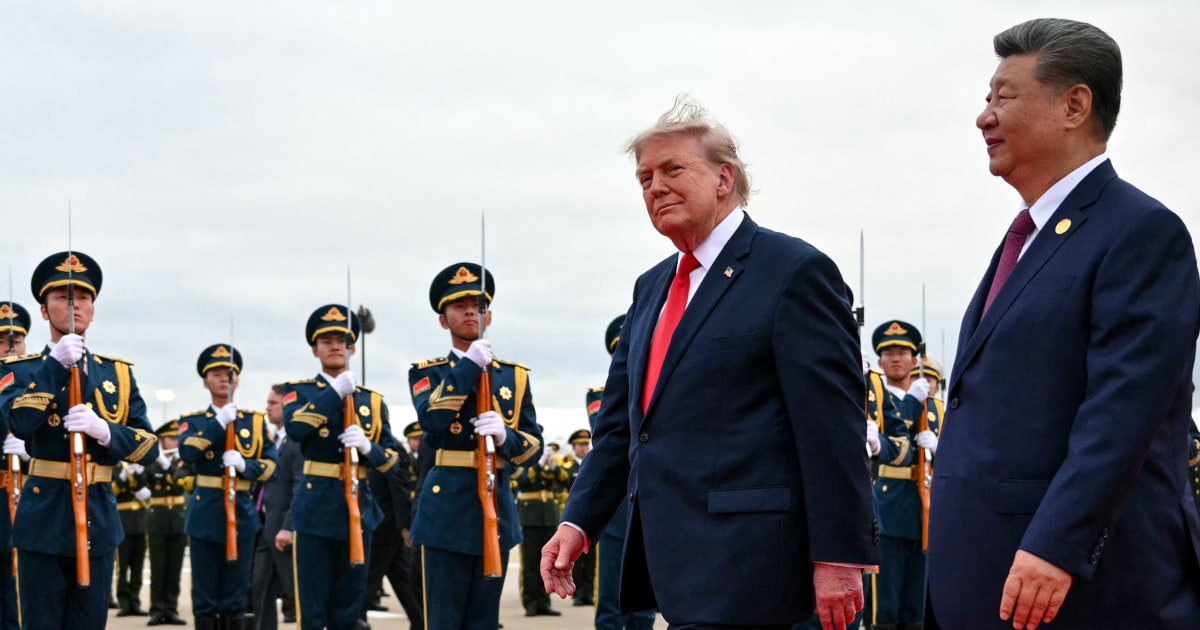
President Donald Trump concluded a historic trilateral summit with Chinese President Xi Jinping and Russian President Vladimir Putin in Shenzhen on Thursday, issuing a joint declaration that pledged dialogue on nuclear risks and United Nations reform while Russian strikes hit Kyiv.
The roughly 90-minute meeting marked the first time the leaders of the world's three largest nuclear powers have sat together at a single table, producing a "U.S.-Russia-China Heads of State Declaration toward Peace" that committed the trio to increasing petroleum production, warning the International Criminal Court against "abuse of power," and reaffirming that "there can be no winners in a nuclear war."
Media additions



Diplomatic pageantry and sharp divisions
Xi broke protocol to greet Trump on the tarmac at Shenzhen Bao'an International Airport on Wednesday, a first for the Chinese leader, complete with military flyover and national anthems. At a welcome banquet that evening, the three leaders shared a toast, though Trump did not offer one of his own. Fox News reported Trump called Xi "my friend" and said, "as long as you and I are in charge of things, we'll never have a problem." To Putin, he said, "Who is he? It's my friend. Nice to see you."
The warmth contrasted with domestic backlash. Senate Minority Leader Chuck Schumer denounced the summit as "a betrayal of the United States by a president who loves nothing more than to bow down to our adversaries for a photo-op." Sen. Tim Kaine said the images "made my stomach turn a little bit," adding, "Vladimir Putin is no friend." Sen. Rick Scott called Putin "a thug" but acknowledged Trump is "trying to get a deal done, trying to get the war to end."
Ukraine absent, under fire
Ukrainian President Volodymyr Zelenskyy was not invited. In an interview with NBC's Richard Engel, he called the exclusion a "huge mistake." As the three leaders spoke of peace in Shenzhen, Russian drones struck Kyiv. Dutch Foreign Minister Tom Berendsen said a projectile hit behind the Netherlands embassy; Ukrainian Foreign Minister Andrii Sybiha confirmed minor damage and no injuries. Oleksandra Ustinova posted video of what she described as a drone striking central Kyiv. "Putin's terror must face strong responses," Sybiha wrote.
Yuri Ushakov, Putin's aide, described the Russian leader's mood as "great" and said Ukraine was the main topic.
Nuclear rhetoric, no new framework
Trump has pushed since his first term for a three-way arms control agreement including China. Russia suspended New START inspections in 2022 and said it would observe its limits for another year after the treaty's February expiration. China, with an estimated 600 warheads versus more than 5,000 each for the U.S. And Russia, has insisted any framework remain bilateral between Washington and Moscow.
In Shenzhen, Xi called nuclear weapons a "sword of Damocles" and urged their "comprehensive prohibition and complete elimination." Putin stressed the three nations' "shared responsibility for maintaining international peace and security."
| Nuclear power | Estimated warheads (Pentagon/analyst figures) | Position on trilateral talks |
|---|---|---|
| United States | 5,000+ | Advocates three-way framework including China |
| Russia | 5,000+ | Suspended New START; open to dialogue on risks |
| China | ~600 (could reach 1,000 by 2030) | Insists arms control remain U.S.-Russia bilateral |
Trade promises thin, media restricted
Trump previewed "a lot" of trade agreements and said he would ask China to "do some more for our farmers because you have, China has an insatiable appetite." Yet the only tangible outcome was a joint statement with Thailand to continue existing tariff talks.
Chinese officials barred Bloomberg correspondent Annmarie Hordern from the trilateral meeting after she shouted a question about former Nvidia CEO Jensen Huang during the Trump-Xi bilateral. The White House advocated for her reinstatement; Chinese authorities refused, telling pool reporters that shouting questions is "extremely rude." Trump later said, "Too bad the media couldn't see some of it, because every move was perfectly executed." Russian officials also denied entry to two journalists during the Trump-Putin pull-aside.
Energy, Iran, and the ICC
Identical statements from China and Russia — not initially matched by a U.S. Version — called for increased energy production and supply, a move that would bolster Russia's oil-driven war economy. The joint declaration also warned the International Criminal Court "and similar bodies" not to abuse their power, echoing Trump's longstanding hostility toward the court.
Beijing signaled willingness to mediate between the U.S. And Iran, with Fred Gao of the Center for China and Globalization noting China is "one of the biggest buyers of energy out of the Gulf."
What to watch next
- Trump press conference: The president announced a noon ET news conference Friday at the White House to discuss the trip and trade deals with Thailand, the Philippines, and others.
- Farm bill deadline: Trump urged Republican congressional majorities to pass a new farm bill before the session ends; the House passed a version in April but the Senate has not acted. Democrats take control of both chambers in January.
- Ukraine diplomacy: Putin said no dates have been set for continued dialogue on European security, acknowledging it was "pointless" to discuss without Europeans present.
- Nuclear follow-through: The Kremlin pledged continued dialogue on reducing nuclear risks, but China's public stance against a trilateral framework remains unchanged.


