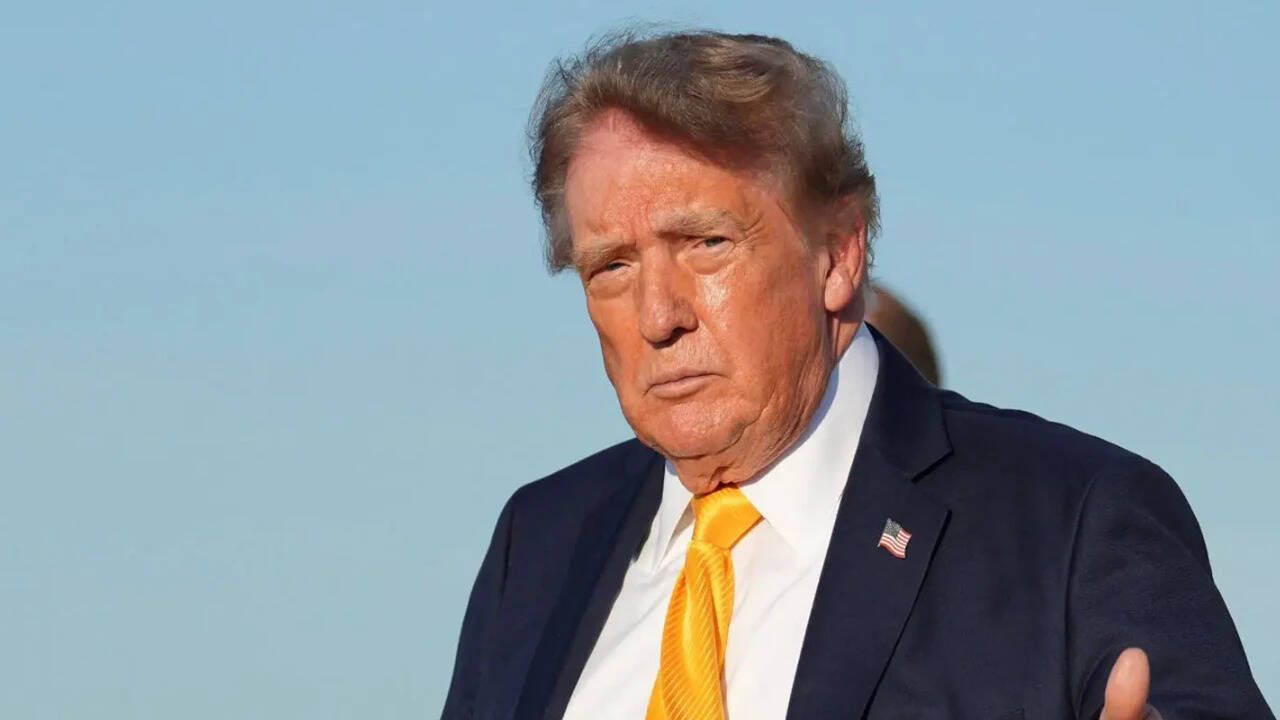
U.S. resumes Iranian port blockade as Trump declares ceasefire over
President Trump declared the ceasefire void after recent Iranian attacks on commercial shipping, triggering a massive U.S. military response.

- Core Development: President Trump declared the ceasefire void after recent Iranian attacks on commercial shipping, triggering a massive U.S. military response.
- Beat Context: Categorized under World with independent corroboration.
- Reporting Depth: 4 minute analytical read synthesized from verified newsroom sources.
The United States re-imposed a naval blockade on Iranian ports at 4 p.m. ET on Tuesday. The move serves as a direct response to the collapse of a ceasefire agreement between the two nations, which President Donald Trump declared over on the same day. This decision marks a return to the restrictive maritime conditions that existed between mid-April and mid-June, before a memorandum of understanding briefly allowed for the resumption of commercial transit.
The escalation follows a series of attacks on commercial shipping in the Strait of Hormuz. According to U.S. Central Command, Iranian forces targeted seven commercial vessels over the past week, resulting in deaths, injuries, or missing crew members. In one specific instance, Indian authorities reported that attacks on two vessels, the MT Al Bahiyah and the MT Mombasa, resulted in the death of an Indian seafarer and injuries to others among a crew of 46. The United Nations has condemned the renewed hostilities, with rights chief Volker Turk describing the closure of the strait as a major setback for civilians, noting that the waterway serves as a vital global lifeline for food, medicine, and energy supplies.
Media additions
In conjunction with the blockade, the U.S. Military engaged in a seven-hour wave of airstrikes against Iranian targets on Tuesday. U.S. Central Command confirmed that fighter aircraft, drones, and naval vessels struck dozens of sites, including missile and drone facilities and coastal defense systems. The stated purpose of these operations is to degrade Iran’s capacity to threaten civilian crews and shipping traffic. Iranian state media reported audible explosions in the port cities of Bandar Abbas and Sirik, as well as on Qeshm Island, while local officials attributed the strikes to American forces.
The conflict has spread beyond the immediate vicinity of the strait. Kuwaiti military officials reported intercepting dozens of drones and missiles on Wednesday, noting that Iranian strikes caused material damage and injured four service members on a naval vessel. Simultaneously, the Jordanian army announced it had shot down three ballistic missiles that entered its airspace from Iran on the same morning.
President Trump has indicated that the campaign against Iranian infrastructure may intensify. In an interview with Fox News, the president warned of future strikes targeting Iranian bridges and power plants should the leadership in Tehran refuse to negotiate. Addressing the potential for further military action, the president stated:
"We're going to hit them very hard tonight. We're going to hit them very hard tomorrow night. We're going to hit them very hard the night after. And then next week, it gets really bad for them, because next week comes the power plants, next week comes the bridges."
President Donald Trump, via Fox News
The president also addressed the requirement for a diplomatic resolution, telling reporters that his representatives had delivered a message to Iran urging them to "make a deal." He further warned:
"You better make a deal, you're not going to have anything left,"
President Donald Trump, via Fox News interview
Economic pressure has accompanied the kinetic military actions. Treasury Secretary Scott Bessent announced that the United States froze over $130 million in digital assets held in wallets linked to the Central Bank of Iran. Additionally, the Treasury Department imposed new sanctions on a network of companies and ships allegedly tied to Iranian shipping magnate Mohammad Hossein Shamkhani, whom the U.S. Characterizes as the head of a significant operation involved in the transport of Iranian and Russian oil.
The blockade operations are managed by over 20 U.S. Navy warships and hundreds of aircraft currently stationed in the region. While the U.S. Military intends to enforce the blockade against vessels traveling to or from Iranian ports, officials stated that they remain prepared to support the traffic flow of non-Iranian linked commercial vessels. Mariners have been advised to coordinate with U.S. Naval forces when transiting the area. The previous iteration of the blockade reportedly saw more than 140 ships redirected, with dozens of vessels carrying humanitarian aid permitted to proceed.
Diplomatic efforts to secure the strait remain strained. While President Trump reversed a previously proposed 20% cargo fee following concerns raised by international partners and industry representatives, he maintained that the United States should benefit from investments made by Gulf states in return for securing the waterway. As the blockade continues, the United States remains in a state of heightened readiness, while Tehran continues to face international scrutiny following the reported attacks on foreign commercial vessels.
How significant is this development?
Contribute your assessment to the aggregated reader sentiment ledger.
Frequently Asked Questions
Key questions answered in this reportWhat is the key development in: U.S. resumes Iranian port blockade as Trump declares ceasefire over?
President Trump declared the ceasefire void after recent Iranian attacks on commercial shipping, triggering a massive U.S. military response.
Why is this World development significant for the UK?
This report covers critical events in our World beat. Independent reporting monitors related UK statements, regulatory shifts, and public responses as further verified details emerge.
How was this reporting corroborated and verified?
Newsarchy UK compiles and cross-references reporting from primary reporting from cbsnews.com and cross-checked wire reports. All coverage adheres to published editorial standards.
When was this report published?
This briefing was published on July 15, 2026 and is permanently cataloged in the Newsarchy UK World archives.