US threatens Iran with 'economic D-Day' as markets await sanctions announcement
Washington is preparing a sweeping set of secondary sanctions dubbed an economic D-Day against Iran, targeting oil buyers, shipping firms, and financial channels.
- Core Development: Washington is preparing a sweeping set of secondary sanctions dubbed an economic D-Day against Iran, targeting oil buyers, shipping firms, and financial channels.
- Beat Context: Categorized under World with independent corroboration.
- Reporting Depth: 4 minute analytical read synthesized from verified newsroom sources.
Washington is preparing to unleash a sweeping set of secondary sanctions that Treasury Secretary Scott Bessent has dubbed an economic D-Day. In a late-night post on X on Sunday, Bessent wrote that the move would be the single greatest financial offensive ever marshalled against an adversary. The statement, also repeated in a Financial Times opinion piece, set the tone for a press conference scheduled for 7 PM CET on Monday where the Treasury is expected to detail the concrete steps.
Bessent warned that any country that continues to purchase or transport Iranian petroleum, uses exchange houses or free-trade zones, handles flights, maintains ship registries, or enables seaborne fuel transfers would accelerate their own isolation. The package is expected to layer secondary sanctions on top of the existing U.S. Naval blockade of the Strait of Hormuz, targeting banks, shipping firms, and other commercial channels that keep Iran’s oil flowing.
Media additions


"the single greatest financial offensive ever marshalled against an adversary"
Scott Bessent, U.S. Treasury Secretary, via X
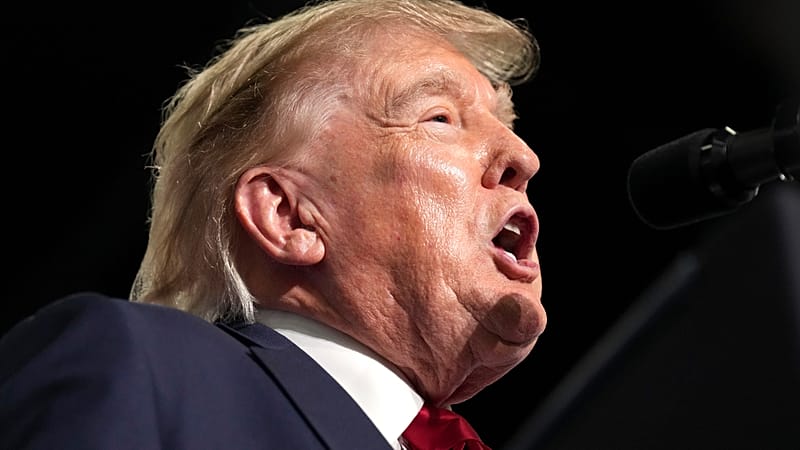
President Donald Trump amplified the rhetoric early on Monday, posting on Truth Social regarding the situation. The brief declaration followed his earlier claim that the United States was launching the most crushing economic operation ever taken against any country.
Iran’s response was swift. The Ports and Maritime Organization used X on Monday to announce that vessels violating Iranian protocols for the Strait of Hormuz would face fines, detention, or confiscation, and that any ship cooperating with listed vessels would be added to a blacklist. The authority later published a list of tankers it deemed non-compliant, naming owners such as ADNOC L&S, Navig8 Tankers, Bahri, Stolt Tankers, and Sinokor.
Iranian officials framed the looming U.S. Measures as an economic war. The Revolutionary Guard’s spokesperson, Brigadier General Hossein Mohebbi, stated that America had changed the front and gone to economic warfare, according to Tasnim News. Foreign-ministry spokesman Esmaeil Baghaei warned that any escalation of this situation would undoubtedly bring about consequences, while Supreme National Security Council head Mohsen Rezai declared that any country joining the U.S. Economic campaign would be deemed an enemy.
"America has changed the front and gone to economic warfare"
Hossein Mohebbi, IRGC spokesman, via Tasnim News
"any escalation of this situation will undoubtedly bring about consequences"
Esmaeil Baghaei, Iranian foreign-ministry spokesman, via CBS News
Domestically, Iran’s national police chief Brig. Gen. Ahmad-Reza Radan warned on Monday that adversaries were trying to exploit livelihoods, gasoline, the economy, and unemployment to spark unrest. He called for police to pre-empt potential protests and to identify hidden networks on social media.
"The enemy is seeking to create unrest in a part of the country or throughout the country, and there are many pretexts, including livelihoods, gasoline, the economy and unemployment"
Ahmad-Reza Radan, Iran’s national police chief, via CBS News
Iran’s central bank governor Abdolnaser Hemmati, speaking at an Entrepreneurs’ Assembly, said the country had already made preparations for a possible oil export cut-off. He recalled the maximum pressure campaign of the previous Trump administration, noting that the country stood and got through that period, and that it is the same now.
"I believe we must speak honestly with the people"
Abdolnaser Hemmati, Central Bank Governor, via CBS News
U.S. Central Command reported that, as of Aug. 23, U.S. Forces had redirected seventy commercial vessels, disabled three, and boarded two to enforce the blockade. TankerTrackers estimated that Middle East crude exports via the U.S. Navy blockade line had fallen to nearly six million barrels per day over the past week, starkly below the more than nineteen million barrels per day recorded in February.
Currency markets reflected the pressure on Iran’s economy. The informal rial rate hit a record low against the U.S. Dollar on Monday, while the official central bank rate hovered around 1.5 million. The steep devaluation raises the cost of imports and fuels domestic inflation, a factor that analysts link to the risk of social unrest.
Military cooperation between the United States and South Korea was also affected. The U.S. Cancelled the scheduled joint amphibious landing exercise Ssang Yong for the following month, citing the situation in the Middle East as a constraint on force deployment.
How significant is this development?
Contribute your assessment to the aggregated reader sentiment ledger.
Frequently Asked Questions
Key questions answered in this reportWhat is the key development in: US threatens Iran with 'economic D-Day' as markets await sanctions announcement?
Washington is preparing a sweeping set of secondary sanctions dubbed an economic D-Day against Iran, targeting oil buyers, shipping firms, and financial channels.
Why is this World development significant for the UK?
This report covers critical events in our World beat. Independent reporting monitors related UK statements, regulatory shifts, and public responses as further verified details emerge.
How was this reporting corroborated and verified?
Newsarchy UK compiles and cross-references reporting from primary reporting from livemint.com and cross-checked wire reports. All coverage adheres to published editorial standards.
When was this report published?
This briefing was published on August 24, 2026 and is permanently cataloged in the Newsarchy UK World archives.


