Iran buries late Supreme Leader Khamenei as funeral procession ends
Following regional processions, the burial of Ayatollah Ali Khamenei has concluded, shifting state focus to political uncertainty and ceasefire negotiations.
- Core Development: Following regional processions, the burial of Ayatollah Ali Khamenei has concluded, shifting state focus to political uncertainty and ceasefire negotiations.
- Beat Context: Categorized under World with independent corroboration.
- Reporting Depth: 3 minute analytical read synthesized from verified newsroom sources.
The state funeral of Iran’s late Supreme Leader, Ayatollah Ali Khamenei, reached its conclusion on Thursday, 9 July 2026, as his remains were interred at the Shrine of Imam Reza in Mashhad. The burial marks the end of a prolonged series of funeral processions that traversed Tehran, the clerical centre of Qom, and the Iraqi cities of Najaf and Karbala, following his death in an airstrike on 28 February.
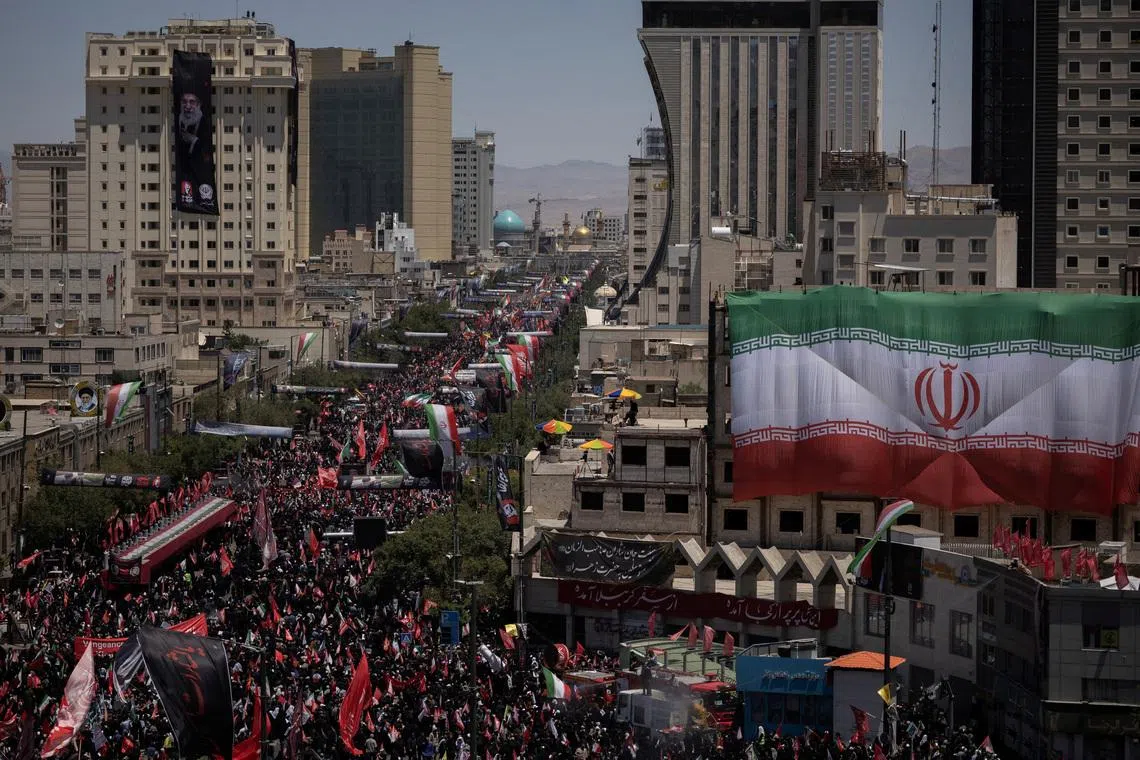
The events in Mashhad on 9 July were characterized by dense crowds of black-clad mourners, with state authorities utilizing the scale of the turnout to project the enduring ideological reach of the Islamic Republic. Throughout the final procession, banners and red placards were displayed, some carrying slogans of vengeance directed at Western leaders. Among the imagery carried by the crowds, a red clenched fist served as a prominent symbol of resistance. Despite the government’s efforts to frame the funeral as a show of national unity, internal observers note that the legacy of the late leader — who held power for 37 years — remains a subject of significant domestic contention following years of recurring protests over economic conditions and government repression.
Media additions

Succession and Security
The transition to the new Supreme Leader, Mojtaba Khamenei, remains shrouded in uncertainty. While a clerical assembly designated him as the successor, his absence from the funeral has drawn attention. According to reports from Tehran, Mojtaba Khamenei sustained severe injuries during the same 28 February strike that claimed the life of his father, resulting in facial disfigurement and mobility issues. Sources indicate he remains in hiding to mitigate the risk of further strikes, with security services restricting his public exposure.
Geopolitical Context
The funeral process occurred against the backdrop of a volatile truce, with tensions surfacing even as ceremonies were underway. The Iranian government’s use of the funeral to assert its continued influence, particularly its control over the Strait of Hormuz, appears designed to bolster its position during ongoing, though paused, negotiations with the United States regarding a permanent end to the war.
Nonetheless, the military wing, specifically the Islamic Revolutionary Guard Corps, is increasingly viewed as the central force in Iran’s strategic trajectory. The Guards, who provided the foundational support for the younger Khamenei’s appointment, remain the primary power brokers behind the current political structure.
What to Watch Next
- Succession Transparency: Observers will be looking for the first public appearance or official media address from Mojtaba Khamenei to clarify his status and his capability to lead.
- Negotiation Status: With the funeral concluded, diplomatic focus is expected to return to the status of the ceasefire negotiations with the United States, which were paused during the week of mourning.
- Internal Stability: The government faces the challenge of managing the "bitterly disputed" legacy of the late leader amidst ongoing domestic grievances over poverty and the state's severe response to past unrest.
- Security Outlook: Authorities remain on alert for potential further attacks, following warnings from military leadership regarding the risks of regional miscalculation.
The mourning period, originally planned for 40 days, is expected to continue with local ceremonies, while the immediate focus of the state shifts from the funeral rites back to the pressing realities of post-war governance and external pressure.
How significant is this development?
Contribute your assessment to the aggregated reader sentiment ledger.
Frequently Asked Questions
Key questions answered in this reportWhat is the key development in: Iran buries late Supreme Leader Khamenei as funeral procession ends?
Following regional processions, the burial of Ayatollah Ali Khamenei has concluded, shifting state focus to political uncertainty and ceasefire negotiations.
Why is this World development significant for the UK?
This report covers critical events in our World beat. Independent reporting monitors related UK statements, regulatory shifts, and public responses as further verified details emerge.
How was this reporting corroborated and verified?
Newsarchy UK compiles and cross-references reporting from primary reporting from npr.org and cross-checked wire reports. All coverage adheres to published editorial standards.
When was this report published?
This briefing was published on July 9, 2026 and is permanently cataloged in the Newsarchy UK World archives.