Ukraine claims responsibility for sinking Russian warship off Benghazi
Ukrainian forces used naval drones to sink a modern Russian warship and strike a cargo vessel at a naval base off the coast of Benghazi.

Ukrainian forces used naval drones to sink a modern Russian warship and strike a cargo vessel off the coast of Benghazi, according to reporting by the Libya Observer and other outlets on Monday, 23 November 2026. The operation took place at the naval base in Benghazi, located approximately 2,400 kilometres from the front lines in Ukraine, as detailed by Colombia One. Ukrainian President Volodymyr Zelenskyy confirmed the operation on Monday, stating that the Security Service of Ukraine and defense forces executed the strike using seven domestically produced naval drones.
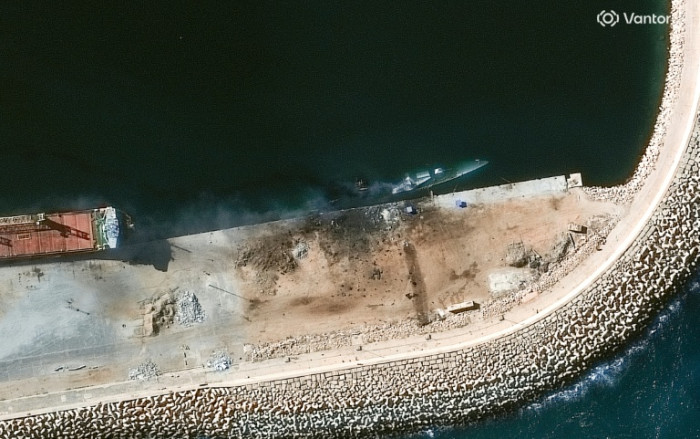
According to Ukrainian statements, the targeted warship was the Russian corvette Merkury, a modern vessel commissioned in 2023. Satellite imagery from Vantor displayed the warship capsized and mostly submerged in the harbor, with only its bow visible. Ukrainian statements further noted that a Ka-27 combat helicopter aboard the corvette was destroyed during the engagement. A second target, the Russian dry cargo vessel MV Angara, sustained a direct hit; Kyiv accused Russian forces of using the vessel to transport weapons. The SBU stated that the corvette regularly escorted enemy maritime convoys and formed part of Russia's Black Sea Fleet.
Media additions


Al Jazeera coverage noted that the Merkury had stopped in Benghazi to refuel and resupply under a cooperation agreement with eastern Libyan authorities. Libya has remained politically fractured since the 2011 uprising, operating under a split between the internationally recognized Government of National Unity in Tripoli and a rival eastern administration backed by military commander Khalifa Haftar. Eastern Libyan authorities initially described the incident as a suspected drone attack and announced an investigation alongside Russia. The eastern Libyan administration condemned the attack as a violation of its sovereignty and requested a United Nations investigation. Saddam Haftar criticized the use of national territory for foreign conflict, while the UN Support Mission in Libya expressed serious concern over turning the nation into a battleground.
The Benghazi operation followed a drone strike which set fire to the Russian cargo ship Sparta II in the Gulf of Finland on 21 November 2026. While Kyiv did not officially claim responsibility for the Baltic Sea strike, Finnish military officials assessed that Ukraine was the likely source. Oboronlogistika, a Russian company providing logistics services to the Defense Ministry, operates the Sparta II, which had been sailing from St. Petersburg toward Kaliningrad when the attack occurred. All 16 crew members abandoned ship in lifeboats and transferred to a nearby Russian vessel.
| Vessel | Type | Location | Date | Status |
|---|---|---|---|---|
| Merkury | Russian Corvette | Benghazi, Libya | 22 November 2026 | Sunk / Capsized |
| MV Angara | Dry Cargo Vessel | Benghazi, Libya | 22 November 2026 | Direct hit / Damaged |
| Sparta II | Cargo Ship | Gulf of Finland | 21 November 2026 | Set on fire / Crew evacuated |
Alexey D. Muraviev, a senior research fellow in defense and strategic studies at Edith Cowan University, told Al Jazeera that the Mediterranean has solidified as an external theater of maritime operations, warning that such attacks introduce additional risks for international shipping lanes. Muraviev noted that the targeted vessels were likely involved in transporting military equipment or supplies to Africa, potentially supporting Russia's Africa Corps.
Moscow reacted strongly to the developments. Kremlin spokesman Dmitry Peskov called the attacks a very dangerous trend and warned of painful consequences from the Russian Defence Ministry. The Russian ambassador to Libya stated that the action would not go unanswered, while the deputy chairman of Russia’s Security Council suggested the situation created conditions that could potentially allow for a nuclear strike.
Operations in designated waters will continue according to Ukrainian leadership, as Times Now News reported, highlighting the expanding geographic scope of the conflict.
What to watch next
- Assessments and responses from the Russian Ministry of Defense regarding its official reaction to the Benghazi naval attack and Baltic Sea shipping incidents.
- Potential outcomes from the United Nations Support Mission in Libya regarding an independent inquiry into the use of Libyan ports and territorial waters.
- Further developments concerning the security of Russian maritime logistics operating in the Mediterranean and Baltic seas.