IEA head says global energy systems can't return to prewar normal
The International Energy Agency warns that global energy systems can no longer return to their prewar state amid escalating Middle East conflicts and tanker strikes.

Global energy systems can no longer return to their prewar state because ongoing conflicts have fundamentally fractured international supply routes and security architectures, according to Boston Globe reporting.
The head of the International Energy Agency, Fatih Birol, stated in a BBC interview that the ongoing conflict surrounding Iran constitutes the largest energy security threat in history. Birol cautioned that European energy prices this winter will depend directly on the reopening of the Strait of Hormuz. While he does not anticipate outright shortages, he warned that harsher winter weather could drive prices even higher than current levels. This structural shift comes as maritime transit faces unprecedented disruptions, forcing a permanent re-evaluation of how petroleum moves across the globe.
Media additions

The turmoil has rippled through regional financial markets, deepening economic pain across the Middle East. Iran’s currency plummeted to a fresh record low as the U.S. Dollar traded at three million rials in exchange shops, according to The Globe and Mail. This financial strain compounds years of economic pressure exacerbated by an American military blockade on Iranian ports and expanded sanctions targeting the nation's financial sector and energy exports.
Meanwhile, hostilities intensified across the Arabian Peninsula as Yemen’s Iran-backed Houthi movement claimed responsibility for a series of coordinated strikes against Saudi infrastructure. According to Iran International and SBS, Houthi military spokesperson Yahya Saree stated that the group carried out five military operations targeting the Al-Uthmaniyah and Shadqam gas plants in Saudi Arabia's Eastern Province, a National Guard battalion in Riyadh, a radar installation in Khamis Mushait, and the vital commercial hub of Jeddah port.
The strikes followed a military escalation in western Yemen, where the Saudi-led coalition launched airstrikes against the strategic port of Ras Isa in Hodeida province. As Internazionale and The Straits Times report, the coalition urged civilians to evacuate Ras Isa moments before targeting the facility, prompting the Houthis to issue counter-warnings instructing shipping companies and workers to immediately clear all Saudi Red Sea ports.
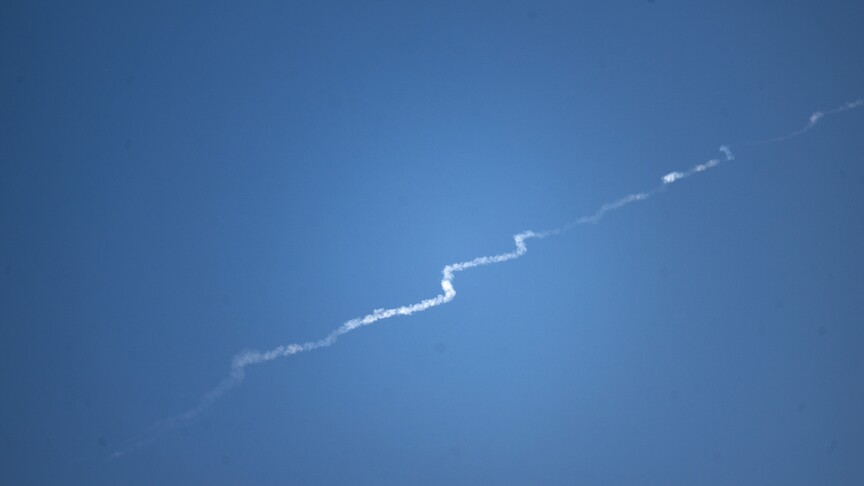
The Saudi-led coalition countered the Houthi offensive by intercepting incoming threats. According to Anadolu Ajansı, the coalition's air defenses intercepted three cruise missiles and a drone in western Saudi Arabia while simultaneously striking multiple targets inside Yemen to degrade Houthi missile and drone launch capabilities. Pakistan expanded its defensive posture in support of Riyadh by deploying ground troops to Saudi soil under a bilateral defense framework, as detailed by AOL.com.
Maritime security remains severely compromised in key trade chokepoints. Iran’s Revolutionary Guard Navy reported that two oil tankers struck mines and caught fire while traversing unauthorized routes in the Strait of Hormuz, though these claims could not be independently verified. Citing data from the Joint Maritime Information Center, The Globe and Mail noted that 17 tankers have been struck in the strait during the current month alone.
| Reporting Entity / Source | Key Event or Development | Reported Impact / Details |
|---|---|---|
| Boston Globe / IEA | Global energy outlook | IEA head Fatih Birol declares prewar energy normal unattainable; winter prices tied to the Strait of Hormuz. |
| Iran International / Houthi Forces | Strikes on Saudi infrastructure | Houthis claim five precision operations targeting Al-Uthmaniyah and Shadqam gas plants, Jeddah port, Riyadh, and Khamis Mushait. |
| Anadolu Ajansı / Coalition | Air defense interceptions | Saudi-led coalition intercepts three cruise missiles and a drone in western Saudi Arabia, destroying 24 Houthi-linked targets. |
| The Globe and Mail / JMIC | Strait of Hormuz incidents | Seventeen oil tankers struck in the strait during the month; Iranian currency hits a record low of 3 million rials to the dollar. |
| AOL.com / Pakistani Military | Troop deployment | Pakistan formally acknowledges deploying ground soldiers to Saudi Arabia to reinforce defensive capabilities under the Mecca Alliance framework. |
Parallel to the energy and maritime crisis, diplomatic and political shifts unfolded across the region. Israel’s foreign ministry announced that an international stabilization force will be permitted to enter Gaza in an initial pilot program aimed at disarming Hamas and facilitating a transition of power to a technocratic government, as reported by The Globe and Mail. Domestically, Israeli Prime Minister Benjamin Netanyahu met behind closed doors with opposition leader Gadi Eisenkot after proposing a rotational leadership arrangement to form a new unity government following an inconclusive election.
What to watch next
- Board of Peace director-general Nickolay Mladenov is scheduled to brief the United Nations Security Council regarding the implementation of the Gaza ceasefire framework.
- Opposition leader Gadi Eisenkot faces a tight deadline to decide whether to accept Netanyahu's rotation offer or seek an extension from Israel’s president to form a governing coalition.
- Further developments in regional shipping security around the Bab el-Mandab Strait and the Strait of Hormuz will dictate whether winter energy prices escalate across European and global markets.
For ongoing updates on international stability, visit World coverage.

