China condemns UK move to nationalise British Steel
The UK government has taken the Scunthorpe steelworks into public ownership to protect jobs and domestic supply chains, prompting a rebuke from Beijing.
- Core Development: The UK government has taken the Scunthorpe steelworks into public ownership to protect jobs and domestic supply chains, prompting a rebuke from Beijing.
- Beat Context: Categorized under Business with independent corroboration.
- Reporting Depth: 3 minute analytical read synthesized from verified newsroom sources.
The United Kingdom’s formal takeover of British Steel, confirmed by the government on Thursday, 16 July 2026, has prompted a sharp rebuke from Beijing. The state move, which secures the Scunthorpe steelworks, marks the first time the facility has returned to public ownership since 1988. This transition follows the enactment of the Steel Industry (Nationalisation) Act 2026, which received royal assent earlier in the week and grants ministers the power to transfer steel assets into state control if they satisfy a public interest test.
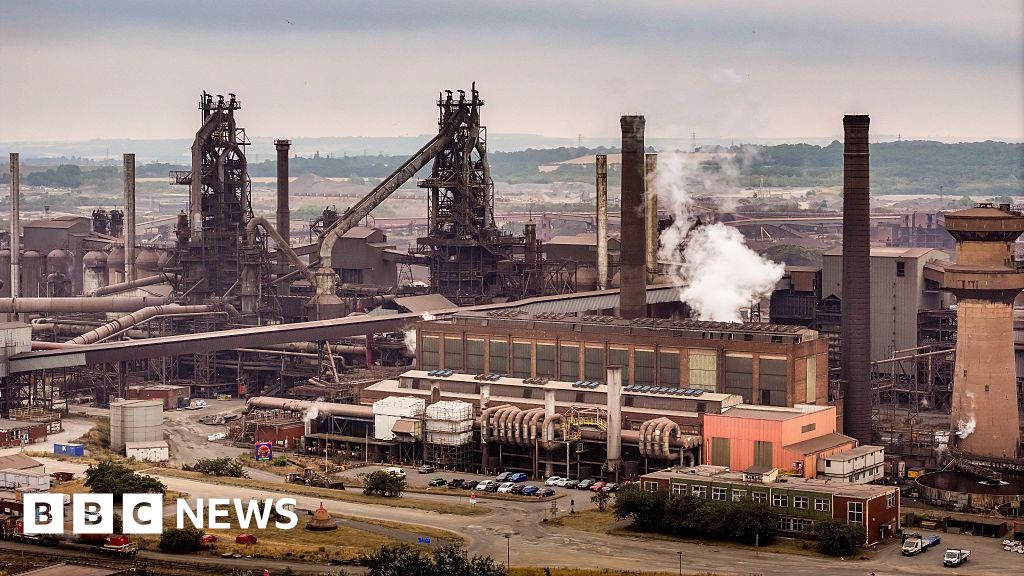
The facility in North Lincolnshire represents the final location in the UK capable of producing virgin steel from raw materials. Prime Minister Sir Keir Starmer described the site as part of the fabric of our nation and a cornerstone of Britain’s industrial strength
. Officials argue the intervention is essential to protect approximately 2,700 jobs and maintain a domestic supply chain for critical sectors, including the defense industry and Network Rail.
Media additions

Beijing’s Diplomatic Protest
By Friday, 17 July 2026, China’s Ministry of Commerce had issued a formal statement conveying its stance on the development. The ministry expressed that it firmly opposes and is strongly dissatisfied with the British government's decision
. Beijing specifically criticized the use of national security as a justification for the seizure, arguing that the UK disregarded the financial contributions made by the former owner, the Jingye Group.
"The UK side, disregarding Jingye Group’s important contributions to the British economy and society, forcibly took control of British Steel and subsequently nationalised the company in the name of national security, seriously undermining Jingye’s legitimate rights and interests and dealing a severe blow to Chinese companies’ confidence in investing in the UK."
The Chinese government has called on London to faithfully fulfil
its obligations under the 1986 China–UK Bilateral Investment Treaty. While Beijing stated it would support Chinese firms in using legal means to defend their rights
and vowed to monitor the situation closely, it did not outline specific retaliatory actions.
Financial and Industrial Implications
The nationalization places a significant immediate fiscal burden on the British taxpayer. Business Secretary Peter Kyle confirmed that the government must cover daily operating expenses for the immediate future. A report from the National Audit Office in March 2026 estimated that the Scunthorpe works cost approximately £1.3 million per day to operate. The former owner, Jingye, had previously cited losses of £700,000 per day, which had driven the firm’s earlier attempts to close the blast furnaces.
To address the transfer of ownership, the government intends to appoint an independent valuer to determine if any compensation is due to Jingye. The Chinese group originally acquired British Steel out of insolvency in 2020 for £70 million.
The government's long-term industrial strategy remains focused on transitioning the domestic steel sector toward electric arc furnaces (EAFs). Officials acknowledge that EAFs are less carbon-intensive and cheaper to operate, but they maintain that the technology currently lacks the capacity to produce the specific grades of virgin steel required by major national infrastructure projects. Consequently, the Scunthorpe plant will continue to operate under state ownership as a temporary measure until viable domestic alternatives are developed.
What Happens Next
- Compensation Assessment: The results of the independent valuation regarding potential payments to the Jingye Group will serve as a primary indicator of future bilateral tensions.
- Leadership Direction: A newly appointed leadership team is tasked with stabilizing the business and developing a sustainable, low-carbon future for the site.
- Strategic Roadmap: The government is expected to clarify its timeline for replacing the current blast furnaces, which remain a flashpoint in debates over the cost of public ownership and the pace of industrial decarbonization.
How significant is this development?
Contribute your assessment to the aggregated reader sentiment ledger.
Frequently Asked Questions
Key questions answered in this reportWhat is the key development in: China condemns UK move to nationalise British Steel?
The UK government has taken the Scunthorpe steelworks into public ownership to protect jobs and domestic supply chains, prompting a rebuke from Beijing.
Why is this Business development significant for the UK?
This report covers critical events in our Business beat. Independent reporting monitors related UK statements, regulatory shifts, and public responses as further verified details emerge.
How was this reporting corroborated and verified?
Newsarchy UK compiles and cross-references reporting from primary reporting from bbc.com and cross-checked wire reports. All coverage adheres to published editorial standards.
When was this report published?
This briefing was published on July 17, 2026 and is permanently cataloged in the Newsarchy UK Business archives.